
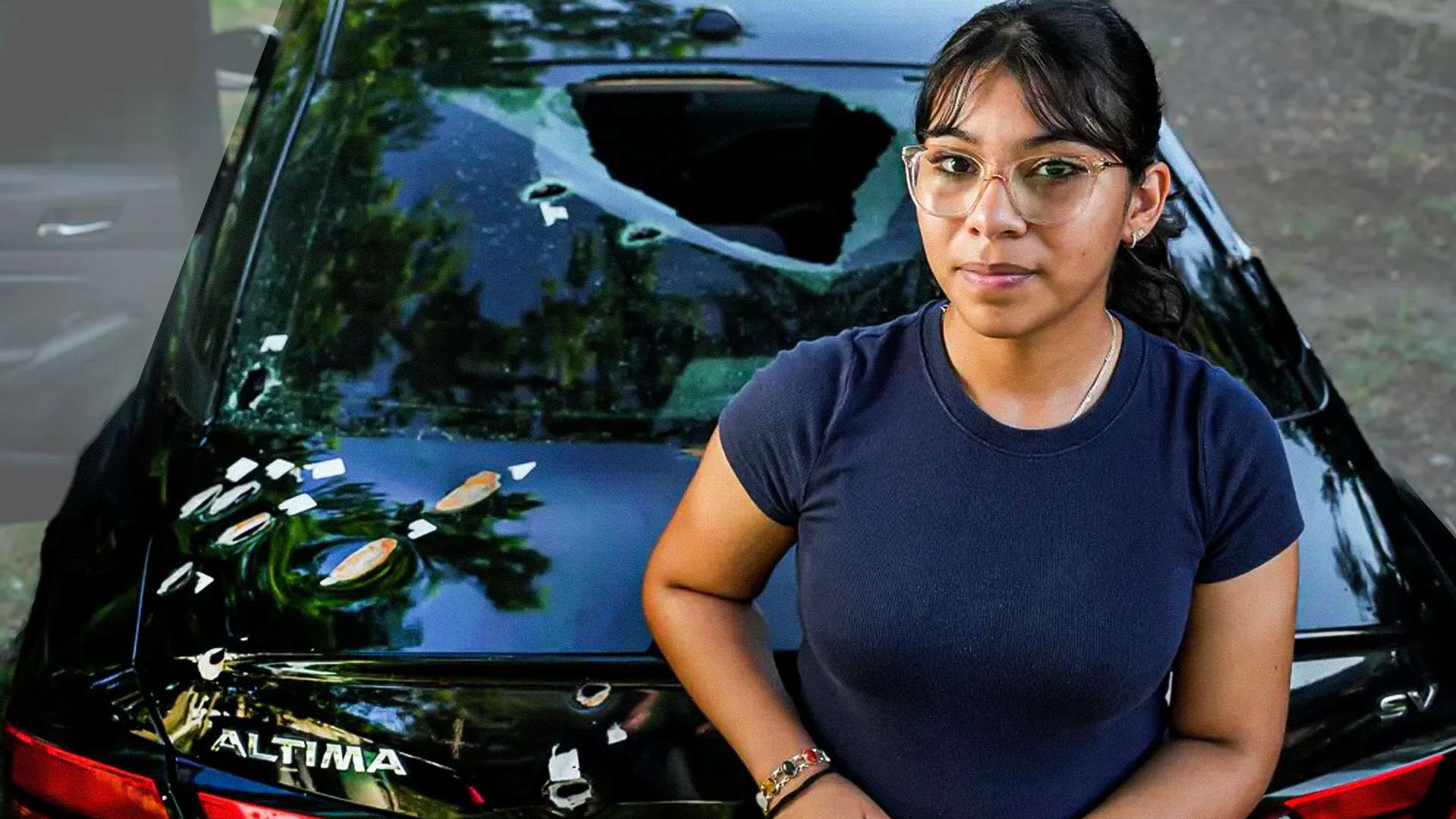
In July, Houston law enforcement opened fire on the car of a bystander, firing dozens of rounds and leaving the vehicle wrecked. The city subsequently asserted that she was not owed any compensation.
That stance would be plausible if Abigail Trujillo, a student at the University of Houston, had been implicated in a crime. The police, however, did not accuse her of any wrongdoing. Trujillo was working at a local shopping center when her Nissan Altima became collateral damage as officers pursued a suspect named Jamarcus Spates.
It was a tragedy in more than one sense—being caught in the crossfire, both literally and figuratively. Yet the aftermath intensified the harm. The city’s lawyers rejected her request for payback, remarking in a letter that they “regret your inconvenience in this matter.”
“I feel stuck in the middle here,” Trujillo told the Houston Chronicle, which first brought the case to light. “This creates a huge financial burden. And I hadn’t finished paying off the car, so I still have to make those payments while looking for a replacement.”
Her experience is shocking but not unexpected. It reflects a broader pattern of municipalities denying compensation after innocent people’s property is damaged by law enforcement during the pursuit of suspects.
Not far away in McKinney, Texas, a suburb north of Dallas, a 2020 SWAT operation released dozens of tear gas canisters into Vicki Baker’s home and drove an armored vehicle through the front door as officers tried to seize a fugitive who had barricaded himself inside. When Baker sought compensation from the city, officials told her she did not meet its definition of a victim. The government declined to pay, and her homeowners insurance also refused, citing a common clause excluding government-caused damage. “I’ve lost everything,” she told me in 2021.
That episode marked the start of a lengthy legal journey that wound its way through the courts for more than five years. A jury awarded Baker roughly $60,000 in damages in 2022, only to have that verdict overturned the following year by the U.S. Court of Appeals for the Fifth Circuit, which ruled that police actions were undertaken out of “necessity during an active emergency.”
That reasoning offers a key glimpse into the heart of the dispute. The Takings Clause of the Fifth Amendment promises “just compensation” when private property is taken for public use. Yet there is disagreement among the courts about whether an exemption exists—and, if so, what it covers—when police power is exercised.
Baker’s claim was ultimately denied under the U.S. Constitution. Still, the Fifth Circuit this year affirmed that she was entitled to $60,000, plus interest, under the Texas Constitution. “As for future victims, this should help in Texas,” said Jeffrey Redfern—an attorney with the Institute for Justice, which represented Baker—after a lower court ruled in her favor last year. “From what we can tell, municipalities in Texas have simply ignored a binding ruling from the Texas Supreme Court about SWAT damage, but publicizing the outcome could push for change.”
But it seems not everyone has absorbed the message. Houston Mayor John Whitmire maintains that the city acted within the law in Trujillo’s case. Yet he is making an exception for her, coordinating with the police union to replace her car. He is also pursuing a review of past denials and working with the city to consider remedies for those cases. He argues that correcting the imbalance—where one person bears a disproportionate impact while the city’s treasury remains largely unaffected—is the appropriate course of action.
A SWAT Team Destroyed an Innocent Woman’s Home. She’s Been Waiting 6 Years for Justice.
