
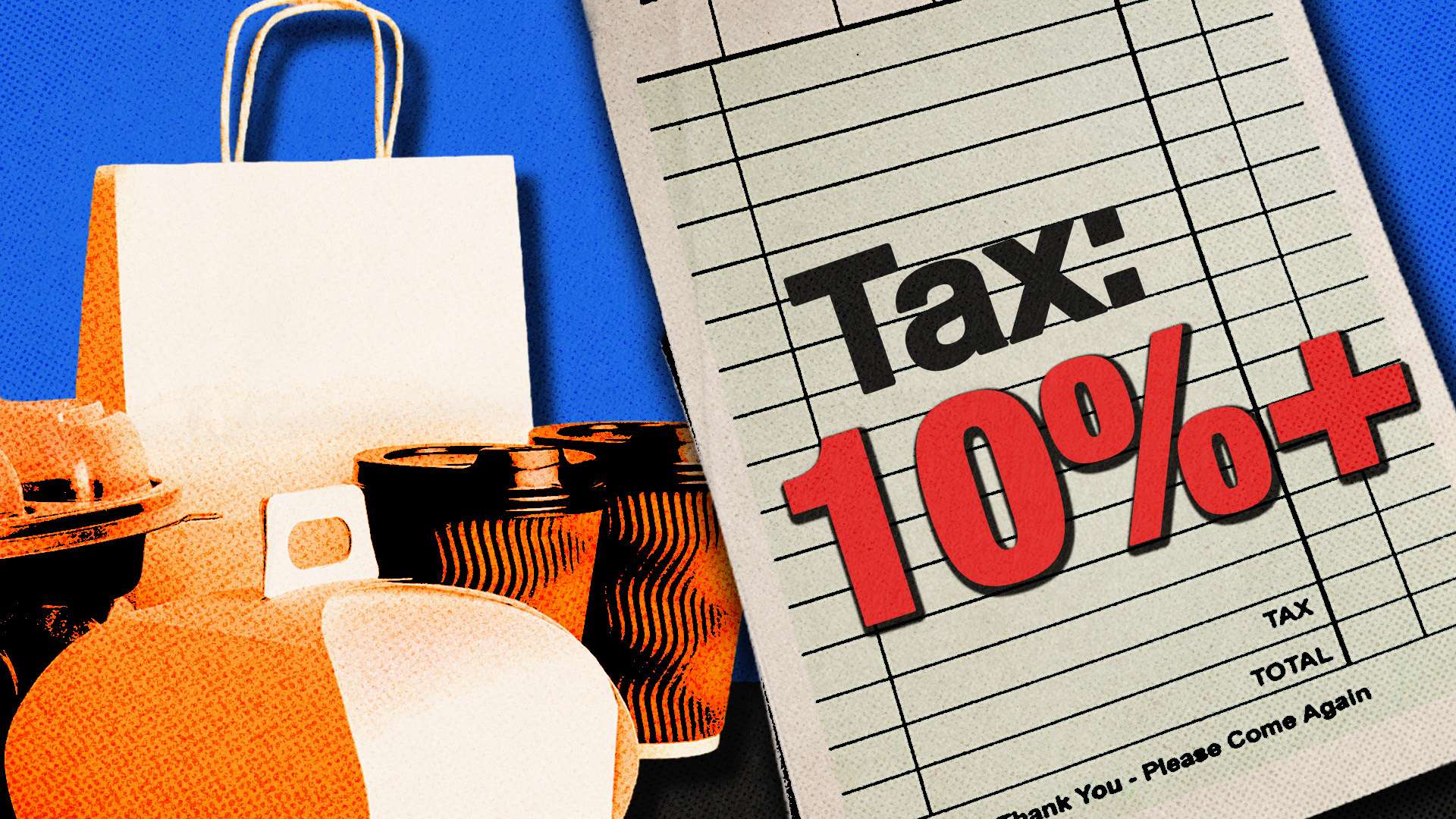
Food-related taxes are gaining traction, even though they burden eateries and customers—and they may not reliably boost government revenue either.
Recently, as part of its 2027 budget, the D.C. Council approved a 20-cent levy on apps and platforms that arrange rider-for-hire deliveries. While the charge covers the delivery of a wide range of household items, officials have mostly framed it as a tax on food delivery, which could yield a substantial revenue stream for the District.
This delivery levy in D.C. is just the latest instance of governments targeting meals with stealthy tax increases to swell public coffers. Though the lure of quick money is clear, the ordinary residents—who simply want a lawmaker who can actually deliver on affordability—are the ones who end up paying the price.
The council member behind the measure, Brianne Nadeau, says the tax is projected to generate about $9 million annually. She contends the burden would fall on the delivery firms rather than consumers. “These are enormous, multi-billion-dollar companies that can absorb 20 cents,” Nadeau told DC News Now. “What we need is for them to build a system where ordering food delivery doesn’t require real wealth.”
This kind of logic isn’t unique to Washington, D.C. In fact, food-related taxes are growing in popularity as a backdoor method of increasing revenue, even as left- and right-leaning officials promise to make meals more affordable. These levies raise costs for restaurants and diners alike, and they may not even succeed in raising much money.
What are called “meal taxes” are becoming more widespread across the country. Most states treat prepared foods from restaurants as part of the general sales tax. As more Americans dine out, this has produced an unexpected windfall for governments. Yet a 2024 analysis by the Tax Foundation shows 13 of the 50 largest U.S. cities also levy additional meal taxes on diners.
When general sales tax and meal taxes are combined, the total charge on food can exceed 10 percent in many places, with Minneapolis (12.03 percent), Chicago (11.75 percent), and Virginia Beach (11.5 percent) among the highest offenders, according to the Tax Foundation. More troubling still is the trend toward greater prevalence: 29 of the top 50 cities have raised their meal taxes or related taxes over the last decade, while only two observed a decline in food taxes.
Smaller and mid-sized municipalities are adopting meal taxes as well. In Virginia, beyond Virginia Beach, Williamsburg, Richmond, and Petersburg have joined in with meal taxes, and even Mathews—one of the smaller communities—imposes a 4 percent meal levy. The Virginia Restaurant, Lodging, and Travel Association notes that 43 percent of Virginia localities have increased either their meal tax or a hotel-specific transient occupancy tax since 2016.
The D.C. case demonstrates that food-related taxes are no longer limited to dine-in experiences. Minnesota and Colorado have introduced delivery charges in recent years; Colorado’s complex fee structure has grown to 31 cents and continues to rise with inflation annually. A handful of other states have eyed similar delivery taxes, while Seattle has added a delivery surcharge at the municipal level.
For lawmakers, taxing meals and deliveries often looks like a safe compromise. A small per-delivery fee or a modest meal tax seems less politically painful than a broad income-tax hike. An added advantage is that meals eaten in restaurants are frequently consumed by visitors, enabling the tax to be partly borne by non-residents who don’t vote in that jurisdiction.
Yet the impact of these taxes is real. In some cases, they may even backfire by dampening revenue opportunities. After Williamsburg, VA raised its meal tax by 30 percent, restaurant sales fell. While receipts from the higher meal tax increased by 6.7 percent, overall restaurant tax revenue declined by about 1.5 percent for the year, partly offset by the sales tax collected on a smaller quantity of restaurant purchases.
To illustrate, consider a typical bill: a $74 dinner at a Williamsburg restaurant now clocks in at just under $84 after the Virginia sales tax and the local meal tax are added. Small increases in meal taxes or delivery fees may not deter some diners, but they can meaningfully affect others. In Colorado, 35 percent of voters said the delivery fee would make them less likely to order takeout, and in Minnesota, 29 percent reported the same concern.
The bottom line is that food taxation is becoming more widespread across the United States. Officials often promise more affordable dining while simultaneously instituting higher costs for meals and deliveries.
