
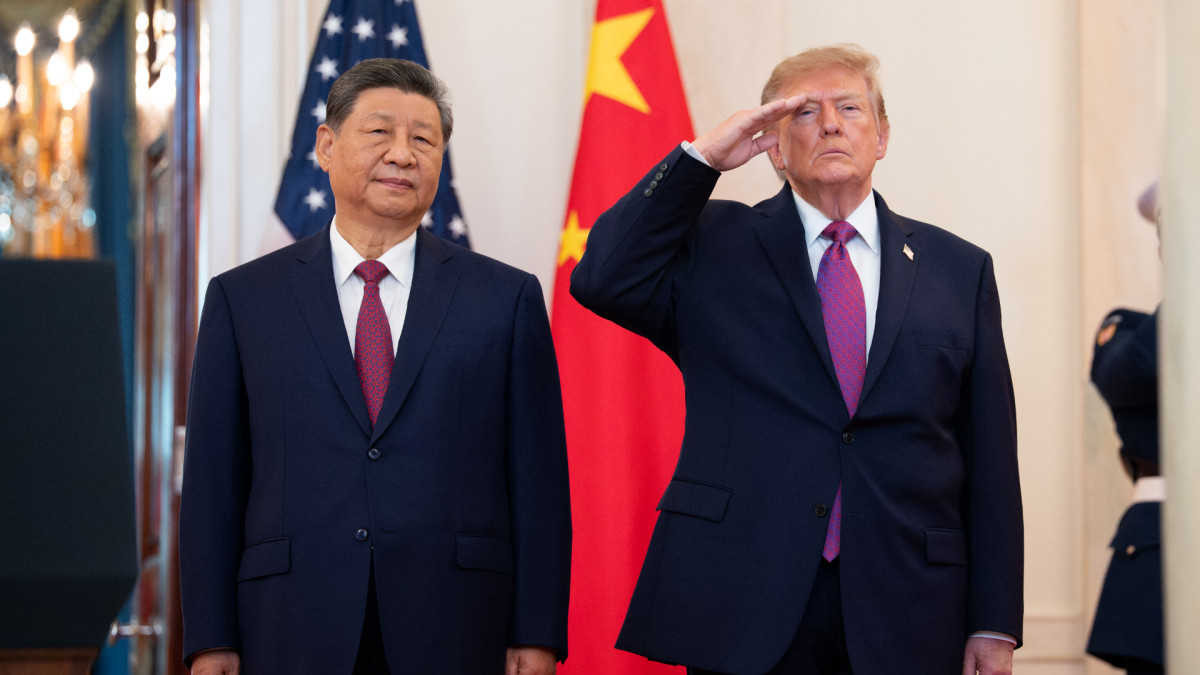
In a recent article, Shlomo Ben Ami, a renowned historian and former Israeli diplomat, could hardly have drawn a darker panorama of the consequences of the war that Israel and the United States have waged against Iran. In his view, unlike other wars that marked turning points and led to a reorganization of the international order, the current conflict will give rise to an international system that is even more unstable and dangerous. This implies that we have not yet hit bottom in a crisis that is likely to be protracted and will unfold in successive stages, many of which are still to come. As the article also notes, amid the chaos generated by American actions, often hard to grasp, China emerges as a comparatively reliable actor, on whom even a certain stability of the remnants of the international order depends, while gradually building an alternative governance architecture more aligned with its interests.
Whatever the outcome of this confrontation, it will undoubtedly accelerate a change that was already underway and will compel a redefinition of United States hegemonic aims. To begin with, regionally, the Gulf security architecture must be rebuilt on the ruins of American military bases destroyed by Iranian missiles. More broadly, Washington’s evident inability to shield its regional allies will lead more than one actor to rethink its foreign and security policy. Globally, the war seems to confirm that new forms of asymmetric warfare are as effective against the aging Russian military apparatus as against the United States’ previously invincible power. The formidable fleet that not long ago projected Washington’s might across the globe now appears unable to reopen the Hormuz Strait or guarantee maritime traffic through Bab el-Mandeb. Perhaps we are witnessing the end of the United States’ role as the guarantor of international navigation security and the predictability of trade and energy flows, as well as the rise of China as an indispensable actor in this arena.
“Tal vez asistamos incluso al final del papel de Estados Unidos como garante de la seguridad de la navegación internacional y de la previsibilidad de los flujos comerciales y energéticos”
Beyond geopolitics, the economic consequences of this war threaten to destabilize an international financial system that is already overheated, adding substantial difficulties to numerous economies, particularly in Europe, and widening a US budget deficit that already seemed out of control. In general terms, the inflation rebound and the high levels of debt form a dangerous combination, exacerbated by widespread distrust of Donald Trump’s leadership. When the smoke clears from the Middle East wars, Xi Jinping is likely to emerge as a figure of relative stability in an international system that has become bewildering, especially from the Global South’s perspective. The truth is that China, while pursuing its own interests, has so far, to the surprise of many, helped stabilize international energy markets and has even quietly supported the diplomatic efforts of some regional countries. In our 2020 essay on the meaning of the strategic agreement between China and Iran, “The New Great Game” (Elcano Royal Institute, ARI 102/2020), we already highlighted Beijing’s growing willingness to challenge U.S. policies in the Middle East. Nor will the observer miss its ability to circumvent secondary sanctions and even provide Iran with advanced and relatively affordable military technology.
Numerous indicators suggest that China’s technological and military capacities will be even more relevant in the future. It is enough to note that the scientific production of its universities and research centers is already the largest in the world, to the extent that eight of the ten institutions at the top of the global rankings are Chinese. China also leads in publishing in most strategic technological fields — 66 of 74, according to the Australian Strategic Policy Institute — including nanomaterials, sensors, advanced chemical compounds, drones, and nuclear energy. It also far outpaces other countries in the number of university graduates in biotechnology, engineering, and artificial intelligence. Since joining the World Trade Organization, its industrial output has quintupled and now accounts for about 30% of global total, while the American share has halved to around 15%, according to the World Bank. Without attempting to be exhaustive, projections indicate that China could concentrate 45% of global manufacturing output by 2030, even if its growth slows to a minimum.
With the lessons of history very present, China seeks to avoid the mistakes that led to what it calls the “century of humiliation.” Its markedly industrial economic strategy aims to swiftly traverse the virtuous circle that starts with technology and innovation, moves through competitiveness and productivity, and culminates in international leadership. The logic of its decisions blends elementary economic principles, long-term strategic planning, and preservation of social cohesion as the foundation of political legitimacy, without assigning a significant role to democracy or human rights, except to the extent that they are fully subordinated to the demands of national security.
“Su estrategia económica, marcadamente industrial, busca recorrer con rapidez el círculo virtuoso que parte de la tecnología y la innovación, pasa por la competitividad y la productividad y culmina en el liderazgo internacional”
The central thesis of this article is, therefore, that, beyond the Middle East conflict as a catalyst, the twenty-first century is being transformed by the emergence of new centers of power —technological, industrial, commercial, and financial— and by growing structural imbalances —economic, social, and demographic— that are altering and, often, hollowing out traditional geopolitics. We also contend that the reckless decisions of President Trump and China’s new position on the world stage considerably accelerate this process. Thus, the competition among great powers today takes on shades reminiscent of the nineteenth-century imperial era, but the rapid technological advance — currently artificial intelligence, tomorrow robotics and synthetic biology — adds a wholly new dimension. History does not repeat itself, but it often rhymes.
Nuevos mitos para sustituir los viejos relatos
The narratives that sustained Western confidence in its supposed moral, industrial, and technological superiority have been reduced to rubble. Values and much of industry or technology have not disappeared; but it seems no one is capable of believing in them anymore, or of making sacrifices to preserve them. The result is that Western democracies are going through a phase of economic and social disorientation, in a new geopolitical era defined less by ideologies than by the reality of digital empires, national interests, geopolitically agile alliances, and the narratives of rival powers.
Yuval Noah Harari has highlighted the role of narratives — myths and shared fictions that exist only in the collective imagination — as one of the fundamental inventions that made possible large-scale human cooperation and, with it, increasingly complex forms of political organization and domination. As confidence in the influential thesis of Francis Fukuyama about the universalization of liberal democracy began to fade, alternative responses to questions of political legitimacy, identity, and social organization began to arise in different regions. Just observe the panorama from a distance. In the vacuum left by the end of Western ideological dominance, China has been quietly constructing, with its usual patience and flexibility, a new narrative. In its simplest formulation, it promotes a potentially attractive model for parts of the Global South and perhaps beyond: a kind of Confucian-inspired technosocialism, combined with state capitalism, doctrinaire Leninism, and imperial traits. Its success can be demonstrated through its own economic development and its prospects for leadership in future industries, if not technological supremacy. The crucial question is how far China is willing to project its political and civilizational narrative globally, something that historically it has shown reluctance to do but has become an increasingly explicit political objective.
“La cuestión decisiva es hasta dónde está dispuesta China a proyectar globalmente su relato político y civilizatorio”
Geopolitics, as Henry Kissinger conceived it, sought to understand power through the interaction of geography, strategic interests, and a supposed balance of forces. In 1976, Yves Lacoste asserted that geography serves, above all, to make war, a notion repeatedly corroborated by recent events in the Strait of Hormuz or Bab el-Mandeb. The liberal international order that emerged after the Cold War aspired, at least in principle, to temper that brutal logic by placing universal rules, international law, and the principles of the UN Charter above national interests and power blocs. There was even a time when digital transformation and the UN 2030 Agenda embodied much of the technocratic optimism of Western elites. That confidence began to crack after the 2008 financial crisis and was seriously questioned by the 2020 pandemic.
In this sense, Russia’s invasion of Ukraine and the United States–Israel war against Iran merely confirm that little of that voluntarist optimism remains. We remain prisoners of geography in its most elemental form, as Tim Marshall has repeatedly written. The “second coming” of Trump has only exposed many of the hidden cracks beneath the apparent Western confidence. Trump did not invent the current crisis: he removed the props and much of the reassuring rhetoric that once concealed it. By doing so, he has challenged not only the alliances and institutions that sustained the international order but also the narratives and myths that legitimized it in the Western collective unconscious, the ultimate source of the bewilderment we face.
Señores digitales y profetas tecnológicos
The movement known as the Dark Enlightenment illustrates better than any other example, however distorted it may seem, an alternative Western vision that questions many assumptions of liberal democracy. This explicitly post-democratic thought, in Curtis Yarvin’s words, no longer even bothers to explain the difference between democracy and dictatorship, but instead posits a rivalry between practical models of organizing an extraordinarily concentrated political, economic, and technological power, which would lead to varying degrees of digital authoritarianism, barely disguised under hybrid regimes or competitive authoritarisms.
From this viewpoint, what emerges would not be a new phase of ideological rivalry, but a competition — and increasingly a clash — between distinct technological and cultural models. Alongside the Chinese model already described, in the United States there is a ascendant libertarian-leaning digital capitalism, driven by Silicon Valley. If this trend continues, democratic systems would risk becoming subordinate to technological power and to the outcome of strategic competition in both models. It is that confrontation, sometimes presented almost as a cosmogonic struggle, that gives the current battle for global hegemony its apocalyptic undertone.
“Si esta tendencia continúa, los sistemas democráticos correrían el riesgo de quedar subordinados al poder tecnológico y al desenlace de la competencia estratégica en ambos modelos”
The new realms of power are no longer represented by statesmen, financial magnates, or generals, but by technological prophets. Figures such as Steve Bannon, Roger Stone, Peter Thiel, Elon Musk, and Curtis Yarvin themselves are transforming the nature of political insurgency and steering it in a direction that would have been unthinkable only a couple of decades ago. First, their influence is not limited to the United States; their ideas, often spread through their own platforms for strategic purposes, have global repercussions. Second, they challenge without hesitation both governments and concrete societies and the entire architecture of international governance. The ideologues of nationalist populism are in charge of crafting the new narratives, while the owners of platforms build the infrastructure through which those narratives circulate and gain power.
Contrary to the hopes placed in them in times that now seem distant, social networks have provided authoritarian and populist movements with the tools to manipulate open public debate, dispense with filters and mediators of traditional media, and thereby exercise control based on cognitive manipulation. In passing, a new digital oligarchy has emerged, concentrating unprecedented economic power. When the leaders of China and the United States meet, the presidents are effectively accompanied by a minority of their usual entourage in dinners and official events, outnumbered by these new digital magnates. Their ability to influence markets, alter information flows, and provoke political crises with a single post makes them representatives of a new form of power. The companies they steer are not merely economic agents: they control the social coordination infrastructures that modern societies rely on. Beside them, well-intentioned liberal-order technocrats seem relics of another era, like Visconti’s figures in The Dove’s Fall: dignified, certainly eloquent, but fatally out of date. In this scenario, international organizations that regulated international relations have become paralyzed. A long list of strong leaders dominates the new international stage and occupies the center of attention in a kind of throne game.
Una realidad incómoda
No actor has been left more exposed to these transformations than the European Union. Until now, Europe’s responses to these challenges have been characterized by excellent analysis, scant decisions, and occasional episodes of humiliation. In 2010, the EU’s total GDP was almost equal to the United States’: $14.64 trillion versus $15.05 trillion, while China stood far behind at $6.19 trillion. By 2025, the landscape had changed radically: the American economy was 50% larger than the European, and China had caught up with the European Union, at $19.40 trillion. The inability to develop an AI model or ecosystem of its own massively widens the gap. In 2024, Mario Draghi published his report on European competitiveness, with numerous far-reaching proposals. The Joint European Disruptive Initiative, an initiative born from civil society that oversees the implementation of Draghi’s proposals, concluded in September 2026 that none had been carried out in full and that only 26% was in motion.
To take two years to move essentially nowhere, when technology rapidly changes the rules of all games, seems not only an eternity but a recipe for disaster. Why do we hesitate? Analysts agree: because we do not act as a united continent, nor as the superpower we could become, and because there is no mechanism to transform those decisions into political capital. Until we break that vicious circle, Europe will remain a player with great capabilities, but hobbling in innovation, geopolitics, and economy.
“Mientras no rompamos ese círculo vicioso, Europa seguirá siendo un actor con grandes capacidades, pero renqueante en innovación, geopolítica y economía”
Meanwhile, the Ukraine war has deepened Europe’s strategic dependence on Washington, while the lack of alternatives regarding Russia has become evident. NATO has been revitalized, certainly, but largely on terms dictated by the United States. The European discourse on strategic autonomy and technological sovereignty has remained, as Draghi and Letta’s reports, a matter of statements. Large strategies have been devised, but few have been implemented. European rearmament hinges on military doctrines that are largely obsolete and rests on economic models that serve the needs of the European military-industrial complex more than its proclaimed strategic autonomy. The EU’s credibility has also suffered from its evident double standard. The Global South perceives Europe’s claimed moral superiority as hypocritical and self-serving and what it demands is a practical, real, and applicable transfer of knowledge. Perhaps we still retain a certain degree of trust and respect for the rule of law capable of convincing others, but it takes us so long to turn it into a competitive advantage against China or the United States that everything remains on paper.
El mapa no es el territorio
Nothing better illustrates Europe’s mental distortion than the maps we typically use. Placing Europe, a small peninsula of the great Eurasian continent, at the center prevents us from appreciating the vast Pacific against the Atlantic, the true dimensions of Africa, or the fact that the Arctic is, in reality, one of the narrow passages between the major landmasses on the planet. Buckminster Fuller’s magnificent projection, the Dymaxion map or Airocean World Map, with minimal distortion and evenly distributed and landmasses that form almost a single continuous world island, should be mandatory study.
Indeed, as global warming drives the Arctic ice back, what seemed a peripheral, inhospitable edge becomes a new strategic corridor. The Northern Sea Route, skirting Russia’s Siberian coastline, offers a shorter path between Europe and Asia, with implications for world trade, energy security, and military logistics. Drawing on its experience and proximity, Russia has responded by accelerating the militarization of the region: reopening Soviet-era bases, deploying modern icebreakers, and asserting sovereign rights over passages that others consider international straits. China, which has invented the category of the “Arctic Near-State,” uses its alliance with Russia to dominate this new route through the Polar Silk Road initiative.
Under the current circumstances, the Arctic is one of the laboratories of the emerging new order, a space where climate change, energy transition, industrial capacity, and technological competition converge. While Europe exhibits its vulnerability and faces a stern test of possible irrelevance, Donald Trump has made clear that the United States will reinforce its position by projecting its power, if necessary, over Greenland and Canada. If that is not enough, the strategic importance of maritime chokepoints, highlighted by the closures of Hormuz or Bab el-Mandeb, will increase the value of controlling this new sea route and will turn it into another stage of strategic rivalry.
“En las circunstancias actuales, el Ártico es uno de los laboratorios del nuevo orden emergente, un espacio donde confluyen cambio climático, transición energética, capacidad industrial y competencia tecnológica”
If we now turn our gaze to Eurasia, the vast supercontinent Halford Mackinder described as the “geographical pivot of history,” we can say it is going through its most unstable period since the end of the Cold War. The Ukraine war, with all its atrocity, is merely the most visible manifestation of a broader struggle for influence, access to infrastructure, and the consolidation of regional identities. Russia attempts to maintain control over the post-Soviet space, from the Caucasus to Central Asia, despite the economic and military wear caused by sanctions and the costs of the Ukrainian war.
At the same time, through the Belt and Road Initiative and other economic, trade, and governance instruments, China is progressively turning Central Asia into an area of economic dependence and infrastructure control. Behind the façade of strategic partnership a discreet but constant rivalry persists between Moscow and Beijing for the loyalty of those states. For now, the alliance of convenience prevails, requiring complementary coordination of the resources and capacities of the two major Euroasian actors. Their relations with Pakistan and Iran give China an increasingly important role in West Asia, both for its economic and financial ties and, increasingly, for the successes of its military systems.
The last year’s clash between Pakistan and Indian air forces and the current war in Iran have shown that Chinese military technology can compete with costly Western hardware. Turkey, driven by a mix of nationalism, Ottoman nostalgia, and opportunities arising from power vacuums, projects its influence over the Eastern Mediterranean, the Caucasus, northern Syria, and even Africa, often against Russia’s and Europe’s interests. Iran, emboldened by shifts in the balance of power and the deepening of its ties with Russia and China, is increasingly presenting itself as a Eurasian power linking the Middle East, the Caucasus, and Central Asia. Together, the odds that regional confrontations will continue or intensify in the short term remain very high, as Israel’s ambitions to extend its power toward a “Greater Israel” collide with Ankara’s and Tehran’s strategic interests. And in this context, which, geographically, it belongs to, Europe plays the sad role of an anxious spectator—and payer, watching its security and influence decided in scenarios where it hardly seems able to intervene.
Regarding Africa, the collapse of fragile Sahel states has attracted little attention in Europe, which overlooks that Western intervention in Libya unleashed regional security chaos. Consequently, France’s influence in countries such as Mali, Niger, Burkina Faso, and Chad has collapsed. Its military forces have been driven out and replaced by Russian mercenaries from the Wagner Group and the Africa Corps, while al-Qaeda and the Islamic State have managed to entrench themselves in the security vacuum extending across the Sahara. For now, Morocco and Algeria have acted as a barrier against the chaos brewing at Europe’s southern doorstep. Their armed forces and security services are effective when it suits them and well organized. Yet, the Maghreb itself remains unstable due to the rift between the two countries and the intervention of other regional actors. Recently, Algeria broke diplomatic ties with the United Arab Emirates, accusing it of wielding a harmful influence and fomenting regional destabilization. The ties among Morocco, Israel, and the Emirates could lead Turkey and Qatar to support Algeria, increasing tensions in a region essential to European security. The possibility that Al-Qaeda and the Islamic State could expand and strengthen in the Sahel, coupled with new migratory waves northward, should demand greater attention from European leaders.
Beyond geography, a slower but deeper transformation advances: demographic dynamics that reshape the ultimate source of power in the world, at least until technologies such as robotics or synthetic biology alter it. Europe and countries like Japan, South Korea, and soon China confront aging populations and shrinking labor forces. These trends weaken economic dynamism, welfare systems, and, ultimately, power potential.
China, in particular, now faces the delayed consequences of its one-child policy. Although it contributed to the country’s spectacular growth at one time, today it is the cause of rapid social aging and a shrinking active population that threaten the sustainability of its development model. India has surpassed China as the world’s most populous country, but risks wasting its demographic dividend through unemployment, inequality, and social fragmentation. The United States retains, for now, a relative advantage thanks to demographic renewal driven by immigration, though its recent policies threaten to turn what was a strength into another cue for confrontation. Africa, by contrast, is undergoing a period of rapid population growth, even more so by comparison. It is projected that its population will triple by 2100, bringing billions of young people into labor markets ill prepared to absorb them.
The comparison of Europe’s and Africa’s demographic curves illustrates the magnitude of the change. In 1900, Africa had 139 million inhabitants, compared with Europe’s 407 million. In 2024, Africa reached 1.58 billion and Europe 745 million. By 2100, Europe would fall to 592 million, while Africa would reach 3.88 billion. In Europe, migration flows from Africa and the Middle East already occupy a central place in policy. They represent a source of future prosperity, but without genuine integration, they fuel polarization and, today, reinforce right-wing radical movements.
Consequently, over the coming decades demographic maps will matter as much as military ones. States that fail to respond to aging, to the rapid growth of their young populations, or to migratory pressures through coherent political projects will see their power erode from within. It remains to be seen how technology will interact with these demographic trends to shape new geopolitical realities.
China waits for its moment
As the liberal order led by the West erodes and geopolitics is redefined, the decisive question is no longer whether technology will shape politics, but whether politics as we have known it can survive the technologies and myths that are remaking the world. Will a new Chinese model based on useful and controllable industries and technologies be more attractive, in which individuals sacrifice for the national future, than the technofederalism of individualism promoted from the United States? In any case, this clash between China and the United States is not only economic: for the powers established in Beijing and Washington, it has an existential dimension.
From the American perspective, since China has not evolved toward liberal democracy as scripted by that biased logic, it will inevitably become a threat. From China’s view, the United States is perceived as a war-addicted country, aware of the risk of losing its power and that only by engaging in conflict can it reactivate its innovation system. In this scenario, each side retains certain comparative advantages. In reality, China’s regime does not fit neatly into any fixed ideological category—whether state capitalism, adapted Leninism, or a technosocialism with Chinese characteristics. It adapts to new challenges with extraordinary flexibility and integrates seemingly contradictory elements of all kinds.
One can argue that China is not a wholly revisionist power bent on building an alternative international architecture, but rather keeps an interest in playing a stabilizing role that often goes unnoticed. For example, if China had not contributed to stabilizing energy prices during the Iran war, the oil price spike would have had devastating consequences for our economies. America, for its part, retains its military might, although its ability to enforce it in distant regions without paying a high price is debatable; it commands the world’s most developed capital markets and a strong innovation dynamism — though no longer industrial — and the dollar remains the reserve currency and the main instrument of international economic flows. It has also placed its hopes on achieving, first, a sort of holy grail: artificial general intelligence. Whether it achieves it or not, the outcome will have enormous consequences for the entire planet.
“Cabe sostener que China no es una potencia enteramente revisionista empeñada en construir una arquitectura internacional alternativa, sino que mantiene interés en desempeñar un papel estabilizador que suele pasar inadvertido”
Yet, the historical interpretation of the “century of humiliation” and the collapse of the Soviet Union reinforces a central conclusion of contemporary Chinese thinking: only mastery of critical technologies and of the strategic links in the global value chains can guarantee national development and prevent new forms of external subordination. From that premise, China has turned industrial policy into a systemic instrument, no longer limited to certain strategic sectors, but aimed at reorganizing the entire productive ecosystem. Artificial intelligence, quantum computing, and new energy systems are integrated into a strategy that combines public investment, credit guidance, state companies, public procurement, and deliberate demand creation. While this approach generates overcapacity, inefficiencies, and financial tensions, Beijing regards these as acceptable costs in a long-term geopolitical competition.
The global effect of this strategy is already evident in the expansion of China’s manufacturing trade surplus, the growing competitive pressure it exerts on advanced sectors, and the deepening of international dependence on its inputs, machinery, components, and equipment. Of course, China faces significant economic and social challenges, but this does not necessarily mean a loss of strategic power. On the contrary, two dynamics can coexist: internal growth deceleration, accompanied by stronger economic and social difficulties, and the consolidation of China as a formidable technological, industrial, and geopolitical competitor.
¿Caminamos sonámbulos hacia la guerra?
Ukraine war has turned the Ukraine war into a disconcerting blend of World War I trench warfare and high-tech autonomous weapon systems, but its lessons are only slowly feeding into Western military planning. The coexistence of obsolete military models and cutting-edge technologies in current conflicts in the Middle East — also fought with data, drones, and algorithmic superiority — challenges traditional strategic certainties. We also know that asymmetric warfare strategies work and that Chinese military technology has come to stay. Although it has not yet been tested in combat to the same extent as its Western or Russian counterparts, it has demonstrated effectiveness in complex operations.
It would be premature and risky to claim that Chinese armaments are superior to Western or Russian ones, but there is no doubt that China has developed particular strength in long-range missiles, especially hypersonic; sensors, particularly those mounted on satellites; electronic warfare; and networks that integrate all these elements. It has also advanced considerably in dual-use technologies, such as quantum communications, unmanned aerial vehicles, and robotics. Its industrial capacity to manufacture combat aircraft in series is also notable, and it is building a gigantic nuclear arsenal.
However, the most transformative development of China’s armed forces has occurred in its navy, which now possesses a growing number of modern destroyers, cruisers, frigates, amphibious assault ships, submarines, and aircraft carriers, to the point of surpassing the United States in total number of warships. Yet, the U.S. Navy remains the world’s most powerful naval force, with advantages in nuclear propulsion, submarines, embarked aviation, and global logistics. The trend, however, seems to favor China. Its fleet is notably young: 70% of its ships were commissioned after 2010, versus 25% of the U.S. fleet. Its industrial capacity, its growing global trade and logistics network, and the subordination of companies to the state allow it to accelerate naval production when needed, while the U.S. Navy faces constraints in renewing and maintaining its ships, as recently shown by the war in the Strait of Hormuz. If Taiwan is today considered the most likely flashpoint for open conflict between the United States and China, the difficulties of waging a war in the Taiwan Strait would far exceed those faced by the U.S. Navy in the Persian Gulf.
“Su capacidad industrial, su creciente red mundial de comercio y logística y la subordinación de las empresas al Gobierno le permiten acelerar la producción naval cuando es necesario”
In short, China’s ability to project power on a global scale is growing with speed and spectacle, solidifying its status as a superpower. However, thus far it has not acted as an aggressive force bent on achieving global hegemony. A U.S. strategy of confrontation could quickly turn that scenario into a self-fulfilling prophecy, since there are numerous technological and geographical fault lines. The analogy between the situation that led to World War I and the current one appears more frequently, and in increasingly unsettling terms. The Crowe Memorandum recalls how Britain’s perception of the danger posed by the rapid growth of the German navy influenced the decision to go to war. Then, after nearly a century of relative peace and stability in Europe, no one was prepared for a conflict as devastating as the one that emerged, not from rational motives or existential threats to the principal protagonists, but from a security issue perceived as a threat. Chinese analysts have studied the circumstances preceding World War I in light of the current naval rivalry between the United States and China, as Gu Quan did in his article on Anglo-German relations prior to the conflict. The reciprocal threat perceptions, the so-called Malacca dilemma, and China’s “pearl necklace” strategy should remind us of the unimaginably disastrous consequences a military conflict between the two powers would have for the entire world.
Xi Jinping has explicitly stated that he will avoid the “Thucydides Trap” in China’s bid to play a global role, but the present dynamics carry global reach risks and, at times, it seems we are walking semi-conscious toward conflict. The recent debate sparked by Amodei, Altman, and Musk’s statements about the need to reconsider expanding the frontier of AI models has once again put the focus on the strategic competition between the two superpowers. Donald Trump has rejected the pause requested by the leaders of AI platforms and has promised to maintain leadership in a race that will determine global dominance. From the BRICS summit in New Delhi, Xi Jinping concurred with the American president in refusing to halt AI development, albeit from a very different stance: he proposed an open-source AI community — actually, models with open weights — in contrast with Silicon Valley’s closed models. In this sense, and as was to be expected, the only tangible outcome of the recent summit between Xi and Trump in September 2026 has been the existence of some channel of communication in light of the risks arising from the use of AI agents, with no commitment to supervision or sharing its benefits with humanity at large, and without renouncing, in any case, to national security understood as safeguarding one’s own nation.
When technology replaces geopolitics
If we pushed the hypothesis to the extreme, with the disappearance of geopolitics as we know it today, there would remain only one element: the pursuit of power. And if that power is grounded in technology, the dispute would revolve around who possesses and controls technological systems, the innovations these systems produce, and the industries that materialize them. Within that dynamic, the two models that emerge are structured around the two technological empires: the Western hemisphere encompassing the entire American continent and the European Union facing Eurasia and those countries that choose the Chinese model and its technology services. The Iberian-American states remain objects of competition between the two empires, but President Trump has made clear that his reinterpretation of the Monroe Doctrine sets very defined limits to the strategic autonomy of their southern neighbors.
“Si lleváramos la hipótesis al extremo, con la desaparición de la geopolítica tal como hoy la conocemos, solo quedaría un elemento: la búsqueda del poder”
We would like to believe that geopolitics exists, to a large extent, because societies —especially democracies, which carry that direct mandate— must collectively decide who gets what, who decides, what rules apply, and which values prevail; and because, when those decisions move into the international arena, they initially aim to resolve them through peaceful negotiation with other societies. In this sense, geopolitics becomes the expression of our societies’ decisions. Also for that reason, in a world convulsed by growing conflicts, new myths arise that place threat and security perceptions at the center — with their procession of nationalisms and enemies — and the need to govern societies under the assumption that individuals are incapable, or irrelevant, or both. The result is new myths: some based on a paternalistic model of what is best for society; others on libertarianism that places the individual above all, even if that leads to disaster for the many. Technology can contribute to reinforcing those myths and their stories, persuading people of the advantages of renouncing their decision-making capacity, although it could also, in a world that seems to be moving away progressively, empower individuals, their abilities, and their societies.
Alongside the pursuit of power, something even more fundamental would persist, and as long as there is no contrary evidence, is intrinsic to human beings: conflict. So long as interests, preferences, and values differ, some mechanism to resolve their contradictions will continue to be necessary. If that mechanism ceases to be political, with its various elements and institutions — elections where applicable, negotiation or international law — almost anything could be justified in the name of security or, if that justification fails, simply yield to a coercive model. Thus, the disappearance of geopolitics would not mean the end of the struggle for power, but the loss of the element capable of moderating it. That is, precisely, a future we would want to avoid.
