
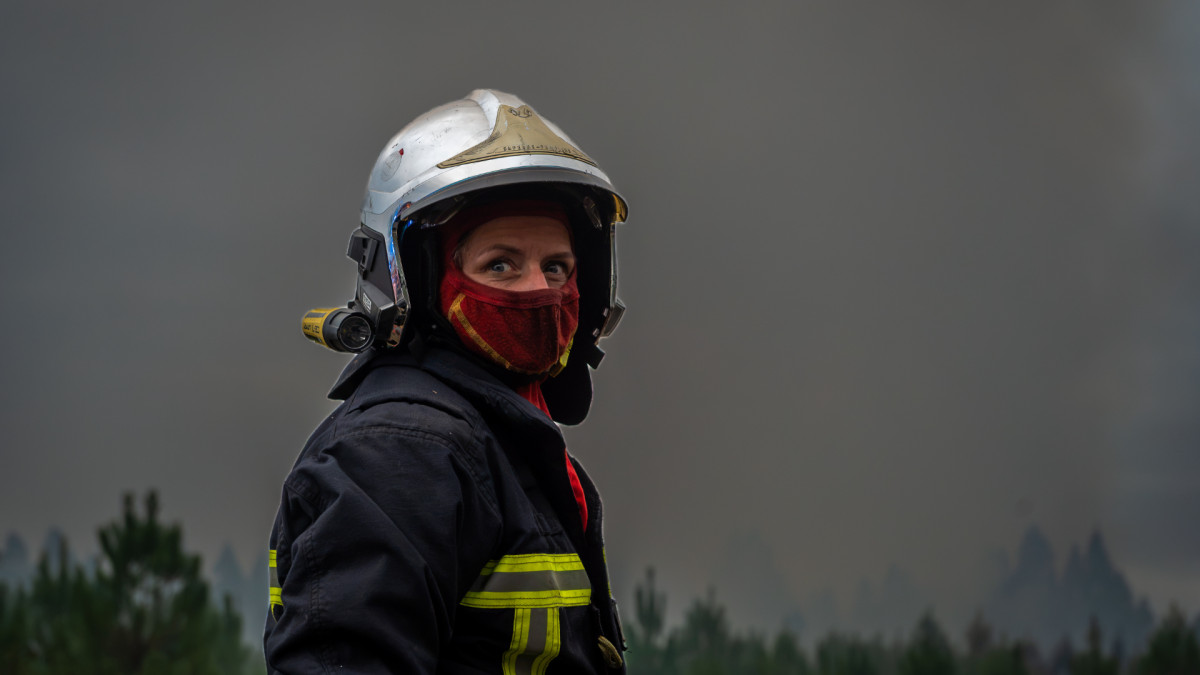
Between 2006 and 2025, the total area burned annually by wildfires in France averaged about 15,000 hectares, a size slightly smaller than Washington, D.C. By July 28, the blaze declared just six days earlier to the west of Bordeaux had burned nearly three times that area. In those same days, about 500 km further south, voracious fires were advancing alarmingly close to Madrid. More than 300,000 people have been evacuated.
Those fires could end up being the worst Europe has faced this summer. Yet this is not a foregone conclusion. A string of heat waves has left large swaths dry and highly flammable, and further heat events are still anticipated. Last year, more than a million hectares burned across the European Union; this year could surpass that record.
And it’s not just about this summer. Europe is warming faster than any other continent. In the face of decades of rising risks, preparation is essential.
The rest of the world is not far behind. Forest fires do not depend solely on climate, but the climate matters. The frequency and intensity of weather conditions favorable to wildfires have been increasing for forty years. Situations that, before climate change, were highly unlikely are now observed with greater and greater frequency. If one uses a definition of extreme fire that combines extent and intensity, the past decade has been particularly poor.
“The frequency and the intensity of weather conditions favorable to wildfires have been increasing for forty years. They are situations that before climate change were very unlikely”
In a world where temperatures sit about 0.5 °C above the average of the early decades of this century — and, therefore, around 1.5 °C above the 19th century level — the risk of fires is expected to rise in more than 88% of the planet’s fire-prone areas: virtually everywhere except deserts and ice sheets. The increase in risk when moving from 1.5 °C to 2 °C appears greater than the rise from 1 °C to 1.5 °C.
There will be more heroic acts, more policymakers anxiously listening to the explanations of soot-smudged firefighters, more lives upended, more destruction and more misery. There will also be a substantial uptick in risks stemming from a less visible but more damaging consequence of wildfires: their impact on the lungs of people who never come within 1,000 km of the flames.
Most deaths linked to wildfires are caused by inhaling smoke. The particles carried by the wind that in mid-July suffocated cities in both Canada and the United States have likely shortened hundreds or thousands of lives. Estimates say the smoke from Indonesia’s fires killed 100,000 people in 2015. It is highly probable that something similar will occur again this year. The demand for biofuels in a world with expensive oil fuels slash-and-burn agriculture, which lies at the heart of the problem. Moreover, an increasingly intense El Niño will, over the coming months, favor conditions conducive to fires across the region, just as its predecessor did in 2015.
“The deaths caused by wildfire smoke, estimated at 240,000 annually during the 2010s, will reach 1.4 million per year by the end of the century”
Projections based on a fairly moderate emissions scenario — taking into account the aging of the global population — suggest that deaths from wildfire smoke, estimated at 240,000 annually during the 2010s, will reach 1.4 million per year by the century’s end. A recent study calculated that by 2050, wildfire smoke could cause up to 30,000 additional deaths per year in the United States. That figure would eclipse all other direct effects of climate change.
The Smoke of War
Fighting fires resembles, to some extent, waging war: if the enemy attacks more frequently and with greater ferocity, you need more forces. Consequently, regions that have hitherto felt safe must bolster their response capabilities. They can also turn to new technologies. Satellites allow nearly real-time detection of fires from their onset, information that can prove decisive, provided there are systems able to act on it. Undoubtedly, drones will also play a role. Allies can provide assistance. Europe has pooled firefighting resources that are already being deployed in Spain and France; Mexico is helping Canada.
“The greatest advances will come from better prevention and learning to live with their effects”
However, improving the capacity to fight fires is not enough. The biggest gains will come from better prevention and from learning to live with their effects. The pressure of danger and urgency means that extinguishing fires tends to absorb resources that should be used to manage the land, teach people when to filter the air, or explain how to protect a home, among other measures. None of these measures seems as indispensable as an aircraft loaded with water over the blaze. But they remain essential nonetheless.
France and Spain’s wildfires are not, as some claim, the new normal. Fire is capricious. It does not repeat itself from one year to the next. Yet these fires are already very much within the new realm of what is possible, the extreme limits of which are still awaiting mapping.
