
The governance of migratory flows has consolidated itself as the most vulnerable vector to polarization and misinformation within the European Union’s political ecosystem. The latest and most troubling example of this drift has been the recent joint letter addressed to the European Commission and to the European Council by twenty-two heads of state or government, a bloc bound together under leaders such as Italian Prime Minister Giorgia Meloni and Danish Prime Minister Mette Frederiksen. In that document, Spain’s sovereignty over its legislation is directly questioned, attempting to causally link the security tensions at the autonomous Ceuta border with the historic approval of the Popular Legislative Initiative (ILP) for the extraordinary regularization of irregular foreign nationals.
As the general coordinator of this citizen initiative, I consider it a democratic, institutional, and intellectual duty to dismantle a narrative that not only suffers from a severe lack of technical, legal, and logical rigor, but also engages in an alarming short-sighted analytical approach. I have responded directly to these twenty-two regional leaders through an open letter. The diagnosis issued by the signatory chancelleries deliberately confuses causes with consequences. In doing so, it places the institutional architecture of the Union in an extremely weak strategic position against the true state and para-state actors who instrumentalize borders and human rights.
The democratic origin against the false narrative of the “pull factor”
The first major analytical error of the twenty-two leaders lies in a misunderstanding of Spain’s internal democratic levers and of the very legal nature of the regularization measure. They seek to project the image that this process responds to a discretionary, unilateral, and partisan agenda of the central executive. Yet the parliamentary chronology and the reality of the facts directly contradict this biased approach. As I reminded them in the letter: “This regularization was not driven by Pedro Sánchez or his Government. For five years they blocked it in Parliament until social pressure forced its approval.”
“The first major error in the twenty-two leaders’ analysis lies in their misunderstanding of Spain’s internal democratic levers and the very legal nature of the regularization measure.”
This law did not come from a ministerial office, but was articulated, sustained, and won thanks to the persistence of Spanish civil society. A mobilization that coordinated 17,000 volunteers over an entire year of signature collection on the streets and that gained the explicit backing of more than 1,000 civil society organizations from all political, confessional, and ideological sensibilities. This democratic push managed to gather more than 700,000 signatures, broke parliamentary inertia, and culminated in a historic vote in the General Courts: 310 votes in favor to only 33 against. We are therefore facing “a mandate of the Spanish people,” not a political strategy imposed from above.
Beyond its indisputable legitimacy of origin, the technical argument that this measure acts as a “pull factor” collapses under even the most basic comparative-law scrutiny. In this respect, the letter is explicit: “The extraordinary regularization approved in Spain is strictly retroactive. It applies exclusively to people who demonstrated that they already lived, worked, and were rooted in our society before the end of 2025.” The regulatory text cuts off any expectation of inflows, since “it grants absolutely no right to those who cross the border illegally today.” This exceptional mechanism, which freezes rights on a fixed past date, acts precisely as a tool of order and a disincentive to immediate irregular migration.
Ceuta and Morocco’s blackmail: an attack on sovereignty, not a migratory crisis
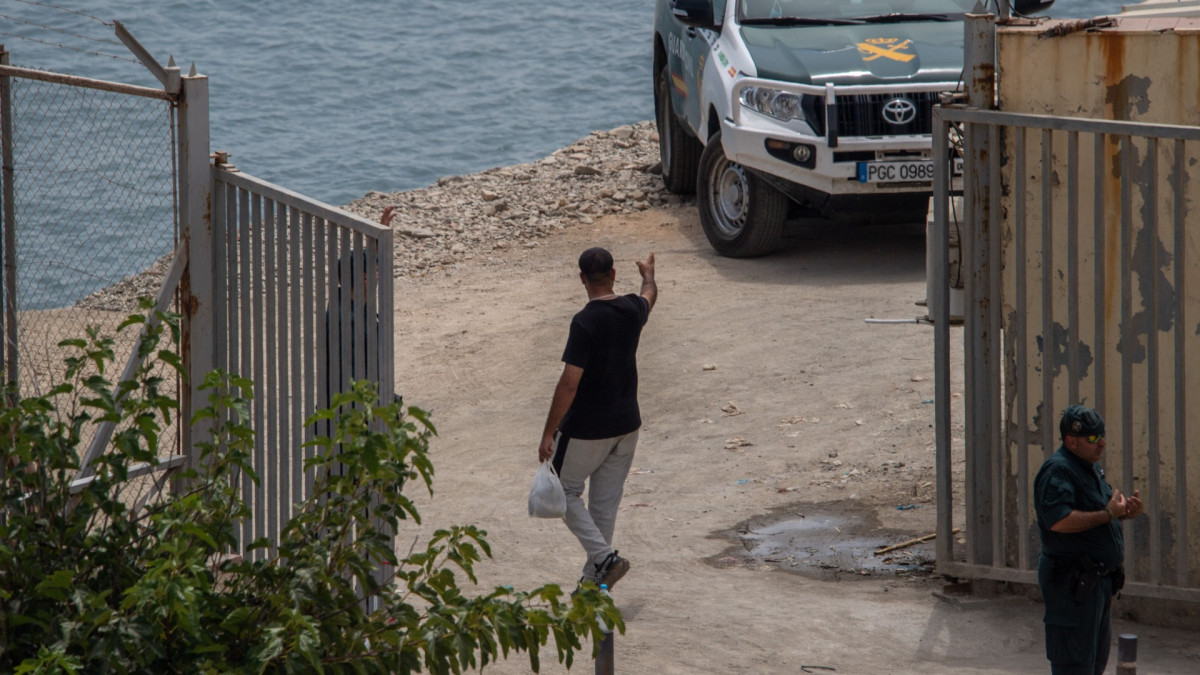
If the diagnosis about Spain’s internal laws is flawed, the geopolitical reading that the twenty-two leaders apply to the events on the Ceuta perimeter border is alarmingly blind. To pretend that tensions and breaches at the North African fence are the consequence of the regularization constitutes a troubling abdication of analytical responsibility that exempts the real cause of the crisis. I have conveyed to European leaders a crucial distinction for the Union’s defense: “Europe has not suffered a migratory crisis in Ceuta; Europe has suffered an attack on its territorial sovereignty.”
“Europe has not suffered a migratory crisis in Ceuta; Europe has suffered an attack on its territorial sovereignty.”
Empirical evidence shows that the observed phenomenon did not arise from spontaneous migratory dynamics originating in sub-Saharan Africa. On the contrary, Moroccan authorities deliberately opened the borders, filtering in their own citizens while blocking sub-Saharan migrants. It was a calculated political maneuver to send a message to Europe about its historical ambitions for this territory, which has been Spanish since 1580. A diplomatic surge that, tragically and condemnably, has claimed the lives of more than a hundred people.
This pattern of behavior by the Kingdom of Morocco is far from an anomaly or an isolated incident. The use of unregulated migratory pressure as a coercive instrument in its foreign policy dates back to the Green March to Western Sahara in 1975 and finds its exact echo in the May 2021 events, when about 20,000 people reached Ceuta due to calculated inaction at the Royal Police’s border fences.
The fluctuations of tension at the border align precisely with Spain’s Maghreb alliance agenda. The restoration of the Treaty of Friendship with Algeria on July 20 revived Rabat’s strategic alarms, fearing a Spanish shift in its stance on Western Sahara. The recent Spanish Supreme Court ruling, which prevents hot returns when entry has been achieved by swimming, was not the cause of the conflict but merely the pretext that the Moroccan government needed to repeat the 2021 action.
The transatlantic chessboard and communal disloyalty
The problem takes on even more systemic dimensions when evaluating extracommunity dynamics. On July 15, 2026, the United States Congress approved a budget package that included a report describing Ceuta and Melilla as “cities administered by Spain located on Moroccan territory.” Spain’s border vulnerability is also being leveraged across the Atlantic for domestic electoral aims, using images of this “invasion” to frighten American voters.
In this scenario, the response of the twenty-two EU signatories is incomprehensible. Instead of showing solidarity with a member state whose territorial limits represent the outer borders of the Union, the leaders hint at political threats and propose the fragmentation of the Schengen area with Spain.
This stance constitutes a double disloyalty to Spain and to Europe: they do not acknowledge an attack on Europe’s borders and abandon the fundamental values that founded our Union. By focusing their criticisms on Spain’s sociolabor framework, the leaders ignore the real aggressor. They blame the victim of a geopolitical blackmail and, by threatening to fracture the Schengen space, they are doing exactly what Europe’s enemies—those who do not want a united Europe—seek: to fracture our Union from within.
Pragmatism, dignity, and security: the ILP model
The challenge of European governance does not lie in choosing between border protection and the respect for human dignity; both concepts are interdependent in a constitutional state under the rule of law. “Europe must defend its external borders with resolve, while managing its internal reality with pragmatism and human dignity.”
“The dilemma of European governance does not reside in choosing between the protection of borders and respect for human dignity; both concepts are interdependent within a constitutional state under the rule of law.”
Maintaining hundreds of thousands of essential workers in a perpetual limbo of administrative irregularity does not stop the flows from their origins; it reduces their wages, precarizes their working conditions, and increases the margins of the underground economy. Those who are targeted by regularization in Spain are not a future hypothesis but a present economic asset. These people are already here. They grow our food, care for our elderly, and build our infrastructure. Removing them from the underground economy is a matter of justice, economic prudence, and security.
If the European Union truly desires to project an image of real strength before foreign powers that instrumentalize human suffering, the strategy cannot be a reclusive solidarity deficit or the assimilation of populist discourses.
Therefore, I conclude my appeal to European leaders with a proposal of affirmative action: “If you truly want to provide a firm and unified response to those who instrumentalize human beings against us, follow the example of Spanish society. Be brave. Regularize the situation of your undocumented workers, those who already form part of your societies and economies.” Only by proving that the Union’s internal stability rests firmly on human rights, integration, and the rule of law can we safeguard the European project against external meddling.
