
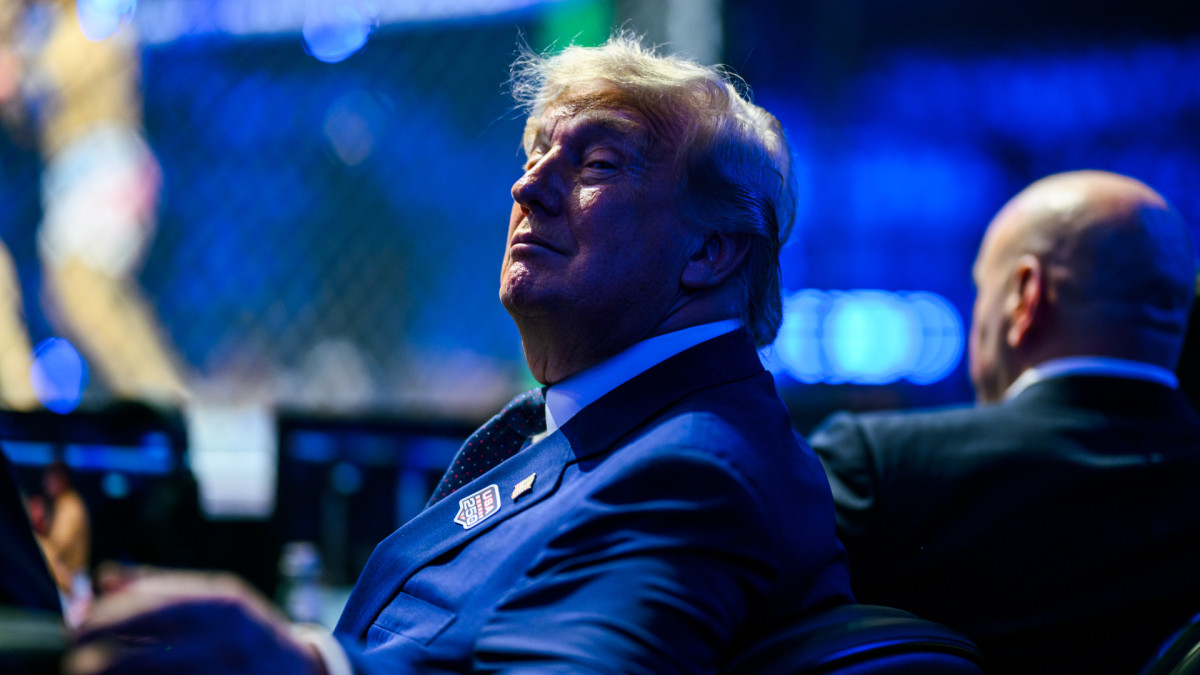
In negotiations between the United States and Iran, the devil is in the details. While the Qatari mediators were arriving in Tehran to push the final stretch of the accord, a portion of the Iranian team fixated on the idea that signing on Sunday would coincide with Donald Trump’s birthday. The newspaper Fars, close to the Revolutionary Guards, hinted that Iranian officials would hardly accept sealing an agreement on a date that would let the American president present the truce as a personal gift. As a result, the deal was moved to the following Friday in Switzerland.
The question is that, according to Vance, the agreement had already been digitally signed that same Sunday, even though the ceremony itself was shifted to Friday in Switzerland. If true, Tehran avoided the birthday photo, but not the gift altogether. Washington obtained the signature and Iran kept the staging. In a pact built on ambiguities, even the difference between signing and staging the signing became part of the negotiation.
The story is anecdotal, but it nicely illustrates negotiations. Between the United States and Iran, even the calendar can be a battleground. If Washington needed to present the deal as a display of power (Hormuz reopened, oil flowing, Iran contained), Tehran needed to show that it did not sign under pressure nor concede to Trump a packaged victory for domestic consumption. Diplomacy, when parties do not recognize each other’s legitimacy, turns into a dispute of choreographies. Every verb, every date, and every silence matters because each actor negotiates twice: once with the adversary and once with their own audience.
“In a pact built on ambiguities, even the difference between signing and staging the signing became part of the negotiation”
The draft text that is known fits better with the tradition of “memoranda of understanding” than with that of treaties. Pakistan announced an agreed final text, and Washington and Iran accepted the framework. In this sense, Islamabad retains the role of political custodian because it was the channel that circulated proposals, counterproposals and minimal guarantees when the UN and the European Union lacked, so to speak, real access to the room. This pathway allows Trump to avoid a negotiation encapsulated in the European JCPOA format, too closely associated with Obama and the diplomacy of procedures. Qatar (which financed part of the logistics and has a direct interest in the Gulf returning to energy normality) and Oman (which has managed the active corridor with Tehran since 2012) serve as regional hinges. Turkey and Saudi Arabia also participated in various phases.
The signed document has a rather non-specific skeleton, based on generalized points. Iran reopens the Strait of Hormuz to commercial ships and the United States lifts its naval blockade on Iranian ports within thirty days. Moreover, Washington commits not to impose new sanctions, grant oil exemptions, release $25 billion in frozen assets, and negotiate a reconstruction plan with regional allies. On the nuclear front, Tehran states it will neither produce nor acquire nuclear weapons, halts the new enrichment program, and agrees to discuss, within sixty days, the handling of its highly enriched uranium, including a possible dilution on Iranian soil. The cessation of military operations extends, in the Pakistani and Iranian formulations, to all fronts, including Lebanon, a clause Israel has never formally accepted.
“The memorandum buys commercial normalisation without fully resolving the dispute over the authority of the Strait of Hormuz”
Before the war, around 150 ships a day passed through Hormuz, representing 21% of global oil trade. During the conflict, that traffic collapsed to five ships a day (a 97% drop), Brent crude reached $126 per barrel, and Gulf war-risk premiums for insurance multiplied tenfold, according to the Lloyd’s Market Association. A shipowner does not risk a tanker simply because Trump writes “let the oil flow“. To do so, they need to know whether insurers will cut the war premium, whether P&I clubs will cover the transit, and whether Iran can clearly distinguish between freighters and vessels tied to hostile forces. In short, the memorandum buys commercial normalisation without fully resolving the dispute over the authority of the Strait. The Islamic Revolutionary Guard Corps (IRGC) posted on Telegram that its administration “will remain the exclusive domain of the Islamic Republic,” which indicates the Strait may still remain a powder keg.
The lifting of the blockade does not happen with the flip of a switch. It entails orders to the Pentagon, changes in rules of engagement, maritime corridors, the release of ships held, and messages to shipping lines and Asian buyers. On the other hand, the thirty-day window creates a possible verification timetable. Each tanker that crosses again will reduce tensions, but each incident with an Iranian patrol boat or an American escort will provide ammunition to the pact’s enemies.
The economics of the agreement have the same structure: it appears clear while hiding complexity. The $25 billion in assets is the most controversial clause. Iran wants fungible money and the United States wants traceable money. The probable solution involves restricted accounts, payments to suppliers, and monitored lines of credit: conditions sufficient to sustain the negotiation and enough pressure to close it if the nuclear phase stalls. Moreover, this architecture is augmented by a reconstruction fund of up to $300 billion, which Washington presents as Gulf financing rather than U.S. money. The idea is to reward de-escalation without it looking like rescuing the regime that was just bombed.
But there is a major obstacle: many of the harsher sanctions were codified into law by Congress, so they are not executive orders. Trump cannot lift them unilaterally, so he needs legislative backing to implement the economic part of the deal. And that internal negotiation has not yet begun. On June 4, the House of Representatives voted 215 to 208 to curb the president’s war powers on Iran, marking the first real fissure in the Republican bloc, with four lawmakers crossing the aisle. In the Senate, four other Republicans (Rand Paul, Collins, Murkowski and Cassidy) oppose continuing the conflict. It is worth recalling that 64% of Americans consider the war a wrong decision.
“Trump cannot lift the sanctions unilaterally, so he needs legislative support to implement the economic portion of the deal”
The nuclear issue is the one that most defines the agreement because it is the least resolved. Iran had 440.9 kilograms of uranium enriched to 60% before the bombings. The gap between 60% and the 90% needed for a weapon is smaller than the jump from 20% to 60%. Natanz was damaged by about 75%; Fordow, built under granite at 80 meters depth, remained virtually intact. The time for Iran to breakout was estimated at twelve days before the attacks; after them, it ranges from two to twelve weeks, a range that reflects what no one knows for sure. The IAEA (International Atomic Energy Agency) has been months without verifiable access to key facilities and without a clean image of the enriched material. A dilution without inspectors would be a scenario with insufficient evidence for Washington, but a total dismantling would be unacceptable for Tehran. Between those two positions live the sixty days of phase two: enough time to calm markets, enough for Iran not to experience it as a surrender.
The agreement also carries consequences that do not appear in the text, and Israel is the main loser. The war began as a campaign to degrade Iran’s nuclear and ballistic capabilities. The memorandum freezes the escalation and does not touch Tehran’s ballistic missile program or close Hizballah’s dossier. Netanyahu can stay quiet, demand guarantees about enriched material, and wait for phase two to fail. If he attacks, he will appear as the saboteur of a reopening celebrated by markets, Europeans, the Chinese, and Gulf countries. Even Trump has criticized Netanyahu for Israeli bombings on Beirut just as the deal was being closed.
The European Union observes all of this with the mix of interest and absence that characterizes it in the Middle East. It was the central actor of the JCPOA in 2015; however, this time it did not have a seat in the room. Its own sanctions regime (with three layers independent of the American one: nuclear, human rights, and the IRGC designated as a terrorist organization since 2022) means that the Iranian economy will not be fully normalized even if the nuclear issue is resolved. The EU can lift one layer without touching the others, a flexibility Brussels will use as leverage in phase two if it can manage to sit at the table.
“The European Union observes all of this with the mix of interest and absence that characterizes it in the Middle East”
Apart from what is signed in Switzerland, the world needs deeds. It needs ships crossing, banks processing, inspectors supervising, militias quiet, a contained Israel, an Iran earning without feeling domesticated, and a U.S. Congress that does not cut the legislative thread before the ink dries. There are many variables for a memorandum signed between enemies. It is also the only workable formula.
The birthday anecdote shows that, at bottom, this agreement is a pact between adversaries who have not resolved their differences, but who have decided that the cost of further escalation currently outweighs the cost of managing distrust. Obama said the text “is not a meaningful improvement over the JCPOA,” the very agreement Trump dismantled in 2018. Sometimes diplomacy does not pacify; it simply slows the rate of disaster. What comes next (sixty days for phase two, the uranium, the inspectors, the missiles and vectors that no one has mentioned) will say whether this agreement was the start of something or merely an oxygen balloon for Republicans in the midterm elections.
