
The reconfiguration of the United States Congress, something that for many observers signals the beginning of the end of the Trump era, already leaves a multitude of questions hanging in the air. Many of them are domestic in nature. But it also places them on the global stage, which has not been at all immune to the recent midterm elections in the United States. Why? Because, simply, the return of Trump to the White House has meant a before and after on the geopolitical map.
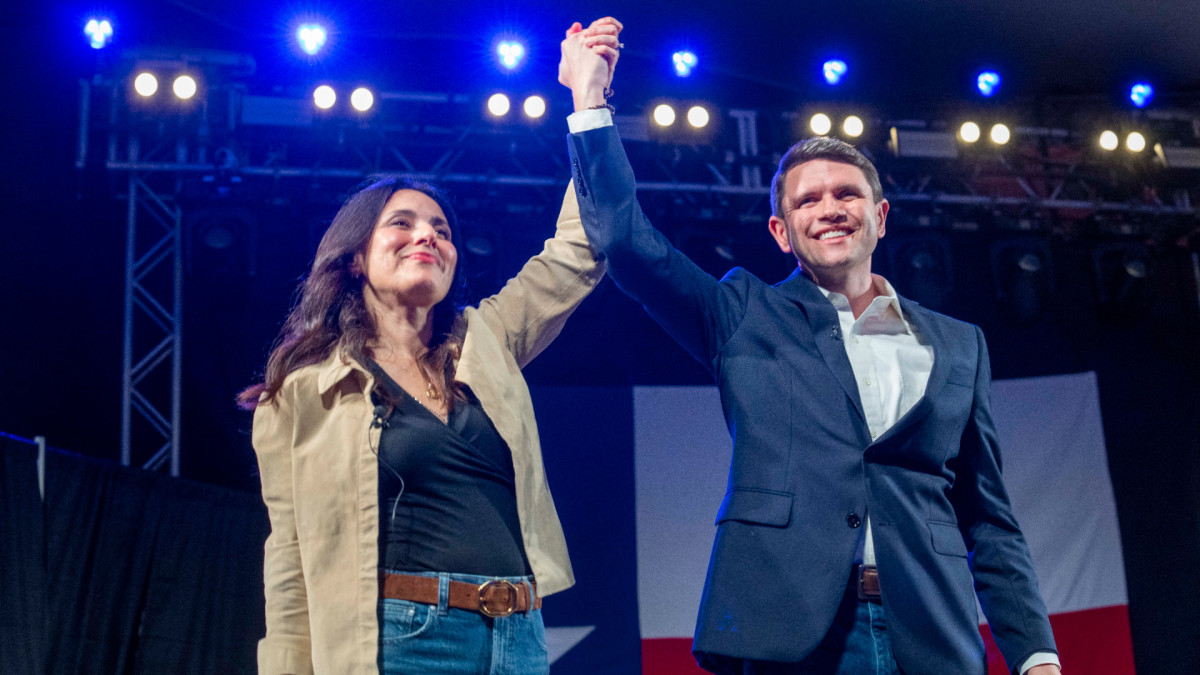
The night of November 3 did more than swap majorities in Washington: it produced a generational and political renewal within the Democratic Party. The victory of figures such as Abdul El-Sayed in Michigan, James Talarico in Texas, and Peggy Flanagan in Minnesota points to a new wave of leaders who seem more interested in rebuilding a country from fresh foundations than in restoring the liberal order of previous administrations.
As we already know, El-Sayed has become the first Muslim elected to the Senate, Flanagan the first Native American woman to reach the Senate, and Talarico the first Democrat to win a statewide Texas election since the nineties, to name just a few of the significant changes in Congress. That, undoubtedly, will have implications for United States foreign relations and for the ways in which it engages with other countries and regions on key items on the international agenda. And the first shift that has jumped out from the campaigns of the now victorious Democrats is that their country cannot continue relating to the rest of the world as if it were still the last decade of the previous century.
“A new wave of leaders appears who seem more interested in rebuilding a country on fresh foundations than in restoring the liberal order of previous governments”
In the face of unilateralism, transactional diplomacy, interventionism, and intrusive regional policies that characterized the Trump 2.0 era, these new leaders speak of alliances, multilateral institutions, and strategic cooperation. And that does not mean they are unwilling to consolidate the United States’ economic position, for example in relation to China. What they have understood, after two years of constant diplomatic missteps carried out by the MAGA leader, is that rivalries (or conflicting interests) can be managed in other ways. For them, Beijing is a technological, industrial, and, of course, geopolitical competitor, but not necessarily an existential enemy to be threatened with tariffs without criteria, protocol, or consideration of the global impact such actions entail. In short, and in general terms, the new Democrats have understood that competition must be sustained through public investment, technological and industrial innovation, and a new energy-transition model (one of the most controversial points of Trumpist policies, which have worn down energy investments worldwide), rather than provocative tariff impositions or confrontational rhetoric.
Furthermore, this young generation of American politicians views Europe from a radically different vantage point. While Trump turned the European Union into a suspect partner, accused (without solid argument) of taking advantage of the United States in trade and defense, many of these Democratic leaders see Brussels as an indispensable ally, first, to redraw the geopolitical map. Then, the region of the twenty-seven is regarded as strategic for managing urgent global challenges: from AI regulation to the climate transition, including checks on trade against Chinese growth, as well as international financial stability. A clear example of this is Xavier Becerra, elected governor of California, who represents the strengthening of a transatlantic vision. This is absolutely contrary to what Trump has done over the past two years.
“A large part of these Democratic leaders regards Brussels as an indispensable ally, first, to redraw the geopolitical map”
Another key point of the new multilateral project and the international relations framework suggested by the newly victorious Democrats is the relationship with Mexico and Latin America. Here, figures such as James Talarico, Gina Hinojosa, the same Becerra, among others, play a fundamental role. Their political trajectory has been deeply linked to Latino-origin communities, many of which culturally identify as cross-border. That compels the United States to reconfigure itself from a more complex perspective, from which those who were once considered minorities now demand recognition as a multicultural majority. We reiterate that this is not an easy issue to tackle, as it carries with it thorny subtopics such as migration, public health, and the new welfare-state project (something utterly innovative and disruptive in the United States). The arrival of new faces and new discourses invites reflection on how the country’s traditional values will begin to coexist with new forms of relation and new cultural recognitions. One of the big electoral surprises of November 3 was that in many Texan towns bordering northern Mexico, which traditionally gave their vote to the Republican Party, they are now turning blue.
The map of this election ultimately suggests that the Democratic Party is beginning to craft a new international narrative. One that is represented by names who, until recently, appeared on the list of people uncomfortable with Trumpism. Some rose to power by making history for identity-based reasons; others by conquering territories once deemed off-limits for Democrats. But they all share a similar diagnosis: the United States remains a global power, but it cannot anymore afford to act as if it were the only one. Finally, one of the major changes implied by the arrival of these new names is the possibility of building a third way in a country that has spent two years exhausted by a model that no longer has a future in the third decade of the 21st century. Put differently, for them, Washington’s new stance cannot simply be one of dictating the rules from the top.
The Middle East, Venezuela, Russia, and the new geopolitical map
If there are two politicians whose popularity plummeted to the abyss in record time, not only locally but in the eyes of the world, they have been Donald Trump and Benjamin Netanyahu. The latter, despite what he may have believed, turned his country into the most rejected and condemned by the international community in just two years; ironically, the same years that Trump has spent at the helm of the United States. A duo so explosive that it ended up detonating in the hands of those who gave them life.
“The United States remains a global power, but one that can no longer afford to act as if it were the only one”
Therefore, if there is an issue that marks a dividing line between the new generation of Democrats and the old moderates, it is precisely Israel. A case that gained notable relevance during the midterm electoral campaign was Abdul El-Sayed’s. His stance was shaped by the debate over the Gaza invasion in relation to the military aid the United States provided to Netanyahu. The Michigan senator-elect has publicly argued for ending U.S. military assistance to the Israeli government and has denounced that public resources have been allocated to sustain a war that has violated all possible human rights. What is his proposal then? After his victory, he has insisted that Americans’ taxes should be used to build schools, for universal public health care (remember that he is a renowned physician and that this has been his campaign banner and main pledge of change) and for the infrastructure that supports it, and not to finance an apartheid or a genocide.
However, despite the good intentions and the international public opinion anchored in a sense of urgent end to the Gaza massacre (which Spain has been decisively clear about from the outset), the issue of Israel remains fraught with difficulty. In this new cohort of Democrats, Minnesota’s elected senator Peggy Flanagan has stood out, sharing many of the criticisms of Netanyahu’s war management, but from a stance more moderate than El-Sayed’s. She, although she has supported a ceasefire and a two-state solution, as well as restricting the sale of offensive weapons to Israel, has maintained support for defensive systems such as Iron Dome (an air defense system created by Israel to intercept missiles). She has also explicitly condemned Hamas’ attacks and anti-Semitic acts against the United States. In cases like these, moderation, or consideration of “both sides of the conflict,” could distance her from the more radical wings of the Democratic Party that are, indeed, positioning themselves in U.S. policy.
On the other hand, Ilhan Omar’s landslide reelection (with more than 75% of the vote in Minnesota’s 5th District), one of the most attacked and uncomfortable figures for Trump, confirms that the progressive current in the United States is in an expansion wave. From Congress, Omar has defended diplomacy centered on human rights, questioned the indiscriminate use of U.S. military aid toward Israel (to sustain the ongoing wars in the Middle East), and has been one of the loudest voices stating that Netanyahu’s government has violated international law. Her positions, which just a couple of years ago were considered marginal within the Democratic establishment, have today found national resonance. Omar’s significance lies not only in her proposals on Gaza or the West Bank, but in having contributed to a debate that was already urgent: not whether Washington should automatically back Israel, but under what conditions it does so, with what limits it should do so, and what political and moral costs for the United States those choices entail. Elevating these reflections to the agenda and into public debate is one of the most meaningful novelties of the Democratic foreign policy that emerged in this new progressive wave confirmed by the ballot on November 3.
“Their positions, which just a couple of years ago were considered marginal within the ‘establishment’ of the Democratic Party, have today found resonance nationwide”
And regarding Venezuela? The same Omar has also spoken forcefully about everything Trump has done (and said) about that South American nation. She is part of the dominant trend among Democrats (the new and the moderates), which is to move away from any temptation of interventionism. She has questioned military intervention and argued that any use of force requires explicit Congressional authorization. She has also warned that regime-change policies, as well as top leadership strategies, can (depending on how they occur) generate more political and economic instability, more forced migrations, and a deterioration of hemispheric relations.
Now, without a doubt, another fundamental issue is Russia. A clear representative of the prevailing stance of this generation of Democrats is James Talarico. The Texas senator-elect has shown firm support for Ukraine, rejected Russian aggression, and endorsed cooperation with European allies. He has argued that the United States must help Ukraine negotiate from a position of strength and guarantee European security, while also avoiding repeating mistakes like Iraq and other endless conflicts of the last decades (as would be the case with a possible war with Iran, which from its inception has run up multimillion-dollar figures that have imbalance the U.S. coffers).
In short, it is still early to make further forecasts. These new faces will have to take office and contend with a president whose geopolitical outlook is unlikely to change easily. In a few words, they will have to work on the fly and rely on the law to create a new system of international cooperation, knowing that they will face (for two years) a presidential power that relies more on secret pacts, hidden interests, and belligerent-economic whims. Time is short, and, as stated, the results will unfold on the fly. The only certainty is that every move they make will carry an intention: the 2028 presidential elections.
