
It’s time to question our assumptions about prisons and punishment.
Sign up for Reason Plus to gain early access to the October 2026 issue.
Among the more peculiar works in the English language is Samuel Butler’s Erewhon. Not Erewhon the boutique grocery chain popular in SoCal, whose devotees spend the equivalent of a small nation’s GDP on a smoothie, but Erewhon, the 1872 satirical novel whose title is almost the word “nowhere” spelled backward.
The book is currently famed for inspiring Frank Herbert to borrow Butler’s name for the anti-machine Butlerian Jihad in the Dune universe. Yet Butler’s original target wasn’t artificial intelligence. It was the flaws of human beings themselves.
In Butler’s imagined land, illness is treated as a crime while crime is treated as a sickness. A man who contracts tuberculosis is prosecuted for a supposed moral failing. An embezzler or a person seen as suffering from a “severe fit of immorality,” on the other hand, receives sympathy and medical care for what is perceived as a misfortune of condition. Butler’s point wasn’t that our society’s categories are inverted so starkly as to be wrong; it was asking why we were so confident that we had them right. Erewhon invites readers to contemplate how every civilization constructs elaborate moral and legal systems that feel utterly obvious to those within them and wonderfully odd to outsiders.
That insight is the lens through which C.J. Ciaramella’s remarkable 14,000‑word history of American prisons is best read, the centerpiece of this special issue of Reason.

Today’s prison system in the United States owes much to Enlightenment optimism, to Protestant moralism, and to a republican belief that thoughtfully crafted institutions could shape citizens into better versions of themselves. As Ciaramella notes, the founders of the penitentiary hoped to employ “architecture and discipline to mold convicts into productive citizens while avoiding the sadism and spectacle that characterized European criminal justice.” Yet one of the country’s most aspirational institutions has evolved into one of its most punitive and callous.
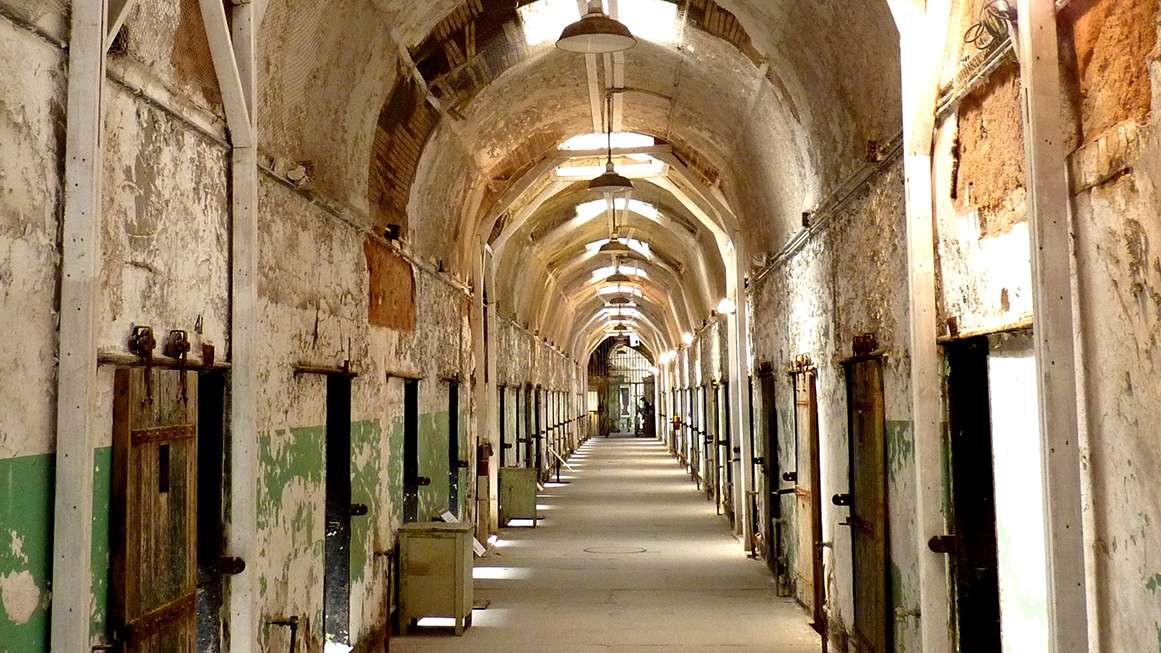
Ciaramella—who has spent more than a decade reporting on criminal justice—begins his survey at Philadelphia’s Eastern State Penitentiary. Its stark stone walls unsettled Marquis de Lafayette when he visited two centuries ago, prompting a famous exclamation about whether the country possessed Bastilles. Yet reformers of the era believed they were toiling on behalf of humanity. As historian Ashley Rubin explains to Ciaramella, prisons were designed to be “republican machines.” The aim was to curb crime while cultivating virtuous citizens, not to indulge in cruelty for its own sake.
Each generation claims to have finally unlocked the right philosophy of punishment. And each generation creates institutions that, with alarming speed, veer toward brutality, neglect, or outright cruelty. Even Butler’s Erewhon envisions a reform movement within its own pages. “Not long before my arrival in the country, the treatment of all convicted invalids had been much harsher than it is now,” the narrator notes, “and the sick were sent to work camps to die without care.” A newer, supposedly more sensitive era, he suggests, may be dawning—but the change remains contested.
***
“The American Prison Experiment” is, in its own way, an experiment for Reason. It is the magazine’s longest feature in three decades or more, almost a book in length. The most egregious injustices tend to hide in plain sight—forms of slavery, discrimination, the legal doctrine of coverture, conscription—and are often treated as unchangeable pillars of society. Ciaramella’s essay works to render both prisons and their inmates visible, while also attempting to understand and articulate the motives of those who designed and maintain the system.
Visitors Alexis de Tocqueville and Gustave de Beaumont reported in 1831 that New York’s Auburn prison, from which “so happy a result had been anticipated,” proved deleterious for most inmates. The theory held that solitary, silent confinement would be best for all; in practice, such absolute isolation, unless interrupted, is more than a person can bear.
Ciaramella traces the shift from visible cruelty to hidden cruelty, and from overt physical abuse to a pervasive neglect that would, as one federal judge reviewing Arizona’s prisons in 2022 put it, make a humane system untenable in truth: “No legitimate humane system would operate in this manner.”
Erewhon invites readers to imagine a society with beliefs so alien that they appear absurd. Ciaramella’s history performs a parallel service, reminding us that America’s prison regime is not a natural landscape but a set of deliberate choices about punishment, dignity, and what people can become.
The American prison has undergone repeated reinventions, sometimes for the worse, occasionally for the better, and almost always with more confidence than wisdom. Butler observed that “happily, common sense, though she is by nature the gentlest creature living, when she feels the knife at her throat, is apt to develop unexpected powers of resistance, and to send doctrinaires flying.”
Ciaramella’s extraordinary essay implies that two and a half centuries of disappointment may have finally taught us enough to pose tougher questions—not because history is fated to progress, but because experience, if we are willing to learn from it, still has something to teach us.
