
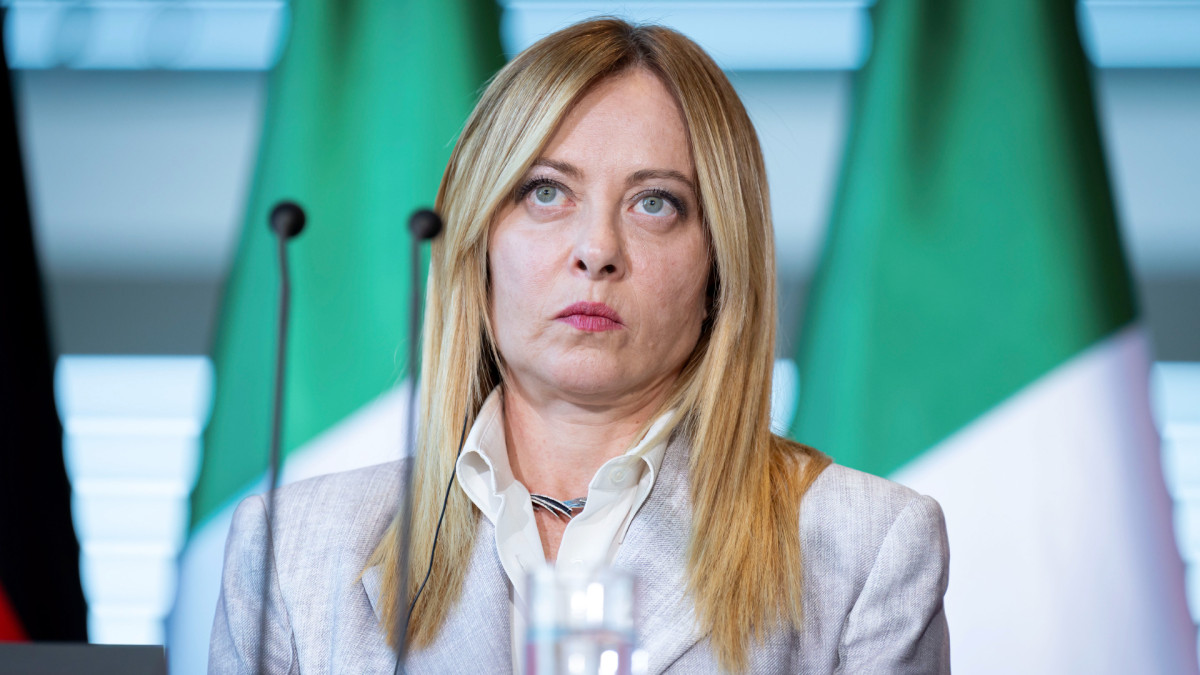
The historic electoral triumph of Fratelli d’Italia (FdI) in 2022 concealed a deeper project to thoroughly reassess the Italian political system with the explicit aim of strengthening the government’s executive powers. From the outset, Giorgia Meloni adopted some rights-restricting measures, announced an ambitious plan for premiership, pushed a controversial judicial reform — thwarted by its failure in the constitutional referendum —, appeared to accept the Lega’s thesis of differentiated regionalism, and has now again focused on the nth electoral-norm change. All of this is part of her preference for another model of the representative state, and the question that arises is whether Meloni ultimately pursues an illiberal outcome.
To understand the background and scope of this design — more open and undefined than it may initially seem, yet with the clear objective of reinforcing the executive in any case — it is of interest to consider the academic conceptualization of FdI’s character: is it a conservative right-wing party or a radical right-wing party? On the former, for example, Salvatore Vassallo and Rinaldo Vignati argue in Fratelli di Giorgia, and on the latter, Davide Vampa in Brothers of Italy. The truth is that this party exhibits elements of both characterizations: because of its “pragmatism,” FdI would seem to fit better with the first typology, but because of its ideologically tendentially authoritarian line — despite its full acceptance of procedural democracy —, its caudillista and pyramidal organization, and its fairly radical activist bases, it sits in the second. The fact is that Meloni has not advanced toward an illiberal regime in Italy, not only because she cannot (not all of her coalition would support such an outcome, the opposition is quite solid and some institutional balancing mechanisms work), but because she does not seem to want it either. Indeed, Meloni has understood the crucial result of the elections in Hungary, which toppled Viktor Orbán, who seemed unbeatable. Therefore, it seems clear that Meloni is betting not so much on “denaturalizing” liberal democracy as on strengthening as much as possible within it the power of the Executive.
Meloni bets not so much on «denaturalizing» liberal democracy as on reinforcing within it all that can bolster the power of the Executive
Her pragmatism is evident both in her embrace of instrumental Europeanism and in her rapprochement with the European People’s Party and in her Atlanticism. In this regard, the distancing she has had to adopt now from Donald Trump is particularly noteworthy: despite Meloni’s attempts to be his privileged interlocutor in Europe, the criticisms and denigrations from the U.S. president have shown that in Europe being his unconditional ally is toxic. However, the supposed moderateness of Meloni does not hide some authoritarian impulses nor her project of a “new” Republic for Italy. First, it should be noted that the seventh annual report on the state of democracy in Europe by the Civil Liberties Union for Europe network places Italy among the countries that have degraded their democratic quality due to certain restrictive measures. The 2025 Security Decree has broadened the possibilities of spying on activists and journalists; the Penitentiary Decree has worsened the conditions of prisoners, which were already poor; and the Caivano Decree has tightened penalties in juvenile detention centers. Moreover, the Meloni government has extended greater control over RAI and continues to press hard on critical media, all this not to mention her reactionary policy of outsourcing irregular migrants (the Albania operation, hindered by Italian judges, or deportations to countries that are not very safe like Libya and Tunisia). In this regard, it remains a serious regression the recent triumph in the European Parliament of these theses with the approval of the Returns Regulation, in total alignment with the very theses of Meloni’s government.
From an institutional standpoint, Meloni’s main objective is to move toward a premierate system following the failed semi-parliamentary model tested by Israel between 1996 and 2001. The proposal for direct election of the premier is argued on the grounds that it should always reflect the voters’ wishes and not be the result of opaque maneuvers by party elites, but, regardless of how dysfunctional that experience was, the aim is to reduce the Presidency of the Republic to an almost purely ceremonial office. A change of this magnitude would almost certainly require a referendum (only avoidable, under Article 138 of the Constitution, if two-thirds of the parliamentarians approve the reform) and it is clear that such a referendum is highly risky. Indeed, Meloni’s defeat in the March 22–23 referendum on justice to separate judicial and prosecutorial careers, and especially to bring the CSM—now out of step with the Government—under control, acts as a deterrent to attempting to repeat this route.
The differentiated regionalism is, at first glance, the most striking element of Meloni’s project because it seems to contradict her Italian nationalist discourse. In reality, it was a retorically concessions from her to Matteo Salvini so that he would join her premierato proposal. The formula would allow the fifteen ordinary regions not only to assume more exclusive competencies and be nearly on par with the five special regions, but also to differentiate themselves in terms of financing, since the “virtuous” regions that saved money would be fiscally rewarded. Obviously, this is not a technical issue, but a deeply political one that could exacerbate the north–south divide. Nevertheless, Meloni has no real intention of implementing this change, especially since Roberto Vannacci could surpass the Lega.
“The project goes in the direction of sacrificing representativeness and reducing proportionality in the name of governmental efficiency”
Consequently, the immediate battle will be over electoral reform: the Stabilicum proposal (February 2026), with the fragile argument of ensuring the stability of a coalition that has set longevity records. The project goes in the direction of sacrificing representativeness and reducing proportionality in the name of governmental efficiency. Meloni’s proposal grants an outsized prize to the winning coalition: 70 deputies and 35 senators more for the coalition that reaches 40%, thereby giving it 55% of the seats; it eliminates the current Rosatellum’s single-member quota and establishes closed and blocked lists, reinforcing the party apparatuses.
In conclusion, the entire project of moving toward a potential Third Republic has been set back by the failure of the first major objective, judicial reform. Hence, Meloni has little choice but to modulate it. In other words, the question of differentiated regionalism is irrelevant due to the Lega’s crisis and will not be revived, and consequently Meloni will focus all her efforts on pushing the premiership —despite the referendum complication— and on electoral reform, which at present is the key to Italy’s near political future, and that is where the immediate partisan debate will center.
