
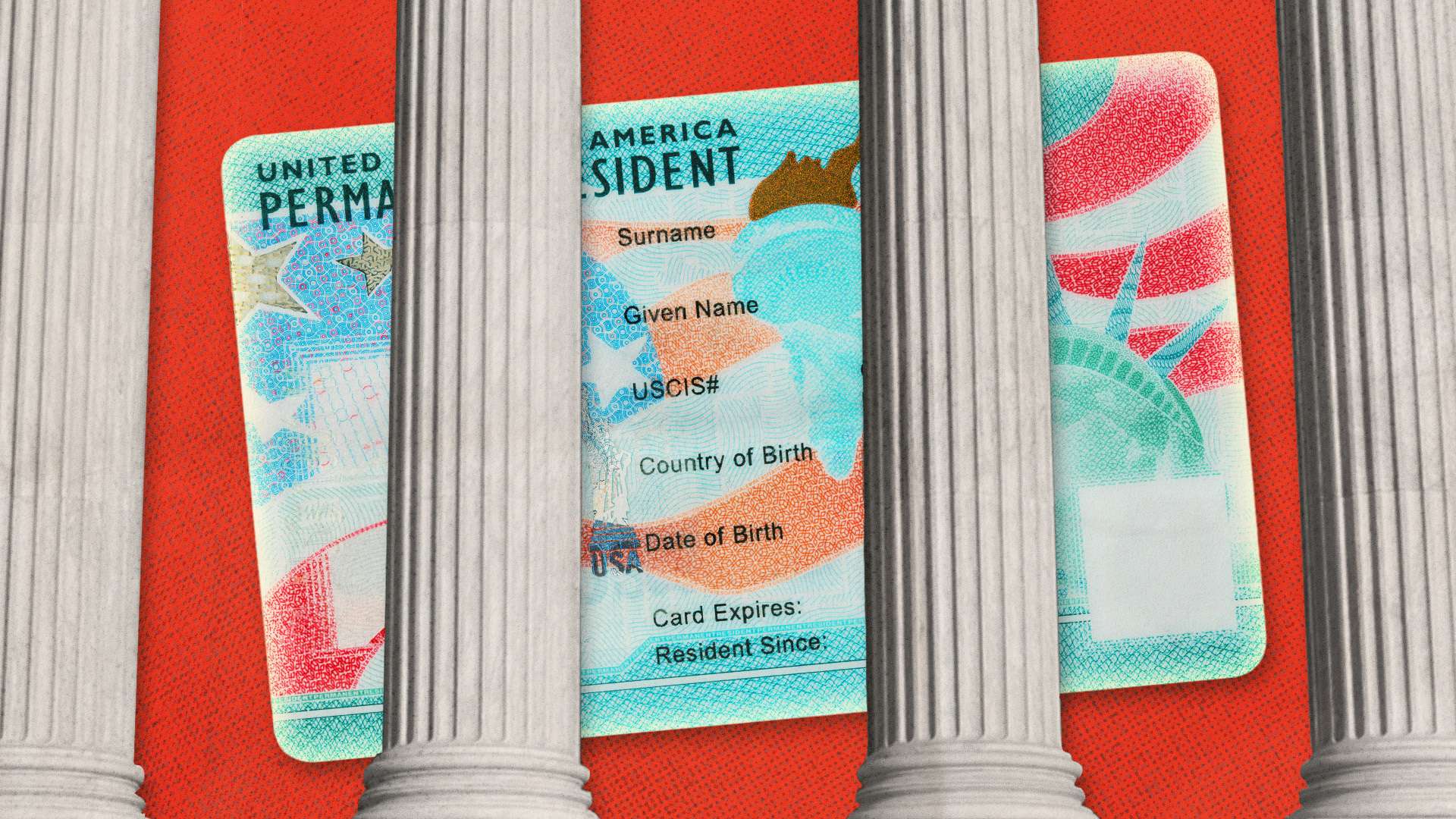
Understanding what’s at stake in this month’s arguments in
Wassily v. Blanche
.
U.S. immigration law provides that a person who has been “granted asylum” and meets certain other criteria, including having been “physically present in the United States for at least one year after being granted asylum,” may petition to adjust their status to that of “an alien lawfully admitted for permanent residence.” In other words, they may seek to obtain a green card.
But what about people whose asylum status was later terminated? Are they now categorically barred from trying to obtain a green card, even though they were technically “granted asylum” at one point, which is what the law seemingly requires? Should the fact that the law is unclear about whether the termination of asylum also effectively erases the prior granting of asylum now tilt the decision in favor of the individual or of the executive branch that seeks to categorically prohibit all such people from getting green cards?
The Supreme Court will tackle these weighty matters of statutory interpretation later this month when it hears oral arguments in the case of Wassily v. Blanche. In other words, fresh off of their Thanksgiving break, the justices will weigh an immigration-related dispute that could impact the lives of many people now peacefully living in the U.S. who lost their asylum status through no fault of their own.
You’re reading Injustice System from Damon Root and Reason. Get more of Damon’s commentary on constitutional law and American history.
This case well illustrates how seemingly dry and technical debates over statutory interpretation can have profound real-world consequences. As the National Immigrant Justice Center points out in the amicus brief it filed in the case, when an immigrant receives asylum in the U.S., his or her spouse and/or minor children may also receive what’s called “derivative” asylum. But “when a principal’s asylum is terminated,” the brief points out, “a federal regulation automatically terminates the status of any spouse or child who holds asylum status derivatively.”
The principal may have lost asylum status for valid reasons while the spouse or children may not have done anything wrong and would still have an otherwise valid case to make when seeking a green card. Yet as the National Immigrant Justice Center explains, those family members will now face the same categorical ban on seeking a green card if the government wins:
Under the government’s reading [of federal immigration law], these family members are barred from even applying for adjustment to [lawful permanent resident] status, no matter the merits of their individual cases. Indeed, under the government’s theory, an asylee spouse or child who becomes the victim of domestic violence or abuse risks the automatic loss of her status and mandatory removal proceedings if she reaches out to the police for protection.
A divided three-judge panel of the U.S. Court of Appeals for the 2nd Circuit sided with the Trump administration when it decided this case last year, holding that “the plain text of 8 U.S.C. § 1159(b) allows only noncitizens with current asylum status to adjust to lawful permanent resident status.”
Writing in dissent, 2nd Circuit Judge Beth Robinson rejected the majority’s confident claim, countering that “the best understanding” of the statute at issue “is that it encompasses ‘any’ noncitizen ‘granted asylum,’ regardless of whether the asylum was subsequently terminated.”
The 2nd Circuit’s ruling is now up for review by the Supreme Court. We’ll get our first indications of what the justices are thinking when they hear oral arguments on November 30.
