
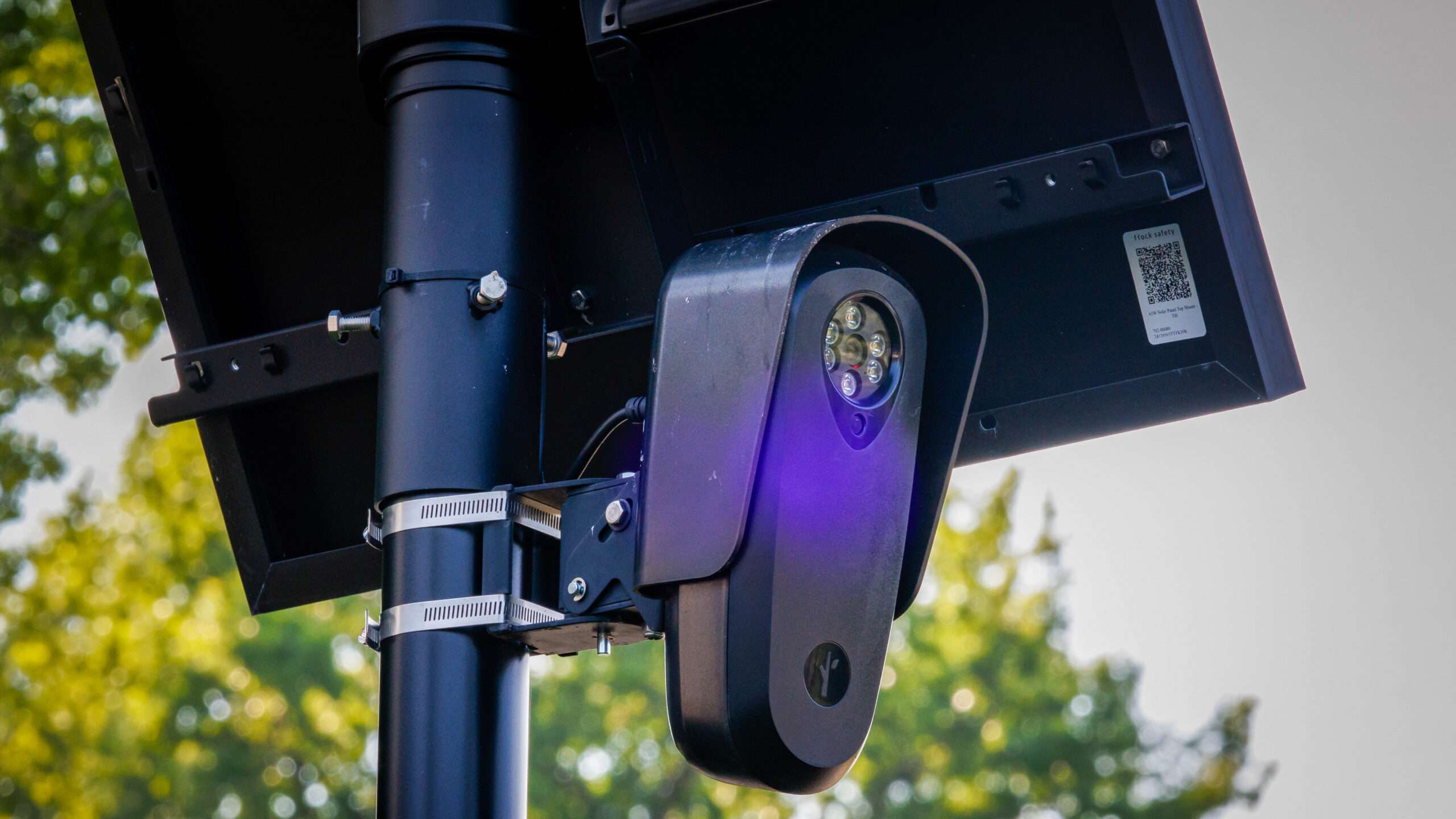
In cities where Flock security cameras are present, your movements may be tracked, logged and shared without any warrant, the ACLU cautions.
One of the most enduring lines from George Orwell’s 1984, the dystopian tale about a society under constant watch, remains strikingly relevant: people must live under the assumption that nearly every utterance is overheard and that almost every action is examined, except in the darkest hours. Today’s Americans often broadcast their thoughts and photos on social networks, yet we should still be vigilant about how cutting‑edge technologies surveil us from dawn to dusk.
Not all of this technocratic panorama is completely avoidable or harmful; some aspects are largely routine. Cookies that require us to consent through pop‑ups are designed to map our shopping habits so private companies can target us with products. It’s irritating, but do I really mind a few ads for auto parts after I looked up a trailer hitch? And a portion of monitoring is self‑imposed. My spouse jokes about how quickly I ride my motorcycle and the towns I visit after my latest ride, thanks to a tracking app that reassures her I’m not lying dead somewhere along the road.
However, the fundamental problem lies with government power. It’s one thing when a spouse keeps tabs on you; it’s another when police and tax authorities collect data about your whereabouts at random, without court supervision. The Fourth Amendment is meant to protect people’s security against unreasonable searches and seizures and requires warrants based on probable cause. Yet many law‑enforcement bodies employ the latest tools to bypass the warrant procedure, citing “public safety” as the justification.
The current dispute centers on Flock Safety cameras. These devices rely on Advanced License Plate Reader technology, and the American Civil Liberties Union warns that governments are quietly assembling a nationwide mass‑surveillance framework. In cities where Flock systems exist, your movements may be tracked, recorded and shared without a warrant. There are more than 120,000 such devices operating in the United States today, and the number is expanding rapidly.
In China’s expansive surveillance regime, authorities employ facial recognition software, tracking networks and biometric databases to create highly detailed profiles of individuals. Termed “Bright Eyes,” this setup reads like science fiction and epitomizes a police‑state model designed to maintain control by making free action and speech risky when authorities can imprison people at will. The United States isn’t there yet, but ALPR technology is pushing the country toward that dystopian path.
A segment of Americans is pushing back. The Los Angeles Police Department has halted its agreement with the vendor, stating that the pause was intended to address civil liberties and rights concerns and to clarify privacy, data ownership and security terms. The department’s primary worry concerns sharing information with federal agencies. In response to pushback—including activists who conceal or disable cameras—Flock maintains that its products should be used only with strict privacy protections and accountability mechanisms.
But even with good intentions, intrusive tools can be misused by some officers. This is a pattern seen across the country. The Washington Post documented at least 62 cases in which officers were accused, charged with, or convicted of abusing Flock’s system and other license‑plate readers to spy on people’s locations, including stalking ex‑girlfriends and ex‑wives. A particularly troubling episode occurred in Orange County, where a former deputy received what appeared to be a lenient sanction—participating in a domestic‑violence program and informal probation. Agencies that embrace these systems to ease their workloads cannot be trusted to police themselves adequately. The prevailing mindset seems to be: if you’ve done nothing wrong, you have nothing to fear.
Apart from individual abuses, the camera issue hits deeper constitutional nerves: it appears to track our movements in a way that limits our freedoms, even though there isn’t a definitive Supreme Court ruling on the matter. If the government can deploy artificial intelligence to casually review where we go, whom we see, and which neighborhoods we frequent, it can assemble a detailed profile. Much like the premise of Minority Report, such data could be used to forecast whether our behavior might be illegal or troublesome to those in power.
The Trump administration openly stretched and occasionally violated privacy norms—ICE agents have stepped onto private property and detained citizens without warrants. Anticipate that subsequent administrations might chart a similar course, leaving the nation in a state of uncertainty about its future direction.
Rapid, ever‑advancing technologies are laying the groundwork for a potential police state, advancing at breakneck speed. And as Orwell warned in 1984, the only way to keep a secret could be to hide it from oneself.
This column was first published in The Orange County Register.
