
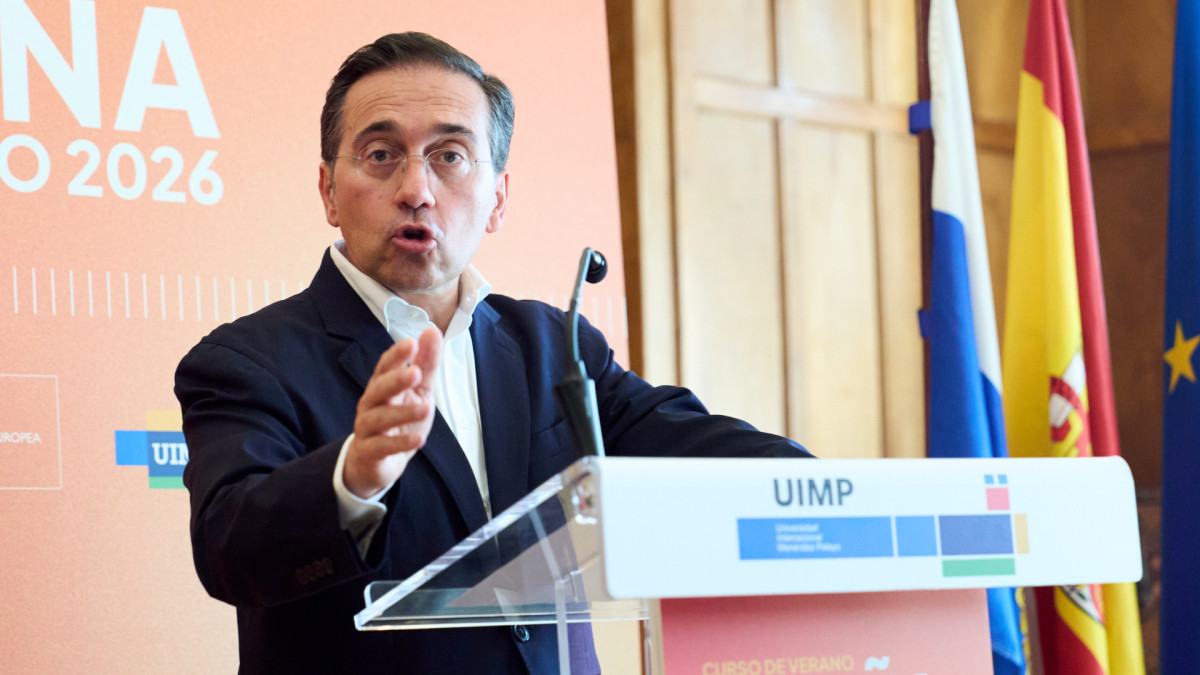
Some of the world’s leading national and international experts have spent this week trying to understand where the world is, where it is headed, and what Spain can do to steer it in the best possible direction. For five days, more than forty analysts have passed through the Palacio de la Magdalena, in Santander, to share their knowledge from fields as diverse as geoeconomics, international cooperation, diplomacy, research, foresight, history, geopolitics, and a long etcetera. This has been the fourth edition of the Spain in the World course, organized by the Ministry of Foreign Affairs, European Union and Cooperation together with the Menéndez Pelayo International University.
If what was discussed there were turned into a book, even just with the transcripts, it would exceed two hundred pages. Its index, however, could be distilled to three words. “Europe” — including its variants in both Spanish and English — was mentioned more than five hundred times. “Country” and país appeared more than three hundred times. “World,” “planet” and related terms rose above two hundred.
Europe was during the course a subject, a problem and a possible answer for Spain. Likewise, states regained the prominence that globalization seemed to have taken away from them, and, ultimately, “the world” began to be seen as a space of concrete competition.
As it is time to face it: Europe is no longer in a comfortable position
The post‑Cold War order has definitively come to an end. That Europe, which built its prosperity on a rare blend of American security, cheap Russian energy and expanding Chinese markets, cannot go back. The reason? None of those conditions are on the table anymore and they may never return (certainly not in the same form).
But that does not mean everything is negative. The continent still preserves one of the largest markets on the planet, solid institutions, regulatory capacity, wealth and a network of alliances hard to match. Although it possesses these and other powerful resources, it does not seem these are translating into a greater capacity for European action.
The European Union can regulate digital technologies, but a large part of its infrastructures is today concentrated outside its borders. It also aspires to a common defense while the member states continue to procure armaments in a fragmented manner. Another example: its autonomy still depends on foreign suppliers in areas such as the cloud, semiconductors, critical minerals or artificial intelligence.
“Europe could have around five years to prevent some of its dependencies from becoming permanent losses of capacity”
Fabian Zuleeg, executive director of the European Policy Centre (EPC), called that lag an “illusion of progress”: we have reports, strategies, and instruments that advance in a linear fashion in the face of a set of challenges that do so exponentially. In his estimate, Europe could have about five years to prevent some of its dependencies from turning into permanent capacity losses. It is clear that excluding a foreign supplier can reduce a specific exposure, but if Europe does not have industries and technologies able to replace it, the dependence remains.
Jeremy Cliffe, a leading figure of Agenda Pública, was one of the opening panelists. Photo: Courtesy image
You cannot aspire to impose rules without power
Economy, technology, and security are the frontline of contemporary policy. They are central to almost everything: we must consider financial networks, the well-known supply chains, controversial data centers, satellites, and more. Thanks to all these tools, countries and companies reach a level of connectivity never seen before in history, but these same tools likewise enable surveillance, exclusion, or pressure on those who depend on them.
“Some private companies accumulate capabilities and a share of power that until recently belonged almost exclusively to the States”
Henry Farrell, a professor at the SNF Agora Institute of Johns Hopkins University, coined the concept of weaponized interdependence years ago and has been analyzing its implications for a long time. In Santander, the Irish political scientist focused on who controls the infrastructures from which coercion can be exerted. For instance, the United States holds a privileged position in the financial and digital systems. And China dominates essential segments of the industry and the processing of raw materials. At the same time, some private companies accumulate capacities and a share of power that until recently belonged almost exclusively to the States.
One of the easiest-to-understand examples is private satellite networks. A business decision by Elon Musk and Starlink in Ukraine can alter an army’s communications in a war. That same dependency also extends to cloud services and the artificial intelligence models used by European institutions and administrations.
To a greater or lesser extent, all analysts who addressed the issue agreed that reducing Europe’s exposures does not equal substituting markets with autarky. Federico Steinberg, professor of the Prince of Asturias Chair at Georgetown University and senior researcher at the Real Instituto Elcano, recalled that economic security has costs. They will ultimately be borne, in varying proportions, by consumers, taxpayers, companies, or public debt.
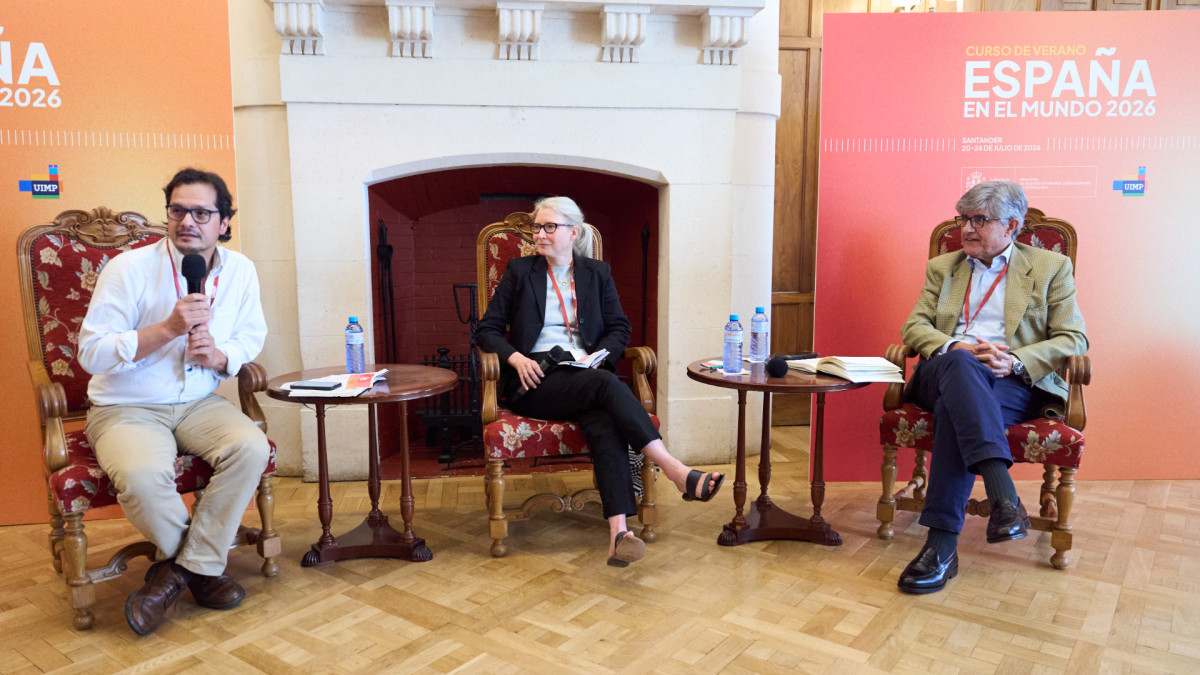
Nacho Torreblanca, Kristina Spohr and Federico Torres Muro. Photo: Courtesy
An order questioned from outside and from within
The wear of the international order is marked by dynamics different from the rise of China or the aggressiveness of Russia. Bruno Maçães, senior adviser at Flint Global; Ilke Toygür, director of the Global Policy Center at IE University; Comfort Ero, president of the International Crisis Group; Matias Spektor, professor of Politics and International Relations at Fundação Getulio Vargas; and Elizabeth Sidiropoulos, executive director of the South African Institute of International Affairs, came to point out, in different ways, that the West has lost material weight, but one of the reasons lies in the selective application of its own rules.
“The so-called Global South does not constitute an anti‑Western bloc. It expresses more a shared experience of exclusion”
Military interventions, double standards, and unequal attention to Ukraine, Gaza, Sudan, the Sahel, or Tigray have weakened the universalist pretension of the system. For many countries, the so-called Global South — a concept criticized by countries in the Global South itself, as Sidiropoulos noted — does not represent an anti‑Western bloc. It expresses more a shared experience of exclusion: little representation in institutions, disproportionately high financial costs, and rules crafted without their participation.
It does not seem that a Chinese order will immediately replace the American one. In response to this diagnosis, sessions pointed to a less stable scenario, with middle powers avoiding full alignment, a set of variable coalitions, and the question of what would happen to supranational institutions. Rather than a consolidated multipolarity, what is unfolding is a process of multipolarization.
Two expectations hinder adaptation to that scenario. One trusts that the old order can be restored without changes, and the other assumes that its disappearance will automatically yield a fairer system. That said, there is no doubt that reforming multilateralism requires redistributing representation and financing. But it is also essential to preserve a minimum set of rules on sovereignty, territorial integrity, human rights, and peaceful conflict resolution.
Diego Martínez Beníó, Secretary of State for Foreign Affairs and Global Affairs, raised the issue at the start of the course: it is a mistake to concede to supposed realists the monopoly on strategic intelligence. Applied coherently, values also generate trust, alliances, and influence.
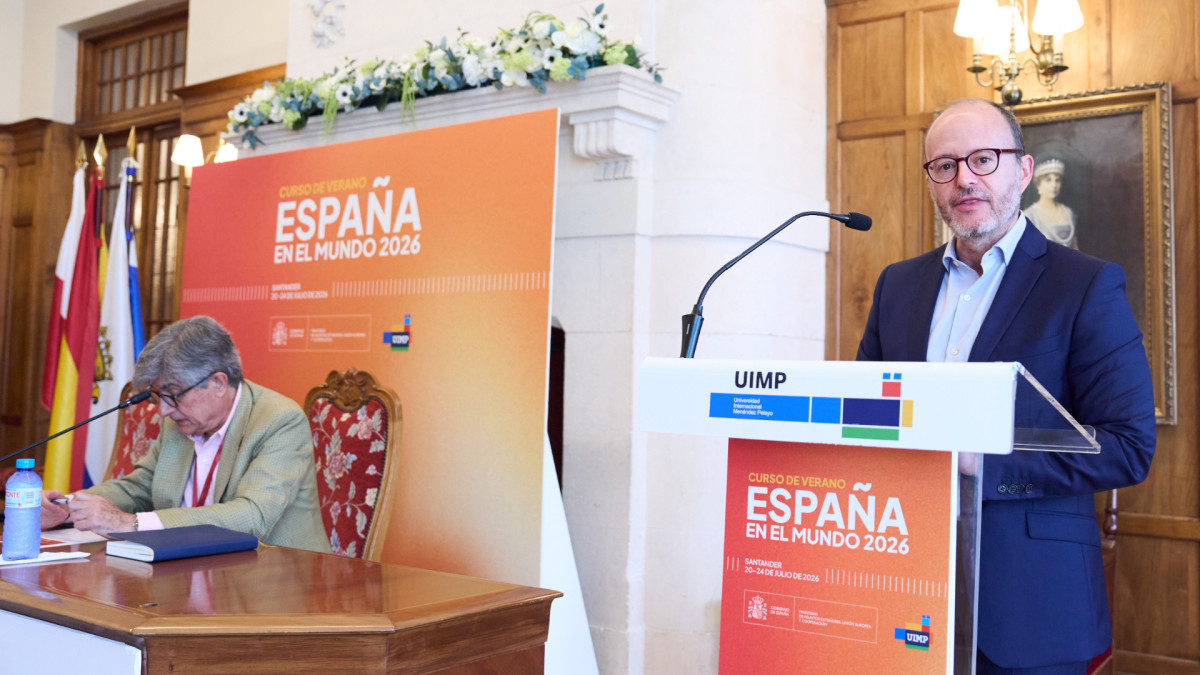
Martínez Belío (right) during his intervention. Photo: Courtesy image
Democracy is also decided in the economy
Europe’s international standing also depends on what happens inside its societies. The rise of populism is one of the symptoms that has caused the greatest concern among the speakers. This phenomenon, even when analyzed not only through misinformation or the “culture war,” is fed by a lack of prosperity: wage stagnation, difficulties in accessing housing, and the growth of inequality form a substantial part of the breeding ground for this refined ideology.
“The advance of populism is one of the symptoms that has caused the greatest concern among the speakers”
Jeremy Cliffe, editorial director of the European Council on Foreign Relations and a contributor to Agenda Pública, argued that European radical right parties no longer advocate an exit from Europe, partly thanks to the Brexit trauma. In this new context, these parties seek to transform the community club from within, by weakening its courts and its media, but also by attacking institutional checks and common rules, while maintaining, of course, the advantages of the internal market.
“The advance of populism is one of the symptoms that has caused the greatest concern among the speakers”
To curb “temptations,” Cliffe explained that mimicking their proposals rarely checks their growth. On the contrary, it tends to increase the legitimacy of the diagnosis, and voters end up buying the original over the copy.
Consequently, European policy will have to deliver tangible results, not just more effective communication. The idea of strategic autonomy will lose support if presented as a bill with no recognizable benefits. Likewise, defense spending, the technology transition, and industrial policy must also translate into jobs, innovation, housing, affordable energy, and territorial cohesion.
And the debate extends into the technological realm, as explained by Nacho Torreblanca, a senior fellow at ECFR. The same tools that facilitate mobilization, broaden access to services, or accelerate knowledge production concentrate power in a handful of companies, expand surveillance capacity, and turn polarization into a revenue source. Regulation is necessary, but it must be accompanied by education, public capacities, and European alternatives.
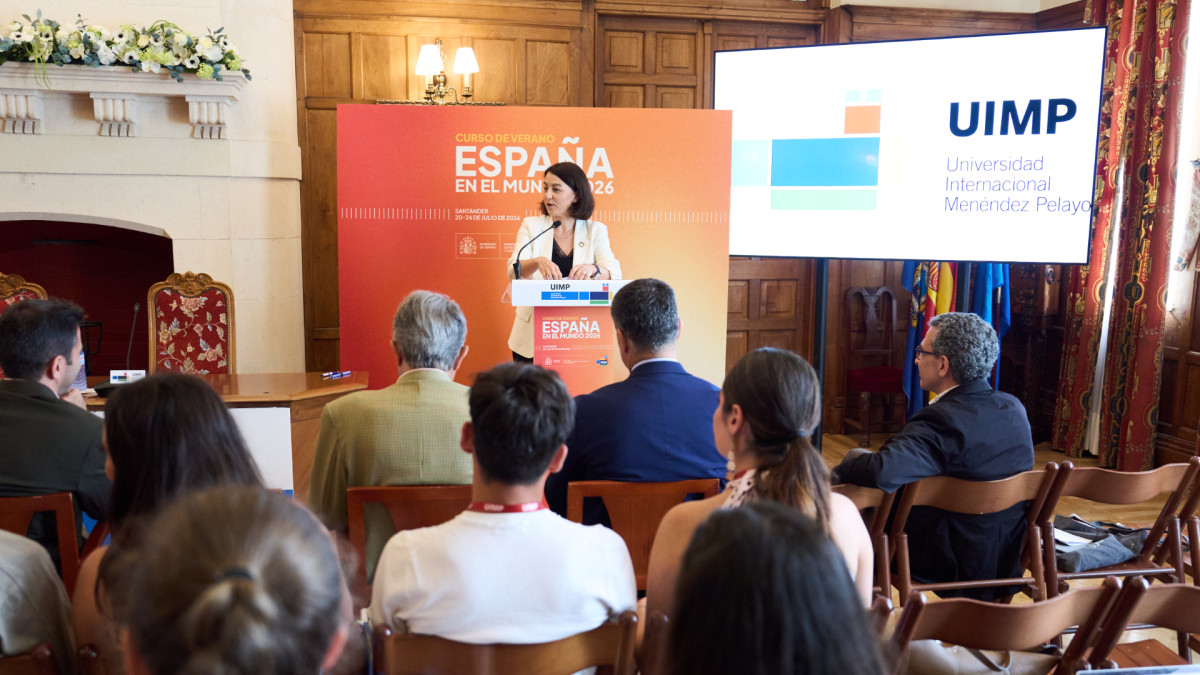
The Secretary of State for International Cooperation, Eva Granados, participated in the closing of the fourth edition. Photo: Courtesy image
Spain must be more than a bridge
Spain expands its capacity to act when it carries it out through Europe and leverages its position to connect spaces that are increasingly losing channels of dialogue. In this sense, the country combines an unusual mix: full membership of the European Union and NATO, Mediterranean and African projection, historical and linguistic links with Latin America, and a long tradition of international cooperation. Marta Lagos, founder and director of the Latinobarómetro Corporation, reminded that Spain tends to generate less suspicion than other international actors in the region.
“The bridging function gains substance when relations become projects”
Nonetheless, the bridging function gains substance when relations become projects. Some of them, as explained by the Foreign Minister, José Manuel Albares, want to be signed at the XXX Ibero-American Summit to be held next November in Madrid.
Also, alongside greater “content,” there must come a more active foreign policy. Spain can defend multilateralism without idealizing it, support Ukraine without neglecting the Mediterranean, demand recognition of a Palestinian state, strengthen cooperation and participate in building European capacities. Its margin of action will grow where values and interests can reinforce each other.
In short, the future will be shaped by an environment that will be more competitive, fragmented and costly. And in that context, Europe and Spain will not be able to play the same role they have had in the Western order, but they can decide how much room they retain to act within it. That margin will depend on the capacities they are willing to finance, the dependencies they fail to eliminate, and the interests they can defend without emptying the content of the values they proclaim.
