
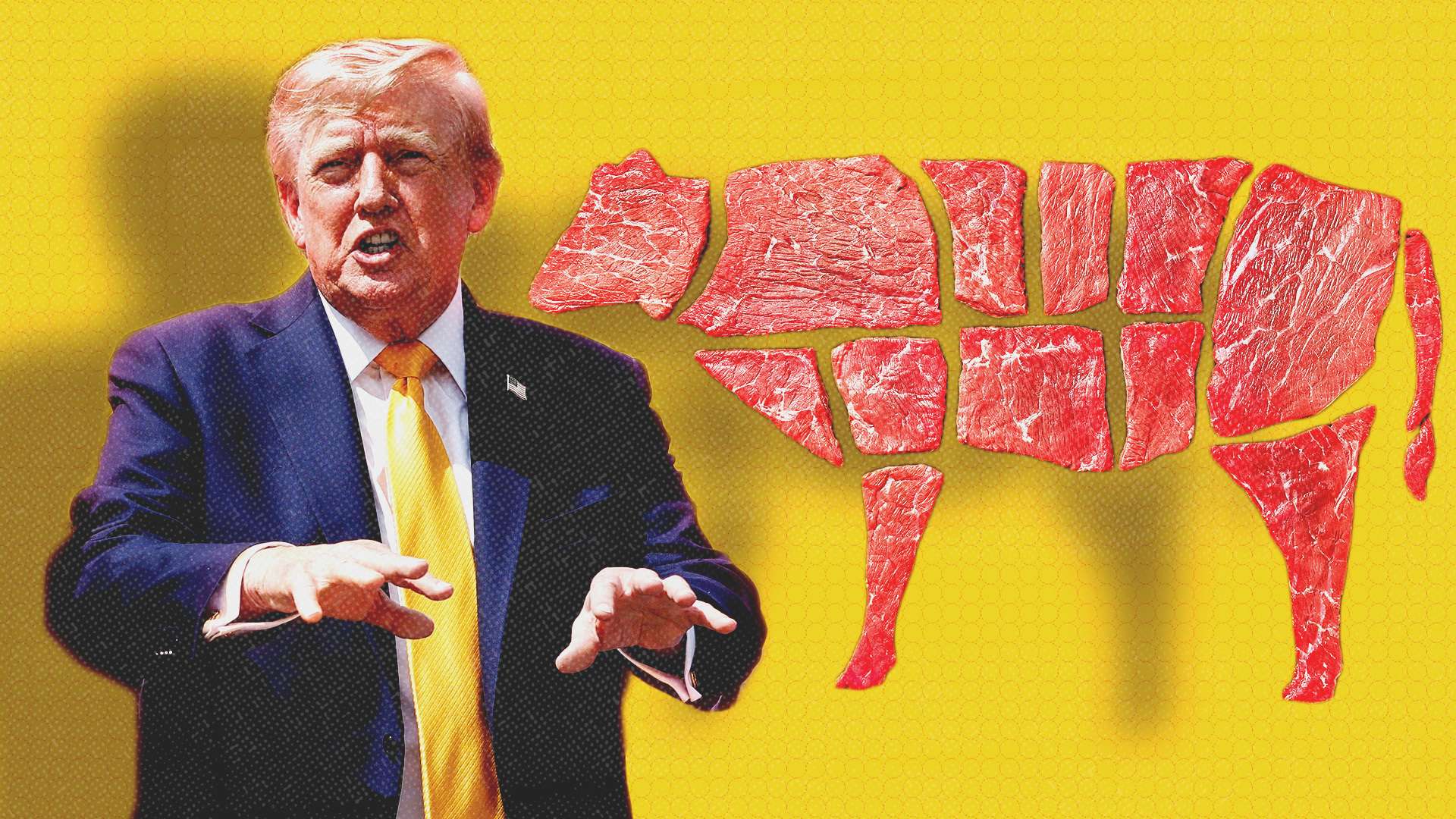
It will take longer than three months to address the core problems afflicting the American beef sector.
Ranchers across the United States are at odds with the Trump administration.
Recently, President Donald Trump signaled a plan to permit imports of as much as 300,000 metric tons of ground beef, surpassing the usual volume cap of the U.S. beef tariff-rate quota system and waiving duties for 90 days. The move has sparked anger among cattlemen, farmers, and lawmakers alike.
In a bid to shield her state’s stake in the American beef industry, Sen. Deb Fischer (R–Neb.) stated she was “extremely disappointed” with the proposal. Likewise, Sen. John Barrasso (R–Wyo.) asserted that Americans expect to see U.S. beef on the table—not foreign imports, while Sen. Tim Sheehy (R–Mont.) conceded that although the president’s intentions may be well‑meant, the plan will “make it harder for American ranchers to rebuild our herd and push prices down for the American people.”
The administration argues that the imported beef would be “priced 25 percent below current market levels,” though specifics have not been released. Nevertheless, CNBC reports that the president will “formally sign an executive order on the tariff waiver” within the next two weeks. Altin Kalo, chief economist at Steiner Consulting Group, told CNBC that imported beef is already trading at a steep discount. If accurate, this could benefit consumers who have seen beef prices climb by 24 percent since the start of Trump’s second term, even as U.S. beef imports rose by about 12 percent compared with the previous year.
Yet such a development would likely spell bad news for American beef producers. Colin Woodall, chief executive officer of the National Cattlemen’s Beef Association (NCBA), remarked that the group was “disappointed by the President’s statement.”
“While America’s cattle producers share the aim of keeping groceries affordable for consumers,” he added, “flooding the market with government-subsidized, below-market beef is not the way to rebuild the U.S. cattle herd.” Woodall warned that the plan and “other market interventions” from the Trump administration “dampen the prospects for herd expansion and sacrifice long-term stability for short-term messaging.” Producers in Ohio, Missouri, Texas, and Minnesota issued similar criticisms, arguing that the move harms the industry’s current outlook and any potential for future growth.
Woodall’s point underscores that a 90-day tariff pause is merely a stopgap for the president’s political challenges, sidestepping the real driver of elevated beef prices: a depleted supply. The count of U.S. beef cows, calves, and cattle in feedlots is down from the prior year, leaving the national herd at its lowest level since the 1950s, according to the Department of Agriculture.
With more than 79 percent of the beef cattle across America’s 26 largest producing states contending with ongoing drought and unfavorable weather, rebuilding the U.S. herd will be a gradual process requiring sustained, long-range policy thinking that has been notably absent in the current administration. This comes after the same administration distributed a $12 billion bailout to farmers last December “in response to temporary trade market disruptions and increased production costs” sparked by the president’s trade wars.
Still, the domestic beef industry bears some responsibility as well: it cannot meet demand and, in a self-interested move, seems intent on excluding competition that could benefit consumers now that tariffs no longer provide protection.
Restoring America’s cattle herds remains feasible, but it would require both government and beef producers to abandon the easy traps of subsidies and protectionism. While acknowledging that Trump’s latest move is detrimental to long‑term health, the industry has historically been willing to accept government meddling when it serves its bottom line.
By cutting tariffs to lower the price of beef, the Trump administration is effectively recognizing that tariffs do raise prices.
Yet the approach appears short-sighted; if reducing prices is truly the aim, Congress should be urged to permanently lift all tariffs and quotas on beef imports, not merely suspend them for 90 days. Rather, the move seems designed to bolster the party’s standing ahead of the midterm elections.
