
He grasps economics roughly the same way he grasps the boundaries of presidential authority.
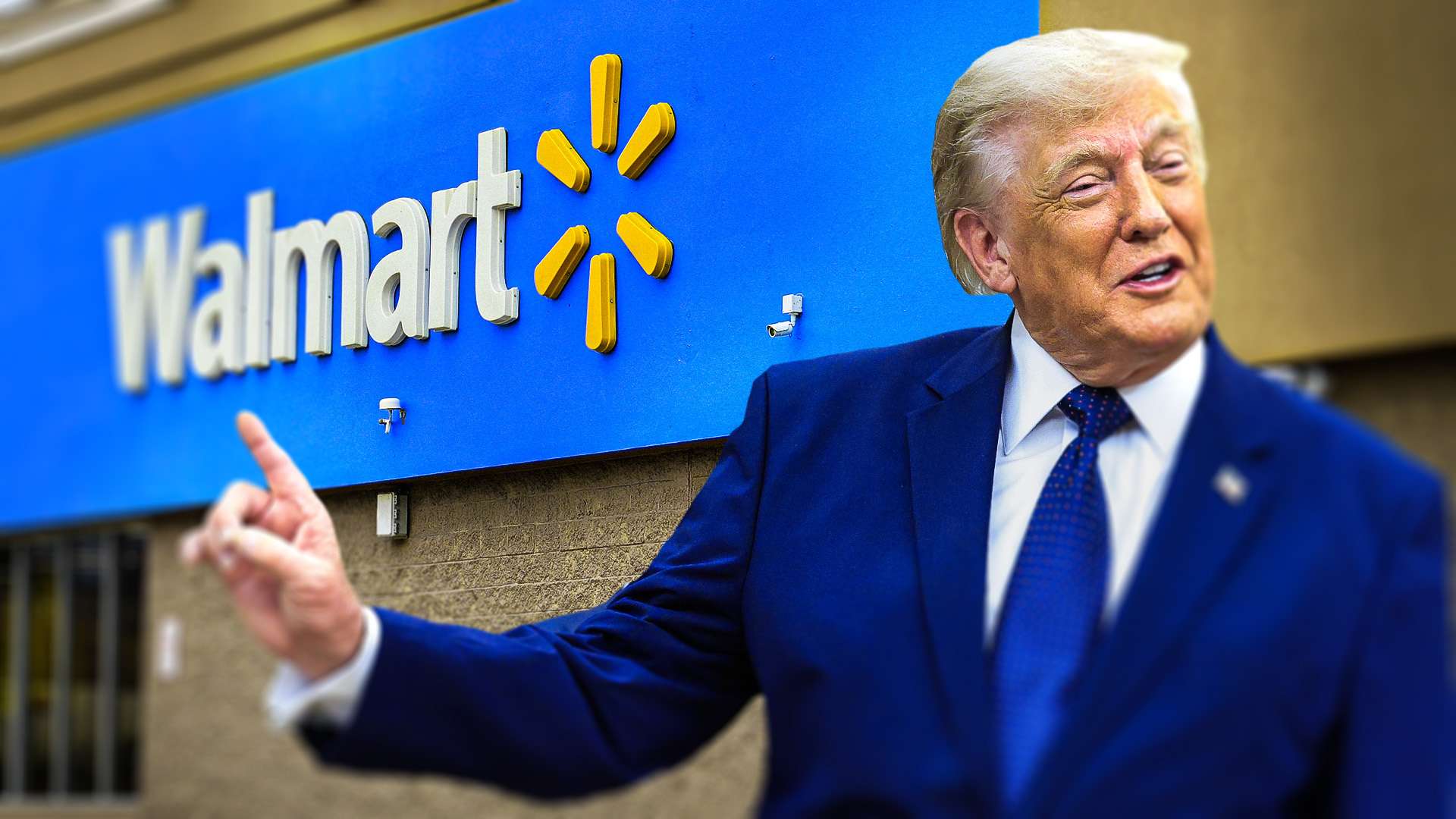
Facing stubborn inflation, it isn’t surprising that President Donald Trump would cling to any positive update. This week he took credit for a nationwide grocery chain’s markdown on barbecue essentials.
“This summer, Walmart and Sam’s Club are helping customers and members save more with thousands of lower prices,” the retailers announced Monday. “From backyard barbecues and family vacations to pool days and neighborhood gatherings, the savings are designed to help customers and members make the most of the season while spending less on the products they need, want and love most.”
The markdowns covered summer staples like ground beef, soda, potato chips, and corn on the cob.
Later that day, Trump asserted that it had been his idea.
“Great news! I have just been informed that one of the biggest, best, and smartest Retailers in America, Walmart, will be lowering prices, by a lot, at my Administration’s request to celebrate our great Country’s 250th birthday,” he posted on Truth Social. “Walmart is stepping up in a big and bold way, and other Retailers should follow the lead of these absolute Patriots.”
What a difference a year makes. Last April, Trump levied tariffs on nearly every other country, and Walmart was among the retailers that warned it could be forced to raise prices.
In that instance, the president was far from pleased.
“Walmart should STOP trying to blame Tariffs as the reason for raising prices throughout the chain,” Trump posted in May 2025. “Walmart made BILLIONS OF DOLLARS last year, far more than expected. Between Walmart and China they should, as is said, ‘EAT THE TARIFFS,’ and not charge valued customers ANYTHING. I’ll be watching, and so will your customers!!!”
Tariffs have long been a central piece of Trump’s economic policy since he first ran for office, even as he repeatedly seems to misread how they operate. Tariffs are paid by companies, and by extension their customers, but Trump frequently labels them “a tax on another country.”
Moreover, Trump’s tariff stance aligns with his remarks about Walmart, illustrating how little he truly understands economics.
Patrick Thomas and Sarah Nassauer of The Wall Street Journal reported Tuesday that ahead of the July 4 holiday, the Department of Agriculture contacted several national grocers to inquire about beef prices. Walmart, in its response, “said it already had plans to reduce prices on many items for the summer, including beef,” wrote Thomas and Nassauer. “Walmart implemented those plans on shelves June 29, and later readied a press release touting the price cuts.”
“Summer sales are typical for chains like Walmart and these discounts had been in place for a week before Trump’s Truth Social post,” added Ramishah Maruf at CNN. “For example, the soda packs that are on sale were discounted last summer, as well.”
Last year, Trump also claimed credit for Walmart’s Thanksgiving meal basket being 25 percent cheaper than the year before, although it included fewer and cheaper items.
Trump often seems to believe he has more sway over markets than he actually does. “We’re a department store, a giant department store, the biggest department store in history,” he told Time last year. “And on behalf of the American people, I own the store, and I set prices, and I’ll say, if you want to shop here, this is what you have to pay.”
That is, of course, not how the economy—or the presidency—works. But Trump has certainly attempted to govern as if it did.
Early in his second term, Trump signed an executive order aimed at lowering prescription-drug prices—not only for those purchased by the federal government but seemingly for every drug on the market. Despite boasting ever since that he had brought prices down by mathematically impossible amounts, prescription costs largely remained unchanged.
In recent weeks, Trump threatened oil and gas companies with federal investigations unless they lowered pump prices. Of course, gas prices are higher largely because of the ongoing conflict in Iran that Trump has continued to wage.
Granted, a president can move markets in the short term. Numerous times during his second term, Trump announced policy shifts that sent markets tumbling or commodity prices rising, only to drift back to normal when he reversed course. Some observers have even noted a flurry of trading activity just before Trump’s announcements, suggesting someone might be trading on insider information.
But in the long run, the economy is driven by individuals making choices based on a range of external and internal factors. Trump, by contrast, seems to think that simply issuing a call from the White House is enough to push prices up or down.
