
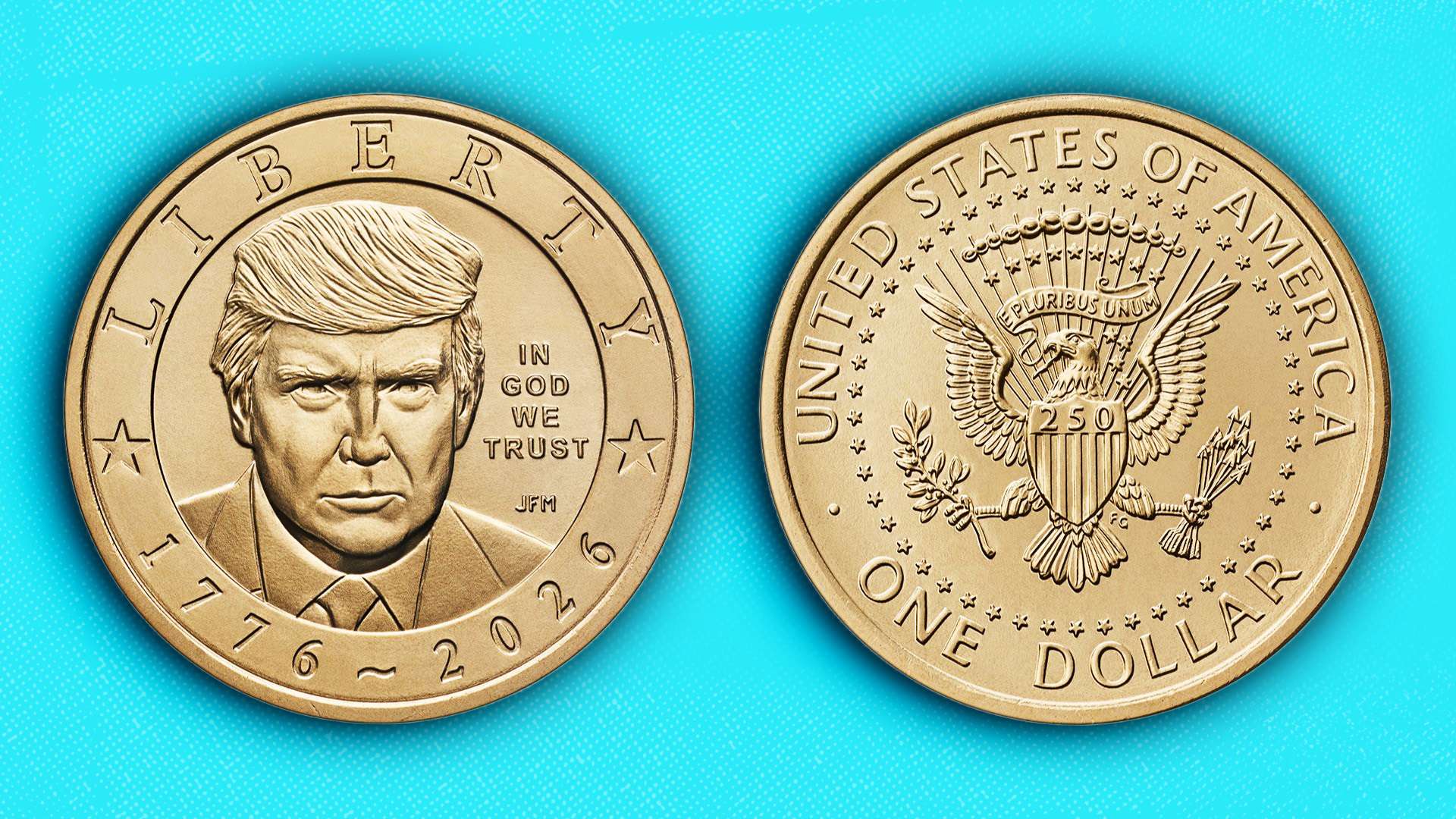
As the coin moves closer to production and distribution, the American public will be the one to decide if this controversial piece proves successful.
Just days after United States Treasury Secretary Scott Bessent publicly disclosed the finalized design for the new $1 coin bearing the image of President Donald Trump, a federal lawsuit filed in Oregon challenging the coin’s production was withdrawn of its own accord. The coin in question is slated for debut this autumn.
The plan for the gold-plated piece includes the presidential seal and the inscription “250” on one side, with a Trump portrait and the phrases “liberty” and “in God we trust” on the opposite face. Minted to mark the nation’s 250th anniversary, the coin is described as intended to “honor the enduring legacy of liberty and serve as a lasting emblem of patriotism,” Bessent posted on social media.
Critics, however, contend that placing Trump’s visage on currency breaches long-standing norms against featuring living individuals on legal tender and may violate federal law.
A 1866 law, known as the Thayer Amendment, “expressly and unambiguously forbids” the production of coins displaying “the image of a face of a living man,” and seeks to prevent government currency from being used as a vehicle for political self-promotion, according to court filings by James Rickher, a retired Portland, Oregon attorney. The amendment arose in response to former Treasury Department official Spencer Clark putting his likeness on banknotes honoring William Clark, part of the Lewis and Clark duo.
At present, the statute grants the secretary of the Treasury authority to “engrave and print United States currency” and states that “only the portrait of a deceased individual may appear on United States currency and bonds.” Yet, supporters of the Trump coin argue that the Thayer Amendment is limited to paper currency and point to a separate statute governing coin minting that does not impose a blanket ban on including a living person’s portrait.
Nevertheless, the Circulating Collectible Coin Redesign Act of 2020 (CCCRA), which authorized a redesign of dollar coins to reflect designs emblematic of the United States’ semiquincentennial and limited production to 2026, includes a prohibition: no head-and-shoulders portrait or bust of any person, living or dead, may be included on the reverse (the tails side) of the commemorative dollar coin.
In response, the Treasury Department argued in court filings that the statute’s correct interpretation narrows the ban on living-portrait imagery to the reverse side. Since the proposed design places President Trump’s portrait on the obverse (the head side) and an eagle on the reverse, there would be no legal obstacle. Moreover, the government’s counsel contended, elsewhere in the statute the secretary is granted broad discretion over the designs of gold bullion and proof coins—coins that remain legal tender and official U.S. currency.
Despite these questions of statutory interpretation, Rickher moved to dismiss the suit on July 20 after a late-June ruling denying a preliminary injunction against production due to lack of standing. The denial, issued by U.S. District Judge Karin Immergut, was based on Rickher’s inability to demonstrate concrete, particularized harm and thus did not address the case’s merits.
It remains possible that no party will have standing to challenge the coin in court until after it has been produced and distributed. One potential claimant, Richard Painter, a former White House ethics chief under President George W. Bush, told NPR that an injury could occur if a vendor or consumer refuses to accept the coin as legal tender.
Even if the Trump administration prevails in court, proponents of leader worship and idolatry run contrary to core American principles. Whether such a coin is embraced or rejected ultimately rests with today’s American people. After all, when Calvin Coolidge pressed forward with a controversial coin depicting him alongside George Washington on the half-dollar to celebrate the nation’s 150th anniversary, the move was widely regarded as a failure, with 859,408 of the 1 million minted coins subsequently returned and melted.
