
A number of Democrats are eagerly eyeing the broader economic powers that President Trump has asserted for the office.
President Donald Trump has dramatically—and in numerous instances, quite recklessly—expanded the executive branch’s sway over private firms.
The Trump administration has framed tariffs as a matter of “national security,” using that rationale to impose steep duties on a wide range of goods—from steel to musical instruments. It has deployed the same justification to seize equity stakes in more than twenty private companies, including a so-called “golden share” in U.S. Steel that gives the president the right to veto future moves to relocate headquarters or alter its production sites.
And if you think a future Democratic administration will attempt to rein these powers in, well…don’t count on it.
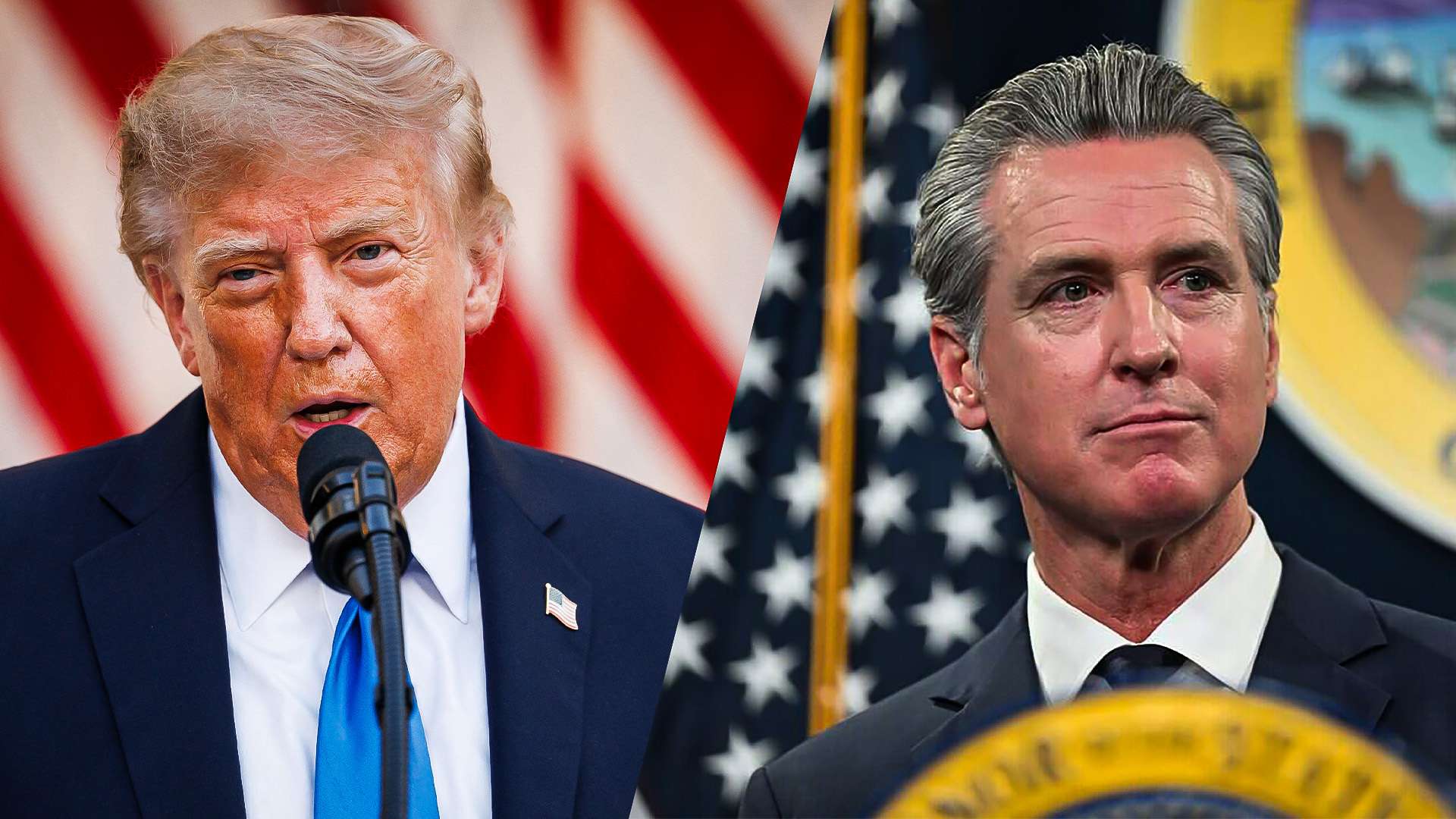
Consider California Governor Gavin Newsom, widely regarded as a strong candidate for the 2028 presidential contest. Recently, a Canadian journalist pressed Newsom to promise that a future Democratic administration would roll back the sizable tariffs Trump has imposed on Canadian goods.
“I cannot guarantee that,” Newsom replied. “But I can promise you nothing like this—this level of disrespect, talking past people, talking down to people, talking past and down to you.”
In other words: a gentler tariff regime, articulated with carefully chosen language.
That might be an improvement in some respects compared with the erratic nature of Trump’s trade wars. Yet it would not advance free trade, and it would not alleviate Americans’ burden from higher tariffs.
To be fair, not all Democrats are taking that line. Senate Minority Leader Chuck Schumer (D–N.Y.) has introduced legislation to curb presidential tariff powers, and a faction of Democrats in the House has pushed to curb Trump’s tariff abuses, with limited success.
Meanwhile, other Democrats are licking their lips at the expansive economic authorities Trump has claimed for the presidency.
Many Democrats “see an opening, now that Trump has crossed what had long been viewed as a political red line: the government joining forces with specific companies, shaping their governance, and letting taxpayers share in the upside—or the downside,” reports Politico.
Trump’s push for a golden share in U.S. Steel has “normalized this idea, you know, which I think again, prior to 2024, I associated a lot with Bernie Sanders,” explains Todd Tucker, director for industrial and trade policy at the Roosevelt Institute, to Politico.
The Roosevelt Institute, led by Elizabeth Wilkens—an alumna of the Biden administration and former chief of staff to Lina Khan—is already outlining how a future Democratic administration might wield these instruments. In a July report, the think tank described how the government could acquire equity stakes in companies to secure places on boards and shape corporate decisions.
Direct access to corporate boardrooms would “give the government eyes, ears, and a voice in setting corporate priorities in a way that one-off grants do not (and with lower transaction costs than the latter),” the report notes. “While this power can be dangerous in the wrong hands, it can be useful in the right ones. Future policymakers could deploy these levers to push for faster decarbonization, recognize labor unions, ‘buy American,’ or prohibit stock buybacks.”
As if concerned with how power might be misused, right?
Clearly, Trump’s team does not seem to worry about that. Its guiding philosophy on executive power was best captured by Vice President J.D. Vance in October 2025: “We cannot be afraid to do something because the left might do it in the future.”
Back then, Vance was replying to a student who worried about a hostile administration potentially targeting conservatives who protest. “How can we prevent someone from abusing that power?” the student asked.
The Trump administration may dismiss such concerns, but it is becoming evident that some on the left are already considering the mirror image of Vance’s remark: “We can do this, because the right already did it in the past.”
That could well emerge as the most enduring footprint of the Trump era.
