
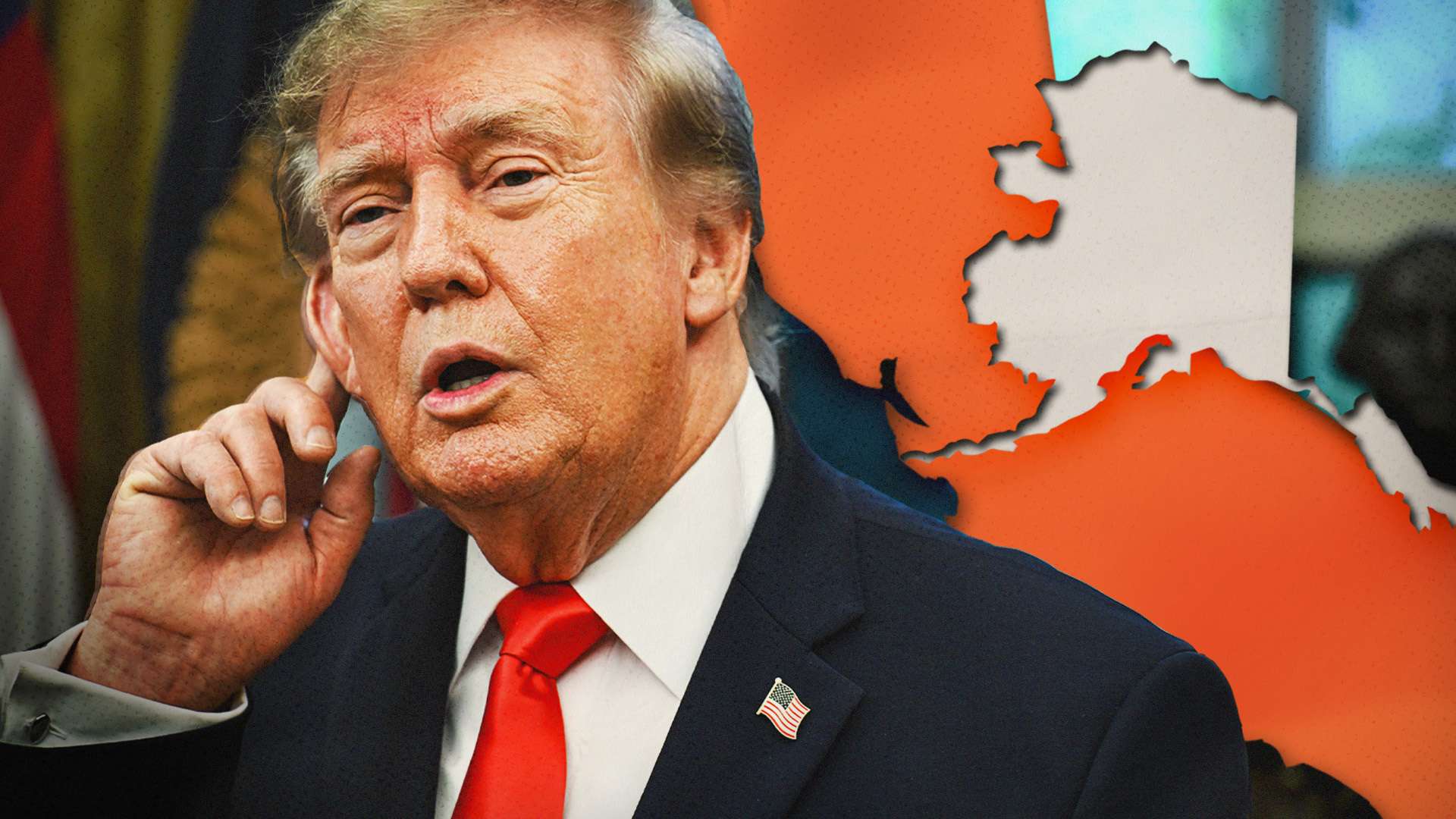
Four federal courts contend that the Trump administration is attempting to seize the states’ constitutional authority over elections.
The U.S. Constitution assigns to the states the power to set the timing, locations, and rules for electing United States senators and representatives, with Congress retaining the ability to legislate changes. Yet in the lead-up to Tuesday’s vote, the administration has repeatedly moved to dictate its own limits on this power, prompting an unusually loud chorus of rebukes from federal courts, including four decisions in just the last five days.
In California, the Justice Department pressed election officials to separate mail ballots cast by roughly 20,000 voters it labeled as “likely noncitizens.” State and local authorities refused for a variety of reasons.
California officials questioned whether the administration’s list was reliable, noting it came from the Department of Homeland Security and rested on unclear, error-prone methods. They worried that the last-minute intervention could disrupt ballot processing, deprive residents wrongly identified as noncitizens of their right to vote, and violate a federal statute barring programs intended to systematically strike ineligible voters from official lists within 90 days of an election.
In response, the Justice Department threatened to prosecute election workers for aiding and abetting violations of 18 USC 611, which makes it a misdemeanor for “any alien to vote” in a federal election. On Friday, Trina L. Thompson, a federal judge in San Francisco, issued a temporary restraining order (TRO) directing that the Justice Department “shall not threaten, intimidate or coerce state or local elections officials or workers” who refuse to “halt processing the ballots of any registered voter solely on the basis that the ballot belongs to an individual alleged by the Defendants to be ineligible to vote.”
Thompson, a Biden appointee, explained that her TRO aims to safeguard “the freedom to exercise the right to vote free from threat, fear, or intimidation.” She observed that “ballots have already been issued,” that “Americans have already begun voting,” and that election workers “have already begun processing ballots.” Given “the consequences of inaction,” she remarked, “the Court sees no reason to delay its ruling.”
The Justice Department’s threats “likely violated” the federal law against voter intimidation under color of law, Thompson said, and ran afoul of the Elections Clause. She noted the Constitution, citing the Supreme Court’s 1972 decision in Roudebush v. Hartke, “reserves to the States the ‘authority to provide a complete code for congressional elections, not only as to times and places, but in relation to notices, registration, supervision of voting, protection of voters, prevention of fraud and corrupt practices, counting of votes, duties of inspectors and canvassers, and making and publication of election returns.'”
Beyond threatening election officials with federal prosecution, the Justice Department sought a TRO compelling them to set aside ballots cast by allegedly ineligible voters. David O. Carter, a federal judge in Santa Ana, rejected that request last week, calling the administration’s claims about unqualified voters “not credible,” particularly given its pattern of substantially downgrading its estimates of noncitizen voting in California and other states. On Friday, the U.S. Court of Appeals for the 9th Circuit declined to overturn Carter’s ruling.
“Never before in American history has the federal government, on the eve of an election, sought to coerce a state and local government to abandon their own Constitutional elections procedures and bend to the will of the Executive Branch,” wrote Carter, a Bill Clinton appointee. “This request violates longstanding constitutional principles mandating that states have control over their elections. If Plaintiff’s last-minute request for relief were granted, either party could create chaos for their own political purposes to disrupt the election process. Over 20,000 registered Californians would potentially lose the right that generations of Americans have fought to preserve.”
The 9th Circuit harbored similar concerns. “We decline the United States’s invitation to contravene the Elections Clause by undermining the Constitution’s plain text,” Judge Mark J. Bennett, a Trump appointee, and Judge Gabriel P. Sanchez, a Biden appointee, stated in a per curiam decision, with Judge Patrick J. Bumatay (a Trump appointee) filing a separate dissent. “If the United States believes different procedures are necessary for vote-by-mail ballots, we think it should take that suggestion to Congress, not the courts.”
The 9th Circuit added that “the potential violation” of the 90-day restriction on systematic purging of voter lists “provides an independent reason to conclude” that the Justice Department had not shown it was likely to prevail. “The United States effectively seeks to cancel (or potentially cancel) ‘batches of registered voters based on a set procedure [which] is systematic as opposed to individualized,'” the appeals court said. “The consequence of the United States’s request is not merely ballot segregation, but ultimately both the cancellation of the ballot and the removal of voters from the voting rolls.”
The 9th Circuit also cited the Supreme Court’s 2006 ruling in Purcell v. Gonzalez, which cautioned that judicial intervention close to an election can cause “voter confusion and consequent incentive to remain away from the polls.” Purcell “counsels that we should not intervene at this late hour,” the appeals court said. “The Purcell principle reflects the wisdom that we must not ‘alter the election rules on the eve of an election,’ and it ‘applies with even greater force’ when, as here, an election is already underway.”
California officials, “pursuant to their constitutional authority, established rules and procedures to challenge a voter’s ineligibility in the months directly preceding an election,” the 9th Circuit noted. “As the district court found—and we discern no clear error—there is no feasible way to identify and segregate the ballots of specific individuals without potentially catastrophic effects on the entire system.”
On Sunday, a federal judge in Alaska likewise cited Purcell in dismissing a Justice Department suit aimed at addressing possible voter confusion in that state’s U.S. Senate race. The main contest in Alaska is between the incumbent, Daniel S. Sullivan, and his Democratic challenger, Mary Peltola. However, the ranked-choice ballot also lists a newly registered Republican, Daniel P. Sullivan, who was recruited by Peltola’s campaign in the hope of siphoning votes from the senator.
After Alaska’s courts refused to bar Daniel P. Sullivan from the ballot, the Justice Department sought a court order that would take effect only if the senator loses and his similarly named opponent collects enough votes to change the outcome. If that occurs, the Trump administration said, Alaska should not certify the results until “an investigation” can “determine whether votes cast for Daniel J. Sullivan were meant to be cast for Senator Sullivan.”
Since voters’ choices are kept secret, it was unclear how such an investigation could be conducted. “Requiring the segregation of ballots cast by voters for Daniel J. Sullivan so that these voters can be further investigated by law enforcement is not a remedy that this Court can or should order as it clearly violate Alaskans’ right to a secret ballot,” wrote Sharon L. Gleason, chief judge of the U.S. District Court for the District of Alaska, in her Sunday decision. “The relief requested here by the United States is ‘infeasible.'”
Gleason, an appointee of Barack Obama, added that Purcell “strongly cautions the Court against granting the relief the United States seeks.” The Supreme Court, she noted, “has repeatedly emphasized that lower federal courts should ordinarily not alter the election rules on the eve of an election.”
The Trump administration argued that it was “not seeking to alter the time, place, or manner of Alaska’s election,” Gleason wrote. “Yet it seeks a court order preventing the State from certifying the election if certain circumstances occur; a court order requiring the State to segregate and preserve certain ballots; and a court order permitting the United States to conduct an investigation into the intent of those voters who cast ballots for Daniel J. Sullivan. These requests certainly involve the time, place, and manner of Alaska’s election, which are the responsibilities of the State, not the executive branch of the federal government.”
