
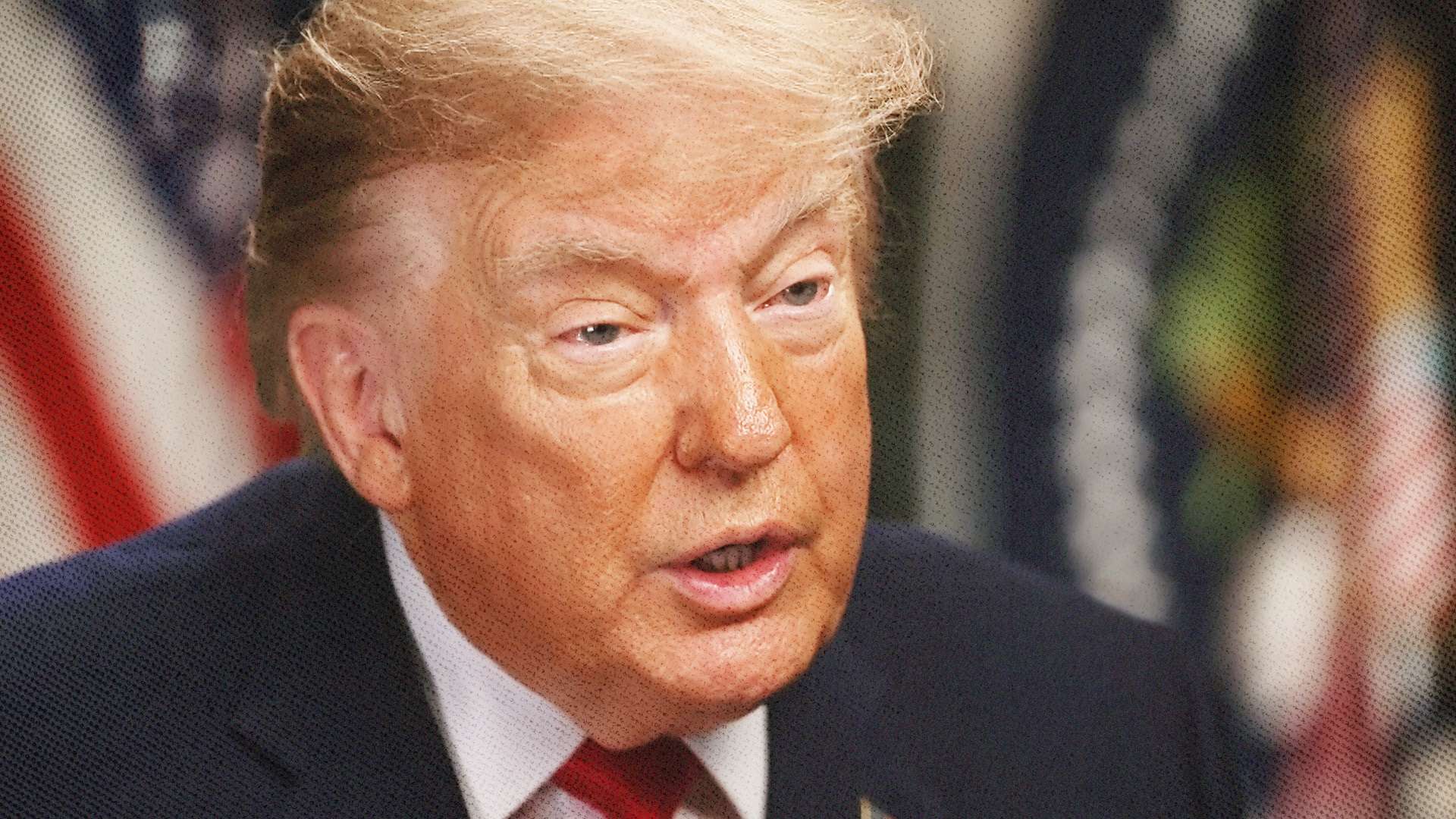
Even as he lauds the chief architect behind that policy, the president admits it might be overly stringent.
During a 60 Minutes segment that aired Sunday evening, President Donald Trump conceded that his broad mass-deportation push may have helped trigger the Republicans’ setback in last week’s midterm elections because “a lot of people think it’s too tough.” Yet on that same day he revealed that he had chosen Stephen Miller—the principal designer of that policy—to succeed Susie Wiles as White House chief of staff.
Those seemingly conflicting signals reflect a tension between Trump’s hardline instincts on immigration and his occasional misgivings about the economic and human costs of removing unauthorized residents who, for all intents and purposes, have deep roots in their communities and remain law-abiding. His ambivalence mirrors the electorate’s mixed stance: voters broadly back efforts to enforce border control and remove criminals, yet many are uneasy about deporting peaceful, productive people who have spent years building lives, jobs, and families in the United States.
Trump and his aides have described the crackdown as targeting “the worst of the worst.” Still, David Bier of the Cato Institute, who examined detainees arrested by Immigration and Customs Enforcement in fiscal year 2026, found that 73 percent had no criminal convictions, nearly half had no current criminal charges, and only 5 percent had been convicted of violent offenses.
The Migration Policy Institute reported parallel findings in October: during the first 18 months of Trump’s second term, only one-fifth of deportees had criminal records. The institute also noted that 61 percent of deportees had lived in the United States for more than two years, while 15 percent had been here for a decade or longer.
Although hard-liners like Miller aim to “get everybody out,” Trump observed in the 60 Minutes interview that “a lot of people” believe the government should deport “the rough ones,” including “drug dealers,” “rapists,” and “killers,” but should strike a deal for others, including immigrants who have been here for “10 and 15 years” in some cases. He said such a deal with the Democrats who will soon gain control of Congress is “actually doable.”
This is not the first time Trump has voiced reservations about the indiscriminate approach to immigration enforcement favored by Miller. In June 2025, Trump ordered a brief pause on workplace raids, and the next month he said that “we’re gonna work with” employers of unauthorized immigrants in the agriculture and hospitality sectors.
“These people…work so hard,” Trump said at a July 2025 rally in Des Moines. “They bend over all day. We don’t have too many people [who] can do that.”
Trump added that “some of the farmers…cry when they see [immigration raids] happen.” He referred to “cases where…people have worked for a farmer on a farm for 14, 15 years” and “then they get thrown out, pretty viciously.”
His conclusion: “We can’t do it. We’ve got to work with the farmers and people that have hotels and leisure properties.”
Trump revisited that theme on 60 Minutes. When “you have a woman” who is “doing a great job” as a waitress or a hotel cleaner, he said, “and all of a sudden, they’re being taken out of the country, it’s tough. It’s a tough thing.”
Last April, the Pew Research Center reported that 52 percent of Americans believed the Trump administration was doing “too much” when it came to deporting immigrants living in the U.S. illegally. In a CBS News exit poll released last week, 58 percent of voters said the administration’s immigration enforcement had “gone too far.”
They may be right, Trump conceded in the interview: “It might be too tough.” While “I get very high marks for removing the bad ones,” he said, “I’m hurt because we also removed people who had good jobs” whose only violation was that “they came into the country illegally.”
Will Trump act on these impulses? That will depend on the outcome of his deliberations with Miller—and with himself.
© Copyright 2026 by Creators Syndicate Inc.
