
Courts should still strike down the lingering Section 338 tariffs and the import bans that remain in effect.
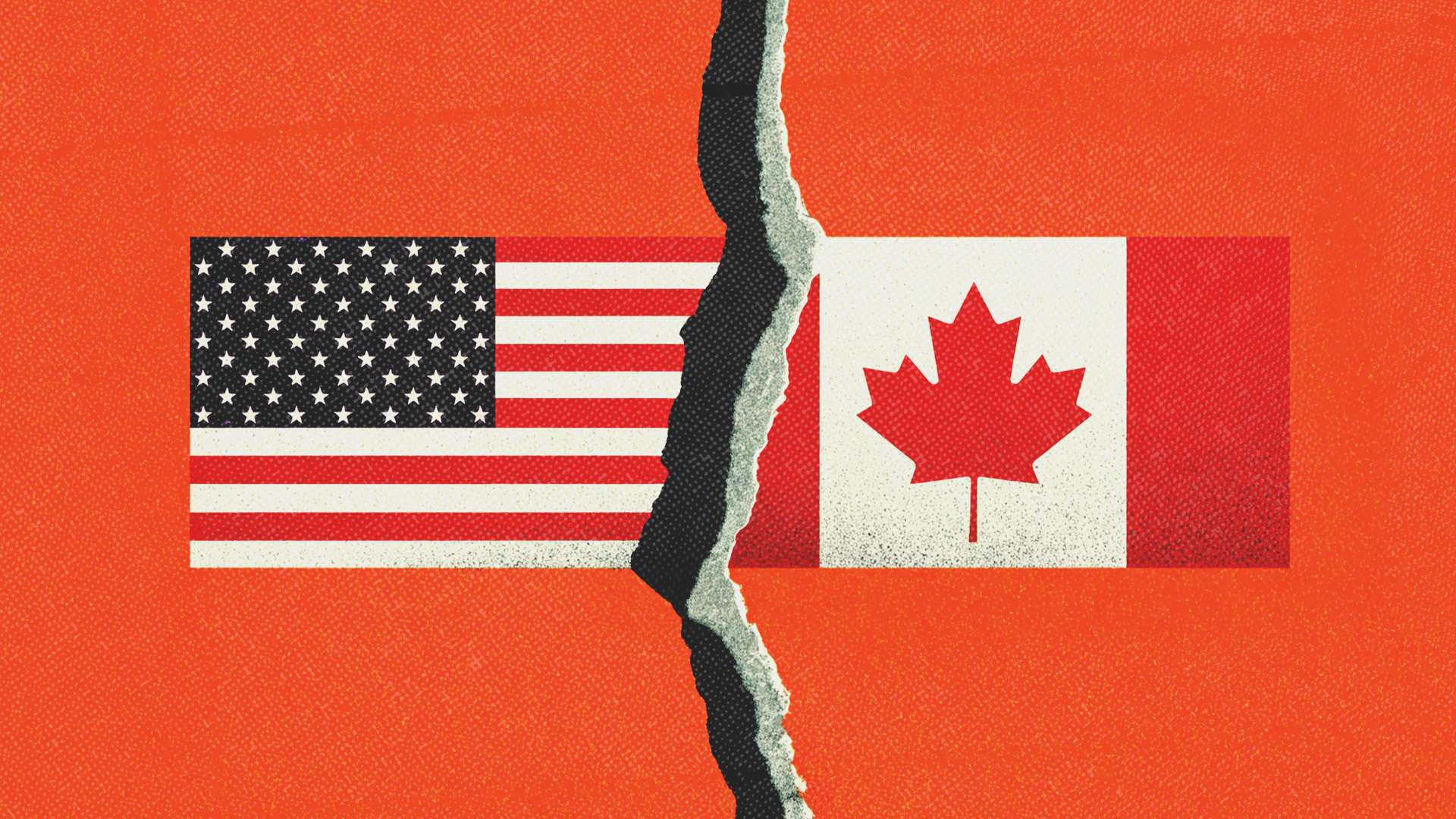
Illustration: Midjourney Last week, the Liberty Justice Center, a public-interest group with which I collaborated on the suit that challenged Trump’s earlier IEEPA tariffs and which the Supreme Court invalidated, filed the initial challenge to President Donald Trump’s expansive Section 338 tariffs targeting a broad spectrum of Canadian imports. Three days later, Trump carved out exemptions for certain Canadian products that had previously been covered, likely to buttress Maine Senator Susan Collins and other Republicans worried about voter backlash ahead of the midterm elections: the White House announced that on Friday a proclamation was signed removing some Canadian items from Section 338 duties and adding others. The changes are slated to take effect on October 30. Plywood sheets, certain paper products, some machinery and refrigeration equipment, and certain packing crates and boxes drop from the list. In their place, valves, carpets, waste products, and other goods will be added.
The tariffs are set at a 50% rate, according to CNBC, and apply whether or not a given product originates under the U.S.-Mexico-Canada Agreement. The reality that American businesses and consumers in states such as Maine are bearing the costs of these tariffs disproves the notion that only foreigners are affected. Trump’s action also highlights how unpopular the tariffs have become and how they impede the Republicans’ prospects in the forthcoming election. While Trump may have removed some of the Section 338 tariffs, at least temporarily, the majority of them remain in force. As noted above, he has simultaneously imposed additional duties on certain goods while lifting others. Moreover, the Section 338 tariffs continue to be illegal for several reasons I summarized in my prior post on the Liberty Justice Center’s lawsuit against them, and in earlier writings: I have previously argued that Trump’s Section 338 tariffs are harmful and unlawful. See my recent Montreal Economic Institute paper on this topic, along with earlier pieces linked here, here, and here. In brief, the Canada-related tariffs are illegal because 1) Section 338 has been superseded by subsequent legislation, 2) even if Section 338 remains operative, the tariffs fail to satisfy its requirements because the Canadian actions they purport to respond to do not “discriminate” against U.S. goods, as the statute demands, 3) the tariffs do not “offset” the Canadian actions (as Section 338 also requires) but instead exceed that purpose, 4) the administration’s interpretation of Section 338 breaches the “major questions” doctrine, and 5) if Section 338 is operative and authorizes the Trump measures, it would violate the constitutional nondelegation doctrine (which limits the delegation of legislative authority to the executive). The Liberty Justice Center’s complaint advances all five arguments. To prevail, the plaintiffs need only succeed on one.
Trump has also used Section 338 to ban certain Canadian imports outright. That prohibition is illegal as well, although the bans—unlike the tariffs—are not directly contested in the Liberty Justice Center case. They may well face challenges in future litigation, however.
Beyond unlawfully usurping Congress’s power over taxation, the Trump trade confrontation with Canada harms the U.S. economy and damages relations with a key ally. Courts should strike it down, just as they did with the IEEPA tariffs and the more recent Section 122 tariffs. They should also invalidate the broad Section 301 “forced labor” tariffs, which are being challenged in three lawsuits currently before the United States Court of International Trade.
