
China does pose meaningful security concerns for the United States, yet the policies of the Trump administration have complicated efforts to address those threats while also undermining American prosperity.
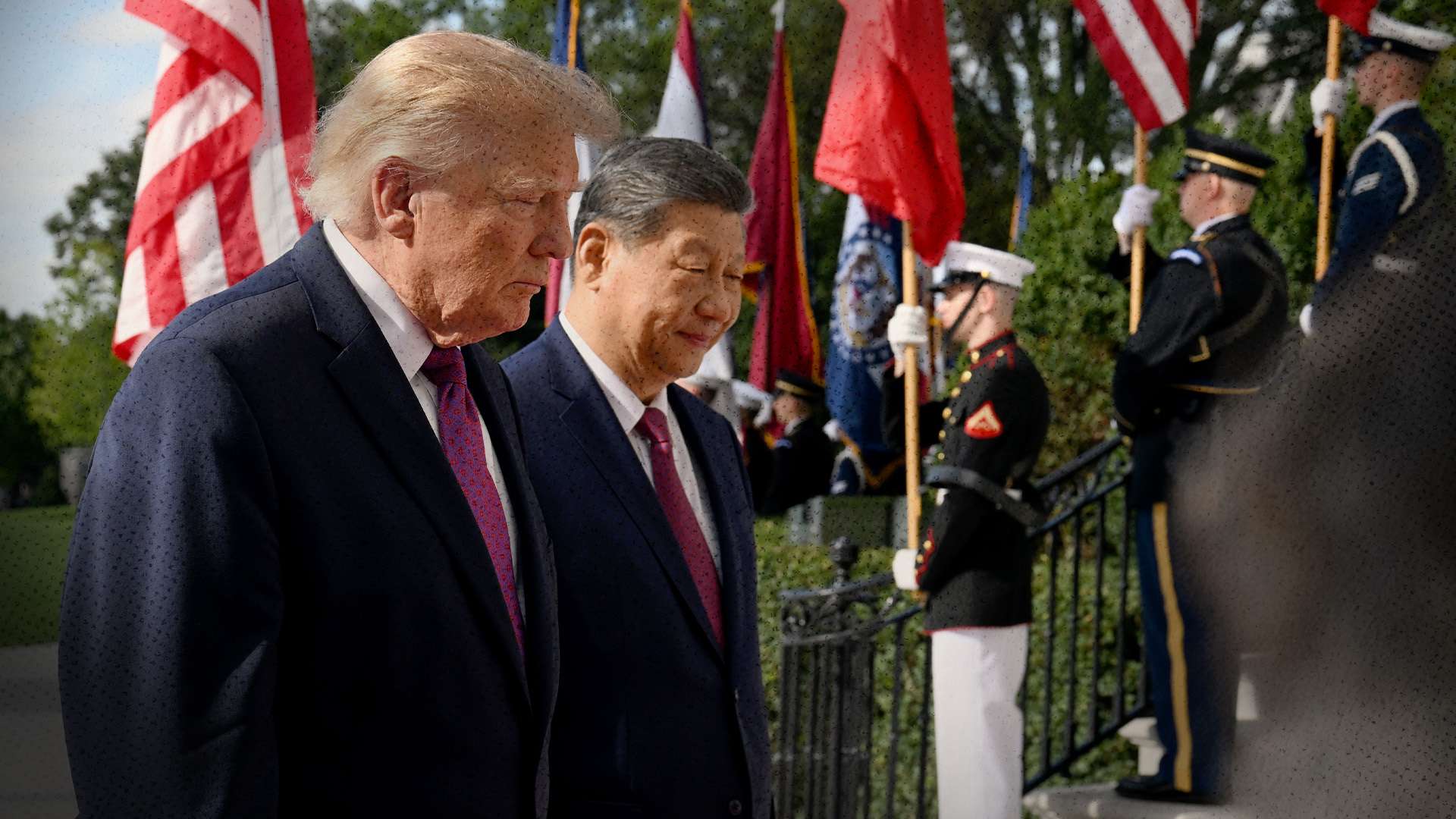
Chinese President Xi Jinping touched down at Joint Base Andrews near Washington on Wednesday and was greeted personally on the tarmac by President Donald Trump. The itinerary included a ceremonial Rose Garden military review and a formal state dinner in the White House’s East Room.
Much of that spectacle functioned largely as a lead‑in to Thursday’s talks aimed at extending the one‑year pause in the ongoing trade dispute between the two nations, a pause that is set to expire in November. It’s a grand welcome for a leader whom the administration labels America’s principal adversary.
Yet, following the specifics of Trump’s trade approach is no easy task.
In his first term, the policy looked quite different. The Section 301 duties, along with the bulk of tariffs launched from 2018 onward, targeted China almost exclusively. Critics argued they were misguided because many taxed items—such as furniture and household appliances—had little direct bearing on security, even as they were explained as addressing the particular challenge posed by a single nation.
The second term has diverged in several notable ways. By 2025, the average U.S. tariff applied to everyone else outside of China climbed from roughly 3 percent to over 18 percent. Officially, the aim cited is to gain leverage with all trading partners, regardless of friendliness, while leaning on protectionism and a touch of tariff revenue. The U.S. Trade Representative frames this tactic as defending American economic and national security interests and promoting fair, balanced, and reciprocal trade. China is simply one component of a broader confrontation.
If all these aims seem tangled, you’re not imagining things. Negotiating leverage requires tariffs that can be traded away for concessions, tariff revenue depends on ongoing imports, and protection aims to reduce those imports. A single instrument cannot realistically accomplish all three goals at once.
Moreover, there’s a practical temptation to offer questionable assurances to the American public. Last November, the administration floated a $2,000 dividend check for low- and middle‑income Americans financed by tariff revenue. Another pledge—that $5,000 per adult if Republicans retain control of Congress in the upcoming midterms—also hinged on tariffs. Talk of a bigger defense budget, fiscal balance, debt reduction, or even tax cuts was framed as being payable through tariff money. The implication: Congress could avoid trimming any spending programs.
Tariffs do generate revenue—about $264 billion in the preceding year—but the burden largely falls on American consumers. Moreover, more than half of that revenue stemmed from levies deemed unconstitutional, refunds of which the administration is now returning to U.S. companies.
In the midst of this confusion, the administration remains heavily focused on China. To be fair, China does present genuine national security concerns. Beijing has shown a willingness to weaponize rare‑earth export licenses, it has threatened Taiwan, and it engages in corporate espionage. There is justification for addressing these threats with targeted measures, but the way policies and rhetoric have been carried out has complicated those aims and diminished American prosperity.
For example, a full‑scale trade war with many partners does little to reduce dependence on China. A New York Times article from July recounted a small U.S. flashlight importer who spent years diversifying supply to Thailand, Vietnam, and Cambodia. When Trump’s latest tariffs adjusted those countries’ costs to roughly the same level as Chinese imports, the importer returned to relying on a Chinese supplier. That anecdote captures the essence of the current policy approach.
Even if one isn’t anxious about the origin of every flashlight, the broader strategy tends to weaken American security. As scholar Samuel Gregg notes in research for the American Institute for Economic Research, military power rests on economic strength. The United States outlasted the Soviet Union in part because its economy could grow and fund defense while devoting only a portion of output to that effort. Tariffs erode that advantage by raising costs for American producers and slowing growth, shrinking the economic base that pays for the Pentagon.
Protectionism also costs allies. Gregg cites the Morrill Tariff of 1861, which angered Britain enough to push it toward a cautious neutrality during the Civil War—despite having every reason to back the Union. In recent weeks, Trump’s sharp confrontation with Canada has strained a close partner, trusted trading ally, and NATO member. It has driven a friend into the orbit of China. Some may dismiss this as a tactic aimed at scoring political points against Trump, but the practical consequence is that America becomes weaker.
Finally, expanding the notion of “national security” to cover every steel mill and auto plant drains the term of meaning. A government that brands almost everything as a security threat will struggle to mobilize allies or win votes when a genuine danger appears.
Perhaps the Xi–Trump encounter will shed some light on these questions. I’m not optimistic.
COPYRIGHT 2026 CREATORS.COM
