
There appears to be no single, consistent doctrine shaping the tariff strategy of the Trump administration. The volley of duties and threats has unfolded in a piecemeal and sometimes unruly fashion, yet if one tries to pin down a fundamental objective, it would be to recalibrate America’s persistent trade deficits.
President Donald Trump has spent years hammering the trade deficit into the national conversation (even as he occasionally seems to conflate it with the federal budget deficit, which sits on a different ledger). Throughout his administration, the leading trade officials have likewise highlighted the deficit as a principal gauge for judging the success or failure of tariffs imposed on foreign goods.
For instance, during a hearing last year with Representative Brendan Boyle (D–Pa.) addressing what outcomes would signal a successful tariff policy, U.S. Trade Representative Jamieson Greer testified that “the [trade] deficit needs to go in the right direction”—implying that it should shrink. More recently, Greer has argued that “overproduction” abroad “displaces existing U.S. domestic production” as a justification for the tariffs tied to the Trump agenda.
In short order, the logic goes: higher import taxes are meant to spark homegrown production across various sectors and to tilt the balance of trade toward greater exports and fewer imports. While many economists downplay the importance of the trade deficit as a macroeconomic concern, the White House’s stance is unambiguous. The aim, in their view, is for America to export more, import less, and to move toward trade surpluses rather than deficits.
Yet the most recent tariff maneuver appears to run counter to that framework.
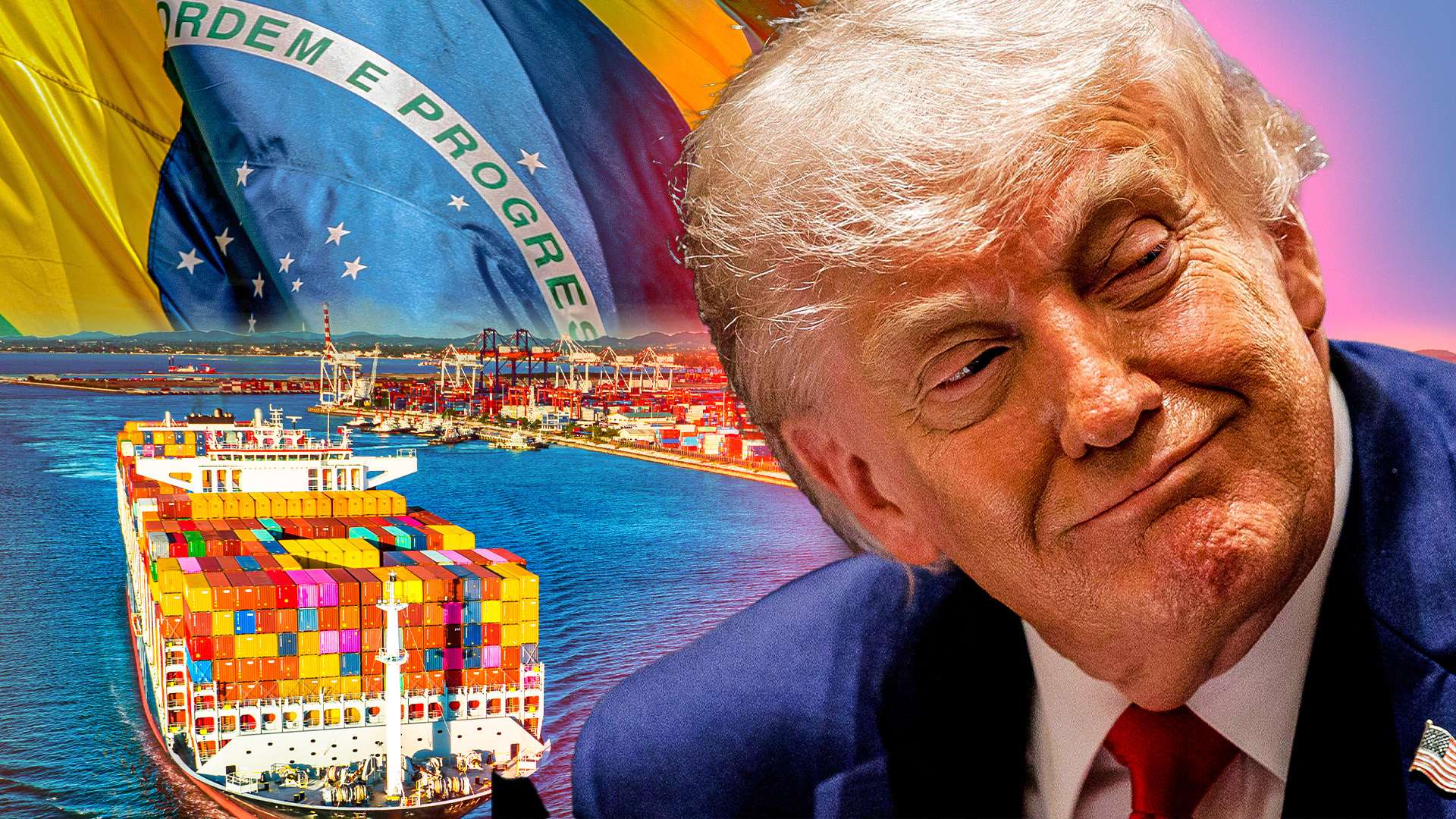
On Wednesday, the White House unveiled a fresh 25 percent tariff on thousands of items imported from Brazil. The new duties are imposed under Section 301 of the Trade Act of 1974 and are intended to replace the earlier “emergency” tariffs on Brazilian goods that the Supreme Court invalidated in February. In a statement, Greer framed the tariffs as a response to “unfair trade practices.”
But if reducing the trade deficit is the North Star, here is a disquieting reality: the United States actually exports far more to Brazil than it imports from there.
“The U.S. goods trade surplus with Brazil was $14.4 billion in 2025, a 112.8 percent rise ($7.7 billion) from 2024,” Greer’s office noted. When services are counted, the trade surplus with Brazil expands by another $23 billion.
And this isn’t a one-off. Over the past fifteen years, the United States has accumulated a cumulative trade surplus with Brazil totaling more than $424 billion, according to a statement attributed to Brazilian President Luiz Inácio Lula da Silva.
Administration officials have offered a smorgasbord of overlapping and competing reasons for the new tariffs in conversations with The New York Times, ranging from “inadequate policing of deforestation” to the fact that Brazilian courts had attempted to compel U.S. social media companies to remove certain political content.
Those may touch real concerns, but the core question remains: how would tariffs fix them? Forcing American businesses and consumers to pay higher prices on imports from Brazil hardly seems like an effective strategy to combat deforestation or to champion free speech.
“These tariffs are a blunt instrument with a weak link between the cited practices and the American companies that will bear the costs,” said Dan Anthony, executive director of We Pay the Tariffs, a nonprofit coalition representing more than 1,200 American small businesses. “Businesses that buy everyday goods from Brazil will now face new tariffs owing to disputes over digital payment rules and other policies they have nothing to do with.”
Altogether, the emphasis on trade deficits underscores a broader point: the new tariffs once again reveal that the Trump administration’s trade policy rests on shifting explanations rather than on a consistent set of principles. The president seems prepared to deploy any justification to slap tariffs on foreign imports, leaving American consumers and businesses to shoulder the bill.
