
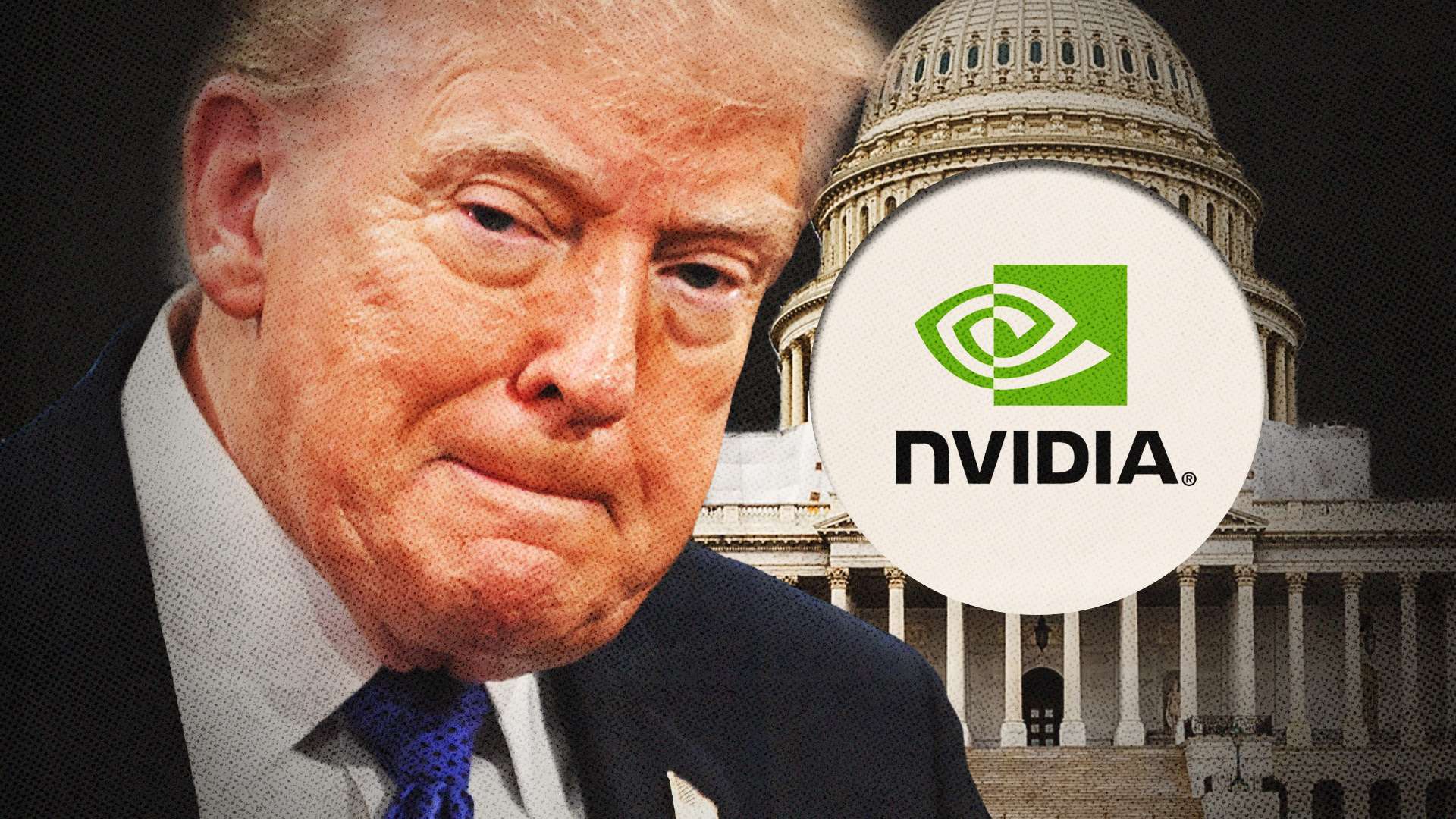
The return of Jensen Huang to Nvidia signals greater government involvement in the chip sector.
On Monday Nvidia’s board of directors announced that it had “voted unanimously” to restore Jensen Huang to the roles of president, chief executive, and board member. The move came 11 days after Huang stepped down amid allegations of an extramarital relationship with an individual described as a Chinese spy. The incident underscores how deeply the federal government has become entangled with private enterprise, a trend that appears to have intensified during the later years of the Trump presidency.
The decision to reinstate Huang surprised many in Washington and on Wall Street. During a recent earnings call with investors, Nvidia’s chair, Harvey Jones, had stated that the board did not “intend to reinstate Jensen as CEO.” Yet on Monday the board reversed course, explaining that after a “series of discussions and meetings” with Huang, it was “satisfied” with his candor and his ability to lead Nvidia. In its deliberations, Nvidia’s board said it had “received input from senior levels of the United States government” and was “confident that Mr. Huang’s reinstatement poses no national security risk.” Semafor reported that hours before the final decision was announced, President Donald Trump joined Nvidia’s board meeting to advocate for Huang’s return. The outlet also said that Vice President J.D. Vance was “personally engaged” in Nvidia’s decision, because both Vance and Trump view Huang as an “effective counterbalance against the incredible and increasing power of OpenAI and Anthropic.”
The stock market responded positively to Huang’s return, rallying in tandem with lawmakers who are pressing for greater government involvement in the AI sector.
Following Nvidia’s announcement, Sen. Elizabeth Warren (D–Mass.) urged Congress to pass “bipartisan export-control bills and ensure NVIDIA does not lobby against them, thereby jeopardizing our national security.” In the House, Rep. Don Bacon (R–Neb.) argued Nvidia should have moved forward without Huang, dismissing what he called the Administration’s inexplicable desire to preserve Huang. Bacon also called for a probe into “who approved high-end computer-chip sales to China.” Warren and Bacon are not alone in their belief that export controls are essential to safeguarding America’s standing in the AI competition. In 2025, and again in late 2025, the Trump administration attempted to curb shipments to China by imposing export controls on Nvidia’s advanced semiconductors, though those measures were subsequently relaxed.
Even as lawmakers from across the aisle call for tighter Nvidia oversight—and Treasury Secretary Scott Bessent telling Fox News that Nvidia needed a “dramatic shake-up” and accusing the company of a “culture of non-compliance”—Trump remains a steadfast supporter of Huang. In a Truth Social post issued after the reinstatement became public, Trump asserted that the “United States Government has no reason to believe that Jensen’s return to NVIDIA poses any risk to National Security.” He also claimed that Attorney General Todd Blanche had “confirmed that the U.S. Government does not possess evidence” that Huang engaged in any unlawful conduct.
The Nvidia episode is unlikely to mark the end of government involvement in the market. When asked on Monday how he would respond to questions about a president commenting on governance decisions by private firms, Trump told CNBC’s Squawk on the Street that he was “doing it for the country.” He suggested he would involve himself with the operations of companies such as Microsoft, Alphabet (Google’s parent company), OpenAI, and Anthropic as well.
Although Trump has framed his public comments as necessary to help the AI industry prosper, Huang’s return also benefits him politically. A CNBC analysis found that Trump’s investment accounts had traded Nvidia stock at least 103 times since his return to the White House, with total activity ranging from roughly $27 million to $97.5 million. The Trump administration has also struck a deal with Nvidia to receive 25 percent of the profits from its chip sales to China (a portion Nvidia has paused).
Beyond the executive branch’s increased involvement in corporate decisions, the affair is likely to invite heightened scrutiny from Congress. Rep. Hakeem Jeffries (D–N.Y.), an advocate of export controls and the incoming House speaker, told Reuters that Congress “clearly” needs more information about Nvidia’s current situation. Those answers may come soon. The Washington Post reported on Monday that Huang agreed to face questions from U.S. lawmakers, including a closed-door interview with House committee chairs in December and a forthcoming hearing before the Senate Banking, Housing, and Urban Affairs Committee, date to be announced.
With the narrative already bearing the marks of a political scandal, there is little reason to expect lawmakers will prioritize substance over posturing during these inquiries. After all, the decision of who should lead Nvidia should have remained a matter for its shareholders and its board, not for the government.
