
From scrapping approved projects to taking equity stakes in companies, Trump is leveraging phony national-security justifications to seize control of the energy sector.
Virginia Beach’s sunlit shores are inviting, yet the real landmark sits roughly 27 miles offshore at the Coastal Virginia Offshore Wind project, the largest offshore wind installation currently under construction in the United States.
This undertaking has stretched over more than ten years. In 2013, Dominion Energy secured a lease from the Bureau of Ocean Energy Management. In 2017, during the first term of Donald Trump, the agency gave its blessing to Dominion’s site plan, and by 2020 two pilot turbines were brought online. It was not until October 2023 that federal regulators signed off for the remaining parts of the farm to start rising from the water.
From the shore, the ongoing work isn’t immediately obvious. Outside of occasional nighttime activity, the turbines are difficult to discern with the naked eye. (If you want a glimpse from land, you’ll need to pick a vantage point and scan with binoculars.) A boat trip to the Outer Continental Shelf, however, reveals the project’s magnitude: 800-foot-tall turbines rising over the open ocean like vertical towers capable of withstanding Category 3 hurricane winds, anchored to the seabed by 1,500-ton metal tubes with a diameter of 31 feet.

Even with their industrial look, the turbines have yielded a net gain for the local ecosystem. They act as artificial reefs for fish and other wildlife, and they have allowed fishermen to keep catching flounder, cobia, and mahi in the deeper Atlantic waters.
When construction wraps up—targeted for late 2027—the wind farm will stand as the country’s most expansive project of its kind. The plan calls for 176 turbine units to deliver about 9.5 million megawatt-hours of clean power to Virginia’s grid each year, a level that Dominion says could light up around 660,000 homes. At this stage, the company projects the facility will sustain roughly 1,100 jobs and generate about $200 million in annual economic output for the region.
And you don’t have to wait until 2027 to observe benefits. During its construction phase, Dominion estimates that the wind farm has supported about 900 direct and indirect jobs each year and produced about $143 million in regional economic activity.
But in December 2025, the Interior Department issued an abrupt stop-work order for the Coastal Virginia project.
What could persuade the Trump administration to pause a project that supported thousands of jobs and had backing from the prior administration? The same line of reasoning that keeps surfacing whenever the president justifies reshaping America’s energy markets: “national security.”
Trump’s National Energy Emergency and the Defense Production Act
While campaigning in 2024, President Donald Trump pledged to unleash American energy supremacy. “We’re going to be energy-dominant, we’re going to be prosperous because of it, we’re going to export it across Europe and the world,” he told Fox News’ Maria Bartiromo in August. “We’re going to be bigger, better, and cheaper in energy.”
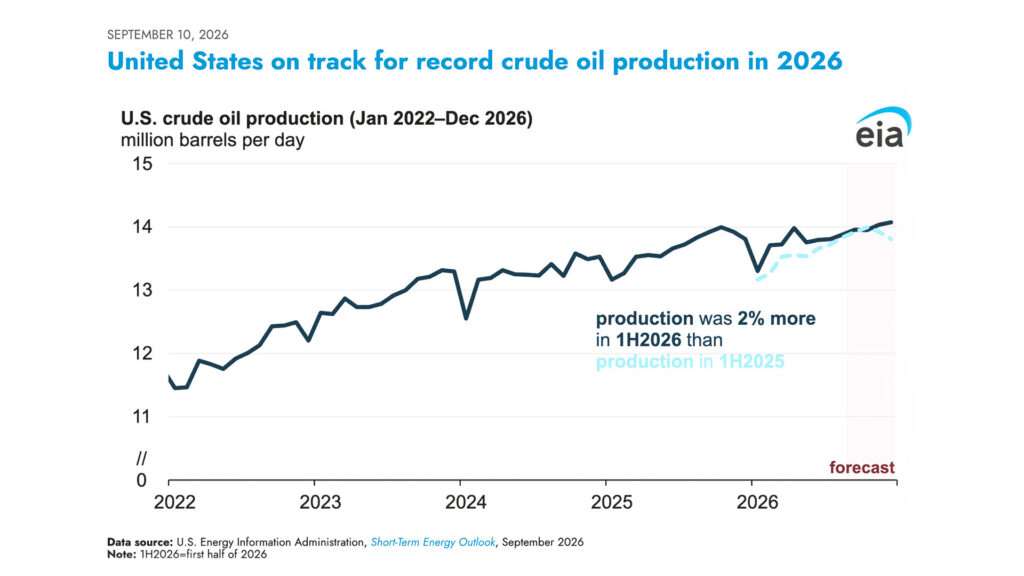
The first 22 months back in office have yielded mixed results, depending on the fuel. Fossil fuels have benefited from favorable policies and higher production, while renewable projects have faced obstacle after obstacle (on top of eliminating subsidies that were deemed wasteful).
On Day 1—the same day Trump “temporarily” halted all offshore-wind permitting in federal waters—he signed an executive order declaring a National Energy Emergency. “The policies of the previous administration have driven our Nation into a national emergency, where a precariously inadequate and intermittent energy supply, and an increasingly unreliable grid, require swift and decisive action,” the order stated.
What was designated as the necessary “swift and decisive action”? Expanding the government’s power and reach. Specifically, the order directed federal agencies to “exercise any lawful emergency authorities available to them” to boost energy generation across nearly all sources—except wind and solar—through the Defense Production Act (DPA).
The DPA, enacted in 1950 soon after the Korean War began, created a framework for the president to steer private industry toward defense needs without full nationalization, notes Gabe Arrington, a national-security expert and nonresident fellow at Rice University’s Baker Institute for Public Policy.
Once invoked, the DPA grants the presidency sweeping authority with minimal congressional listening, enabling government direction of private businesses. It can compel prioritization of certain contracts, authorize loans and loan agreements, and even block mergers with foreign entities.
“We were just emerging from World War II, where nationalization was a broader option. This was a middle ground,” Arrington remarks.
Yet the DPA carries a long institutional memory and has been used by every president since its inception. President Jimmy Carter employed the act to fund research into synthetic fuels and to set up the Synthetic Fuels Corporation, which financed development of those fuels from 1980 until Congress dissolved it in 1986. President Ronald Reagan used the act to stockpile rare earth minerals for military uses and to direct steel production.
After 9/11, its use expanded dramatically, Arrington notes, including for body armor, military vehicles, and other surveillance equipment. During the COVID-19 pandemic, both Trump and President Joe Biden employed the DPA to secure billions in PPE and medical and testing supplies. Biden then used it to boost production in the clean-energy sector.
In April 2025, Trump chose to advance a different set of energy producers. Through an executive order, he proclaimed that “coal is essential to our national and economic security,” and he also designated coal a “critical mineral,” broadening the potential for future DPA funding.
With these moves, the Trump administration positioned itself to wield the full federal apparatus to mold the energy sector as it wished.
‘The American People Won and the Special Interests Lost’
During his first term, the president pushed through deregulation in nuclear energy, updated environmental-review practices, and rolled back costly plant-rules. The market responded to this largely hands-off stance with lower inflation-adjusted energy spending, record renewables production and investment, and, in 2017, the United States became a net exporter of liquefied natural gas—a striking milestone given that the first LNG shipment from the continental U.S. occurred only a year earlier.
Trump’s successor reversed this laissez-faire approach.
On his first day in office, Joe Biden scrapped the Keystone XL pipeline project and paused new oil and gas leasing on federal lands. Then, in 2022, Biden signed his signature (and ironically named) Inflation Reduction Act into law.
“With this law, the American people won and the special interests lost,” Biden proclaimed at the signing ceremony. A few months later, climate czar John Kerry predicted the measure would spark the “largest transformation, economically, since the Industrial Revolution.”
That transformation, however, never fully materialized. Instead, the government poured substantial subsidies into the green-energy sector.
The Inflation Reduction Act funneled billions into new programs, including $12 billion steered toward the Energy Department’s Loan Programs Office. That funding, alongside the office’s expanded lending authority of $100 billion, was directed at supporting projects like a Ford plant in Tennessee (which displaced residents), grid upgrades for California’s largest utility, and a solar facility for a South Korean manufacturer owned by Stellantis (the former Chrysler).
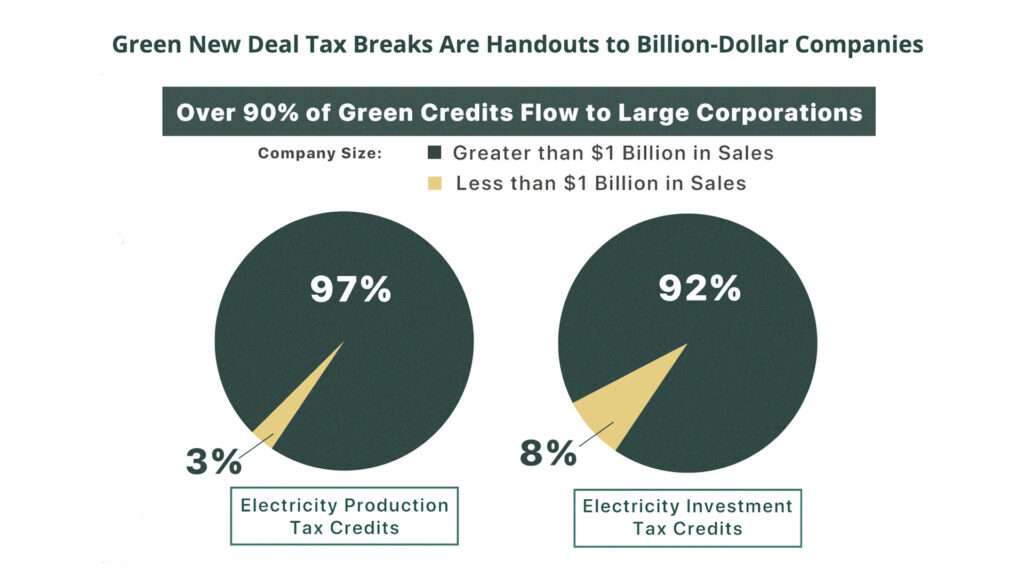
The law also offered generous tax credits and subsidies for renewables and green technologies. Wealthy homeowners and large corporations captured the majority of the tax credits. Renewable-energy generation—though reaching historic highs in 2024—lagged well behind fossil fuels in overall production.
Meanwhile, grid operators issued stern warnings about the health of the power grid. In 2023, PJM Interconnection—the largest grid operator in the nation—reported that demand driven by electrification and data centers was exceeding supply. A year later, the operator warned that ongoing plant retirements and rising demand were eroding energy reserves, potentially hindering responses to record summer heat. A later report from the Energy Department concluded that continued retirements could make blackouts 100 times more likely by 2030.
This price squeeze, paired with high spending, spurred conservative policy thinkers to call for drastic measures. Diana Furchtgott-Roth of the Heritage Foundation penned pieces warning that America faced a national-energy emergency caused by Biden’s policies and insisting that immediate action by Trump could prevent the country from following Europe’s energy and climate trajectory.
Trump’s National Security Claims Are a Weak Justification To Block Wind and Support Coal
Enough people agreed that Biden’s green agenda was misguided, so Trump returned with substantial latitude to recreate the lighter-touch approach to energy markets from his first term. Yet he intensified Biden’s reach instead of dialing it back.
For instance, in 2026 Trump tried a new tactic in his conflict with wind projects: compensating developers to stop operating. In March, the administration struck a deal with TotalEnergies to shut down two offshore-wind projects off North Carolina and New York. Under the arrangement, TotalEnergies received $928 million—a dollar-for-dollar reimbursement of what it had spent on securing offshore leases—which it then redirected into oil and natural-gas ventures. The company also committed not to pursue any new offshore-wind projects in the United States, per a government press release.
The Interior Department cited national-security concerns to justify the deal. It has since brokered four additional agreements to compensate developers to cancel permitted offshore wind projects and shift investments toward fossil-fuel generation. Meanwhile, the Defense Department has stalled approvals for onshore wind farms on private property under the banner of “national security,” the Financial Times reported in May.
Projects like these typically require Defense Department clearance to ensure they do not interfere with radar systems. If interference is detected, a simple fix exists: the developer pays a Pentagon-approved fee to update the radar. If no agreement is reached, the project may proceed anyway. As the Financial Times notes, about 50 of the projects facing shutdown would likely have been deemed risk-free; about 30 had already engaged in negotiations, received informal approvals, and were awaiting written confirmation—making the administration’s national-security justification appear increasingly thin.
Jason Grumet, CEO of the American Clean Power Association, told the Financial Times, “The fact that the administration is telling private landowners they can’t pursue economic activity and extract value from their property is hard to square with conservative principles.”
Fortunately for developers, a federal judge froze the Pentagon’s wind-order in August. In November, the Senate passed a broad bipartisan permitting-reform bill that would, among other things, bar the executive branch from reversing or altering an approved permit or hindering construction on a project that was already approved. While certain conditions—including new information about national-security risks—could still justify government interference, the agency would have to provide advance written notice. As of press time, the legislation sat in the House of Representatives; the White House indicated it supported the measure.
The administration has also stepped in to bolster favored sectors, particularly coal. In May 2025, citing Trump’s national-energy emergency order, Energy Secretary Chris Wright directed J.H. Campbell—a 1,560-megawatt coal-fired plant in Michigan that was slated for closure—to remain open temporarily for the summer. More than a year later, the plant remains in operation. Consumers Energy, the plant’s majority owner, is seeking roughly $303 million in cost recovery from local ratepayers. In September, a federal court voided the initial order, but the agency issued a 90-day directive in November to keep the plant running through mid-February.
“I think that the reliability and stability of the grid is both an economic concern and can pose national-security risks,” says Nick Loris, president of the free-market think tank C3 Solutions. “But it doesn’t seem that J.H. Campbell is generating much electricity, so I’m not sure it actually solves a problem.”
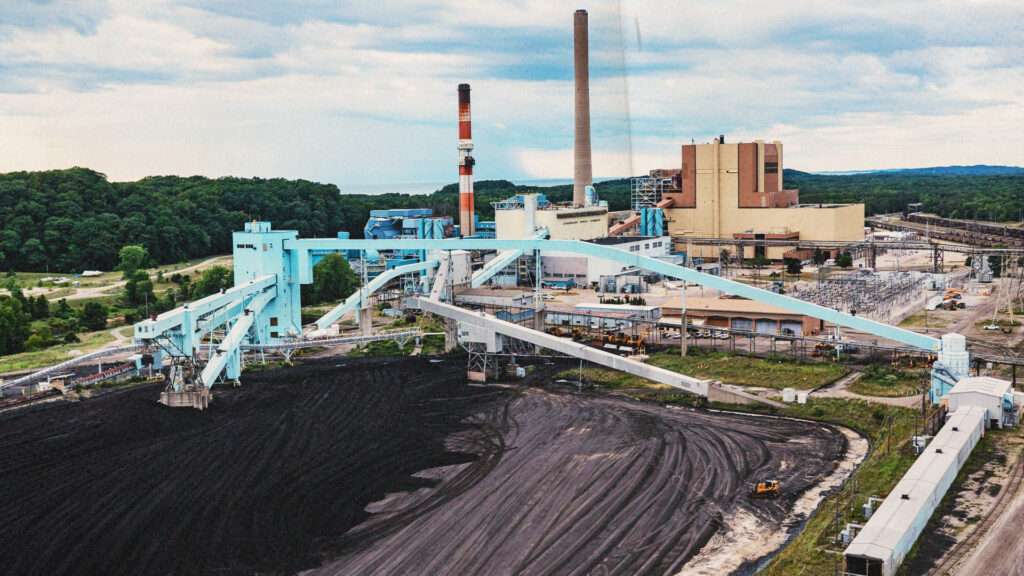
Loris warns that decisions like these can have “secondary and tertiary effects” on the market and deter investments in cleaner, cheaper technologies. This is playing out in Indiana, where an Energy Department order to keep a retiring coal plant running has made it impossible for one unit to be replaced with cleaner-burning natural gas.
The Trump administration has kept funneling money into coal. Using its DPA authority, the Energy Department has provided $425 million for modernizing coal plants and has opened up other funding opportunities for the industry. Following an April order, more DPA funds are on the way to support the sector’s supply chains and extend the life of other coal plants. Yet coal exports have declined.
Nuclear energy, too, has enjoyed favored status under the reconstituted Trump administration, including using the DPA to enrich nuclear fuel. Industry voices have praised this as essential given America’s reliance on imported uranium—an issue many see as a national-security risk. Christo Liebenberg, president of LIS Technologies, a startup that uses laser methods to enrich uranium, contends that the Energy Department’s deployment of the DPA to fund enrichment is “needed because the demand is so large and the supply so small.” Liebenberg argues that to meet Washington’s aim of quadrupling nuclear power by 2050, the U.S. would need a twelvefold boost in domestic enrichment capacity.
The administration leveraged the same national-security rationale to take an ownership stake in Westinghouse last year. In June, the Energy Department unveiled a $17.5 billion loan program to deploy 10 Westinghouse AP1000 reactors. Notably, under the ownership agreement, the government would receive a 20% share in any dividends paid by Westinghouse above the $17.5 billion threshold, according to Bloomberg.
So, even when a national-security justification has some basis in reality, it can become a slippery slope. “Rather than investing in a project targeted to a specific security need,” says Loris, “it ends up acting like a balloon payment to broad industries and firms that aren’t addressing the core security questions.”
This appears to be the pattern of the second Trump term: deploying seemingly defensible, mostly spurious, national-security claims to bolster favored companies and sectors. Trump may not be the first president to do so, but he is doing it at a time when officials such as Wright have identified deregulation as a more effective remedy to America’s energy challenges.
People may not feel the immediate sting of Trump’s energy-socialist policies, but the longer-running disturbances in energy markets will show up in higher utility bills and steeper costs for building power plants. The impact could also be political, should competitors advocate halting all oil-and-gas projects and accelerating solar development by employing the same “national security” tools Trump now uses.
What Happened to the Coastal Virginia Offshore Wind Project?
Despite being a target of the Trump administration, the Coastal Virginia Offshore Wind project remains alive. In January, a federal judge overturned the administration’s work stoppage, and later that month a turbine generator was installed. In March, the farm delivered its first power to the grid.
However, in August, Dominion disclosed that the project’s cost had climbed by nearly $300 million, a rise attributed to Trump-era tariffs and revised turbine-installation projections.
Trump entered office vowing to overturn Biden’s energy policies. Yet while the beneficiaries may have shifted, many of the same policy instruments have been used, producing results that are similarly costly and detrimental. The nation needs more energy, but bogus national-security claims are hindering progress.
