
Europe usually responds to international crises as if waking in the middle of the night to find their home on fire: first disbelief; then perplexity; and finally, with smoke already filling the rooms, a sudden conviction that the danger is real. The military escalation between the United States, Israel, and Iran brings that familiar scene back to mind. We are confronting not only a fresh crisis in the Middle East but another sign that the international order established after World War II is unraveling before our eyes.
For decades, the international system rested on a fairly straightforward premise: the use of force should be restrained by shared norms, multilateral institutions, and a balance between power and legality. That balance was never perfect, yet it created a framework of predictability. Today, that framework is broken. The doctrine of the preemptive strike—an elastic formula that converts hypothesis into threat and threat into justification—has become an alibi for unilateral action. When preemptive war is normalized as a routine instrument, it undermines not only international law but the very architecture of global stability and security.
“It’s worrying that the erosion of the international order is being justified in the name of defense of democracy. Democracies do not defend themselves by suspending the very norms that make them possible”
None of this implies ignoring the nature of the Iranian regime. This is a theocratic power that brutally represses its own population—especially women—and that has used regional violence as a tool of political survival for decades. But precisely for those reasons, it is all the more alarming that the current erosion of the international order is being justified in the name of defending democracy. Democracies do not defend themselves by suspending the norms that make them possible. When international law becomes a selective instrument, invoked in some conflicts and relativized in others, then it ceases to be law and becomes a mere instrumental argument.
The European response to this crisis has again laid bare a weakness too often repeated: the difficulty of viewing Europe as an autonomous actor. Too often, European foreign policy operates as a shadow of American foreign policy. That reaction does not stem from Europe’s own strategic reflection but from an almost automatic reaffirmation of alignment. That kind of blind Atlanticism cloaked in prudence is today revealing its limits in a world where alliances no longer align with the 20th-century coordinates.
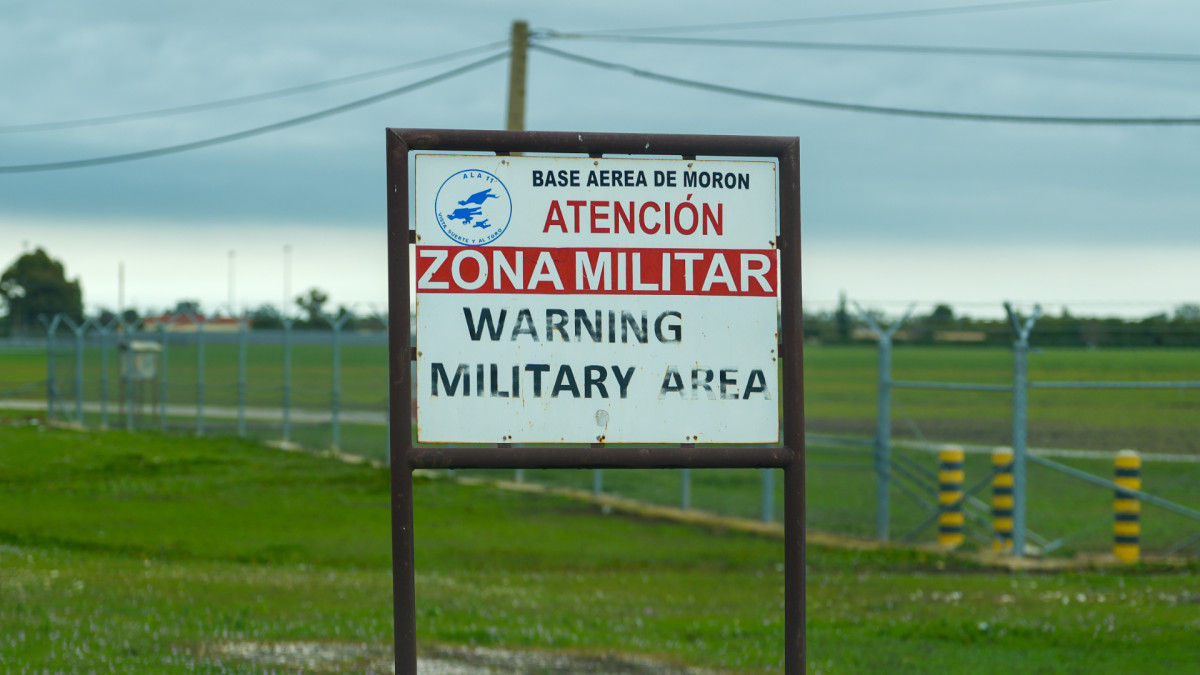
The current case provides an especially clear illustration of the problem: Donald Trump has threatened to cut off trade with Spain in retaliation for its government’s refusal to back a military escalation that lacks UN coverage, and for resisting the use of its bases for operations linked to that aggression. The scene is revealing. This isn’t merely a diplomatic dispute but the explicit use of economic coercion among traditional allies as a tool of political pressure.
“By threatening to cut off trade with Spain, the U.S. is effectively threatening the entire European market”
The most significant aspect of this episode is that Trump’s threat doesn’t even recognize Europe’s institutional reality. Like any other Member State, Spain doesn’t negotiate its trade policy bilaterally with Washington. Trade policy is an exclusive competence of the European Union. Therefore, by threatening to cut off trade with Spain, the U.S. is effectively threatening the entire European market.
The lack of response from German Chancellor Friedrich Merz was telling: he oscillated between complicit silence and vassal-worthy cooperation. This was a moment to clearly assert that no Member State can be subjected to economic intimidation by an international partner. It could have served as an opportunity to remind that the European internal market is a political project designed precisely to shield its members from external pressures. Instead, there was silence.
That kind of silence is often presented as strategic realism. But increasingly, it resembles something else: the persistence of a political culture that continues to view the transatlantic relationship in terms of subordination. For decades, Europe outsourced its security and much of its strategic horizon to the United States. That delegation may have seemed comfortable in a stable world, but when U.S. policy becomes unpredictable, ready to exploit its economic and military power, it becomes hazardous.
The emerging world looks less and less like the liberal order Europe learned to inhabit. The great powers are combining commercial pressure, military strength, and technological capacity to defend their own interests. Trade becomes a geopolitical weapon, sanctions an instrument of discipline and interdependence a field of strategic competition. In that scenario, a Europe incapable of exercising its collective sovereignty risks becoming a space of influence rather than a political actor.
“Sovereignty is the ability to sustain a foreign policy consistent with international law, even when coherence becomes difficult for traditional allies”
Sovereignty is not an abstraction—it has very concrete dimensions. Sovereignty is the ability to defend one’s internal market against economic coercion. It’s the ability to sustain a foreign policy consistent with international law, even when coherence becomes difficult for traditional allies. It’s the ability to build an industrial, energy, and technological base that reduces strategic dependencies. And it’s also the ability to speak with a single voice when one of its members is threatened.
Paradoxically, the European Union already possesses one of the most formidable instruments of power in the contemporary world: its economic dimension. Europe’s internal market is among the largest commercial areas on the planet. It is a regulatory powerhouse capable of setting global standards, an economic actor whose scale makes it an indispensable partner for almost any advanced economy. But that potential becomes real power only in a context of political will to use it.
And that political will demands abandoning automatic inertia. Europe cannot remain a normative power if it’s unwilling to defend the rules that make its allies uncomfortable. European credibility depends precisely on that high level of coherence which Spain has consistently maintained. If we defend international law in Ukraine, we must also defend it in Gaza and Iran. Not because those conflicts are identical, but because law is the only thing that prevents the international system from turning into a chessboard where only force counts.
In the last hours, some have begun moving closer to the position marked by Pedro Sánchez. Emmanuel Macron and Mark Carney have finally acknowledged the illegality of the attacks, and other voices have begun to speak more clearly about the need to de-escalate and restore the framework of international law. These moves are revealing. As happened with Gaza, the accumulated pressure of ongoing events can push governments toward positions that Spain defended from the outset.
But embracing the correct positions with the passage of time isn’t enough. In international politics, reason that arrives too late usually arrives once the damage is already irreparable. Europe needs more than the ability to retrospectively acknowledge its errors. It needs the political conviction to act in time.
“A Europe that assumes its collective sovereignty can be one of the few powers capable of defending a rules-based international order”
In the end, the real debate running through this crisis isn’t about Iran. It’s about Europe. It’s a question of whether the continent is willing to assume its place in a world increasingly driven by imperial prerogatives. In that world, a European Union that acts as a mosaic of national fears becomes irrelevant. On the other hand, a Europe that assumes its collective sovereignty can be one of the few powers capable of defending a rules-based international order.
The difference between these two possibilities is ultimately a matter of political will. Spain has led the way. For too long, Europe has lumbered ahead like a sleepwalker, confident that the ground beneath its feet would always remain stable. But the ground is now crumbling.
In the face of such a profound change, the greatest risk is not to make a mistake. The greatest risk is to continue walking as if nothing has changed.
