
That notion is both dangerous and unlawful.
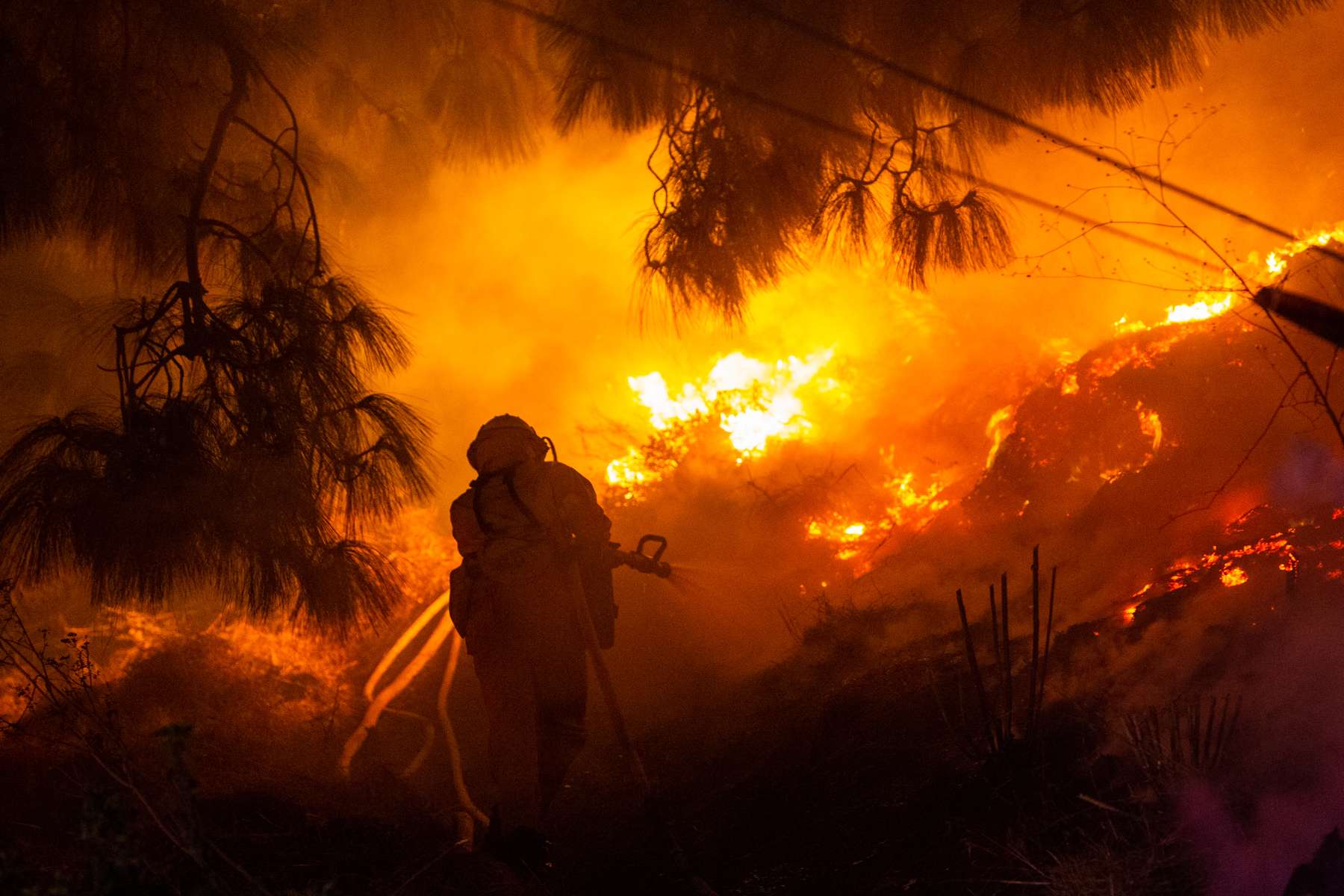
A thick plume of smoke from extensive wildfires in Canada has recently blanketed much of the eastern United States. It’s a real problem. Yet Trump’s proposal to levy fresh tariffs on Canadian goods in reaction to it would not improve matters. If put into effect, such tariffs would harm both economies and strain the U.S.–Canada relationship still further, while doing virtually nothing to ease the wildfires themselves. Moreover, no law grants the president the authority to impose tariffs as a response to natural disasters like this one.
Trump argues the tariffs are warranted because “we are holding Canada responsible for the fact that they are not properly maintaining their Forests, and Brush therein, and the United States is being unnecessarily invaded by filthy, polluted, and unhealthy air.” But in truth, the fires result from a mix of lightning, weather patterns, and global warming. They cannot be remedied merely through improved “forest management.”
One could contend Canada bears some responsibility for warming the planet, but the United States shares that responsibility as well—and on a far larger scale given its bigger population and economy. In any case, higher tariffs aren’t likely to compel Canada to stop the wildfires.
What such tariffs would do is raise costs for American consumers and diminish the output of many U.S. industries that rely on Canadian imports as inputs. For instance, a December 2025 analysis by the U.S. Chamber of Commerce documents substantial harm caused by Trump’s prior tariffs on Canadian aluminum. Likewise, tariffs on Canadian lumber push up the cost of building homes, worsening the housing crisis. The two nations’ economies are deeply integrated, and there are numerous sectors where mutual benefits arise from purchasing goods the other country can produce with higher quality and lower prices.
Tariffs would also inevitably inflict pain on Canada. But that is harmful in itself, and likely to rebound on the United States as well. A prosperous neighbor is preferable to a weakening one. A wealthier Canada is likely to buy more American exports, manufacture more goods and services Americans would want to buy, and offer stronger investment opportunities for U.S. interests.
Furthermore, a new wave of tariffs would further undermine relations with Canada, which have already suffered from Trump’s previous tariffs and his repeated threats to annex Canada and turn it into the 51st state. Gratuitously alienating a neighbor and vital ally is not “Making American Great Again.” It makes the United States weaker and more isolated at a moment when cooperation with allies is essential to counter adversaries like Russia and China.
I know many Canadians, including a sizable share of conservatives and libertarians who have historically been sympathetic to the United States. Thanks to Trump and his policies, many now feel alienated or at least highly skeptical. And this sentiment isn’t limited to a few acquaintances. Polls of Canadian opinion show a marked rise in anger and distrust toward the United States. Americans underestimate the peril of wrecking this relationship at our own risk. We don’t want to replace a friendly, accommodating neighbor with a hostile one.
Finally, it’s worth noting that Trump lacks the legal authority to impose tariffs in response to wildfires. The Constitution assigns tariffs to Congress, not the executive branch. The Supreme Court reaffirmed this principle when it struck down Trump’s IEEPA tariffs in a case I helped litigate. There is no statute authorizing the president to levy tariffs in response to wildfires or other similar natural disasters in a neighboring country.
Trump is reportedly planning to reimpose something like the IEEPA regime through Section 301 tariffs. That plan is itself illegal for reasons Peter Harrell and I have described in several writings. In any event, as Peter notes, Section 301 can only be used to counter “unjustifiable” or “unreasonable or discriminatory” trade practices by foreign governments. Wildfires are clearly not a trade practice.
The same applies to his push to deploy massive new tariffs under Section 122 of the Trade Act of 1974 (which the U.S. Court of International Trade recently struck down). Section 122 is intended to address balance-of-payments deficits and related problems. Wildfires do not qualify. No other statute provides for tariffs in such situations.
Interpreting the IEEPA statute to permit tariffs in this context would grant the president the power to impose duties essentially at will, so long as he claims it is in response to a “national emergency” that constitutes an “unusual and extraordinary threat.” But the courts rejected that expansive view, precisely because it would vest the executive with nearly unlimited authority.
Perhaps administration lawyers will craft a novel theory to justify imposing tariffs here. If they do and Trump acts on it, hopefully the courts will reject it.
Ultimately, this episode serves as another reminder that we should not give one person a blank check to impose tariffs whenever he desires. Permitting that would undermine the constitutional separation of powers, inflict economic harm, damage our relationships with allies, and threaten the rule of law.
