
The widening scope of the conflict into Yemen is worsening disruptions to oil supplies.
Russia once carried out its infamous “three-day special operation” in Ukraine. The United States now finds itself conducting a “brief foray” into Iran. In February 2026, as he ordered the confrontation, President Donald Trump assured the public that the campaign would last only four or five weeks, and he told other leaders that victory would be achieved in three to four days.
Seven months into this up-and-down conflict, the world finds itself revisiting familiar indications. In a repeat performance, Trump repeated his preferred talking points to Axios on Thursday: a major decision is on the horizon, and he might “annihilate” Iran, yet the Iranian leadership appears desperate for a deal. To top it off, Axios reported that the White House is pursuing a coalition of Israel and Arab states to curb Iran, a familiar tactic that many administrations have attempted to address the Middle East.
Trump has also repeatedly insisted that the energy shortages triggered by the war are only a “minor glitch” and that once hostilities end, gas prices would be even cheaper than they were before. But the damage now looks more serious and durable. Diesel prices in America are reaching record highs, and airlines are canceling flights due to comparable jet-fuel shortages. On Friday, Aramco, the Saudi state oil company, halted deliveries to several European refineries for October. The investment bank JPMorgan has essentially given up trying to forecast the war’s economic consequences.
Tehran’s approach to the protracted conflict relies far more on free markets than Washington’s strategy. The U.S. government has tried to keep oil prices low, even if that means decoupling them somewhat from actual supply and demand, at the risk of future shortages. In contrast, the Iranian government is allowing price inflation to erode demand and squeeze out more domestic supply, according to a recent Foreign Affairs article by economist Esfandyar Batmanghelidj.
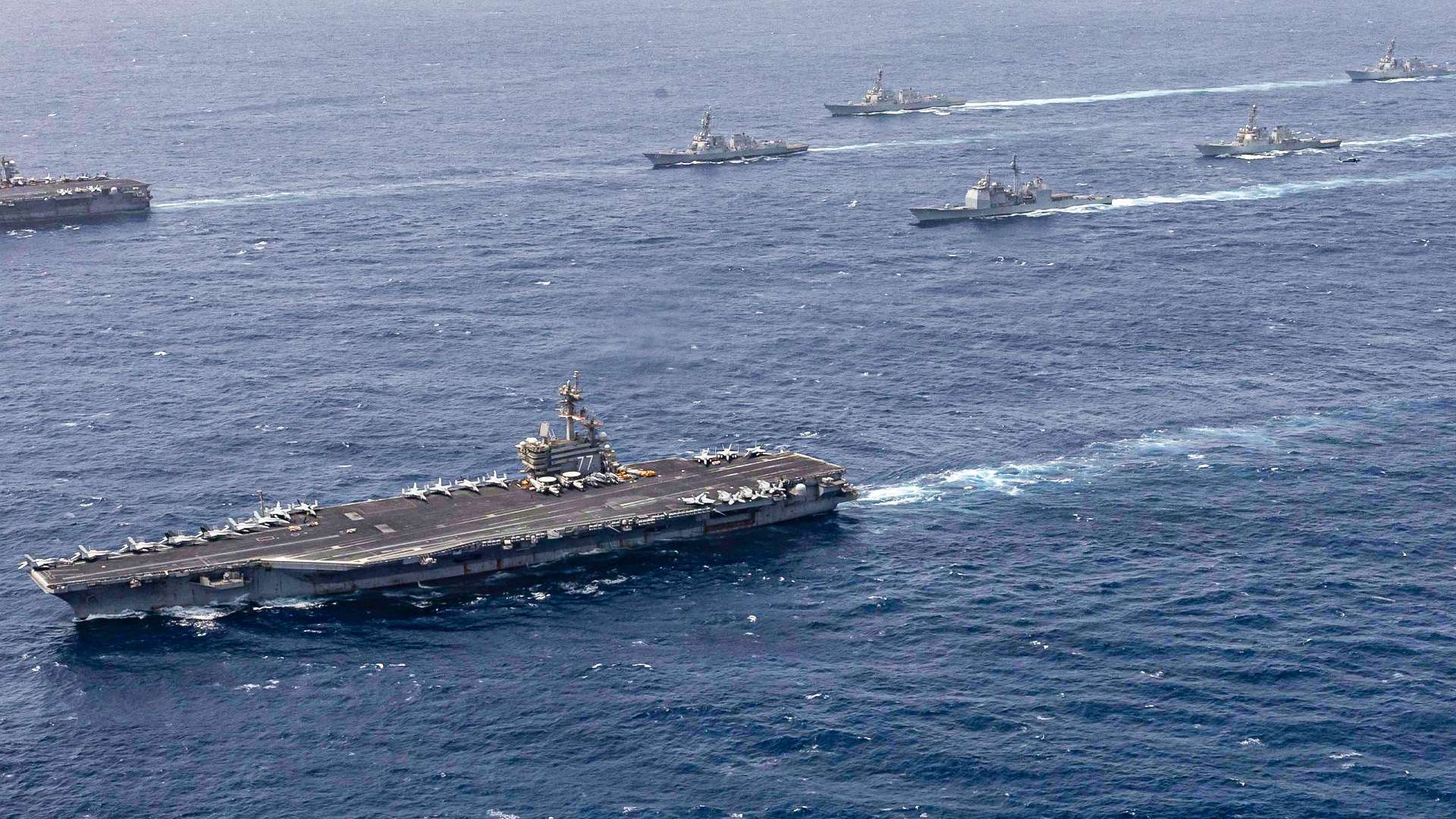
About a third of the U.S. Navy’s fleet is occupied with enforcing the U.S. blockade of Iran, not counting forces fending off Iranian raids on shipping in the Strait of Hormuz. (UK Maritime Trade Operations, a British navy office, has reported three separate “incidents” in the past few days.) The latest round of fighting did not involve direct clash between Iranian and U.S. troops.
The Houthi government in Sanaa, one of Yemen’s rival regimes, seized the port of Mokha last week, placing the Houthis within artillery range of Bab el-Mandeb, the strait at the entrance to the Red Sea. When forces from nearby Saudi Arabia intervened, Houthi forces retaliated by destroying a Saudi pipeline intended to bypass Hormuz and that carries about four percent of the world’s oil.
Saudi Crown Prince Mohammed bin Salman reportedly pressed Trump twice to intervene and bomb Yemen, according to Reuters and CBS. While the president declined direct U.S. involvement, the two nations established a U.S.–Saudi joint command with around 100 advisers from the American military, CNN reports. The Trump administration had previously carried out air raids in Yemen, as did the Biden administration before it, and the United States remained deeply involved in the Saudi–Houthi conflict from 2015 to 2022.
There is little domestic appetite for U.S. escalation. The war, which was unpopular from the outset, is even more unpopular now, according to a poll released this week by the Institute for Global Affairs. A majority of Americans view the war as a mistake, cannot name a goal worth pursuing, believe it has increased the cost of living, and assign primary blame to either the United States or its ally Israel for starting it. Meanwhile, U.S. involvement in Yemen was so unpopular that Congress passed its first-ever War Powers resolution in 2019 to withdraw.
Still, bipartisan hawks are pressing the Trump administration to respond to the Houthi gains. During a hearing last week, Rep. Jared Moskowitz (D–Fla.) asked why “the Trump administration is not supporting [the] fight against one of the largest terrorist militant groups in the Middle East.” Rep. Joe Wilson (R–S.C.) told the Saudi state TV channel Al Arabiya that he would like to see the U.S. military “back up” Saudi Arabia, and he proposed the Free Yemen from Iran Act, a bill to aid the Saudi-backed government in Aden, Yemen.
But the U.S. military simply might not be able to escalate on two different fronts. U.S. military sources have told both Axios and The Intercept that the current standoff is simply unsustainable.
The shortage of American air-defense ammunition is a well-known issue, and the Pentagon’s inspector general reported on Monday that there are significant bottlenecks for munitions resupply. U.S. forces fired 60 to 70 Patriot missiles and more than 12 Terminal High Altitude Area Defense (THAAD) missiles to defend bases in Jordan during clashes with Iran last week, The Wall Street Journal reported. The United States had 759–827 high-end Patriot missiles and 234–278 THAAD missiles left, according to July 2026 calculations by the Center for Strategic and International Studies, which government sources confirmed to CNN as accurate.
Acting U.S. Secretary of the Navy Hung Cao told The Epoch Times last week that Iran “blew the hell out of Bahrain,” the central headquarters of the U.S. Navy in the Middle East; Chief of Naval Operations Adm. Daryl Caudle told an audience of sailors that the Navy has no plans to return “any time soon.” Ships are now being resupplied from Diego Garcia, a distant island in the Indian Ocean. The inspector general’s report on Monday noted that the “extended sea transit” has created complications.
The standoff has persisted because both sides have grown overconfident that they had the other cornered. As Trump’s forecast of a swift victory unraveled, Iranian officials boasted that their leverage over Hormuz was “greater than a nuclear bomb.” In the following months, Trump pursued reviving some shipping through Hormuz and imposed a counter-blockade on Iran, boasting about his “total control” of the waterway. Then the Yemeni escalations demonstrated that Iran could threaten other waterways and upstream oil infrastructure.
And so it continues into month seven—with no end in sight.
