
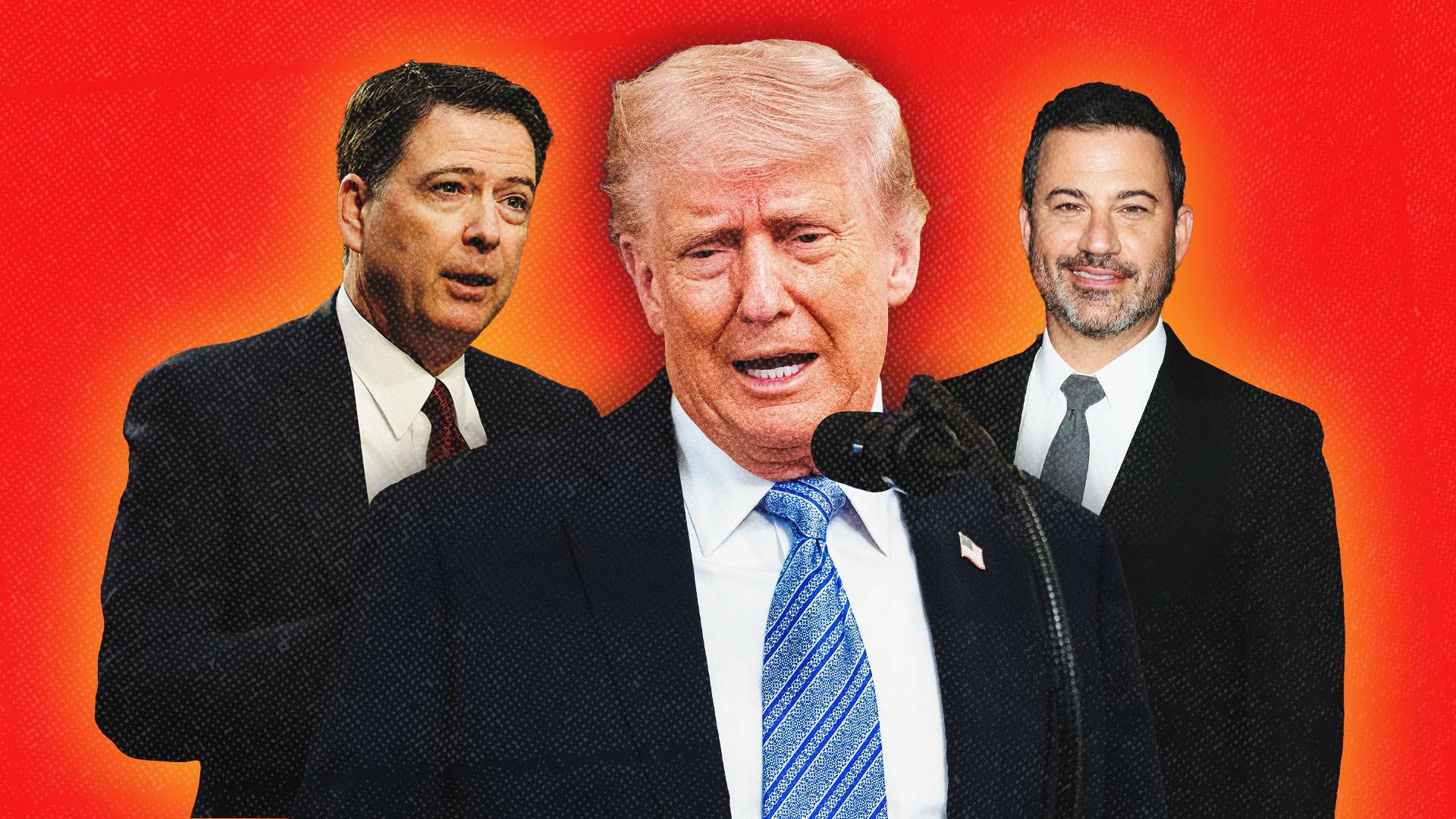
Recently, President Donald Trump called for the immediate dismissal of late-night host Jimmy Kimmel after he delivered a joke about him that the president labeled as “really shocking.” The following day, the Justice Department charged former FBI Director James Comey with two federal felonies for sharing a beach photograph in which seashells were arranged to spell the phrase “86 47,” a ubiquitous slogan expressing opposition to the sitting president.
These consecutive outbursts of anger from the chief executive illustrate a striking divergence between Trump and most past presidents. While criticism of the president has never been welcome, Trump stands out for regularly and openly leveraging the powers of the presidency to punish people whose remarks he finds offensive—a pattern that directly clashes with his proclaimed commitment to safeguarding free speech.
Trump asserted that both Kimmel and Comey had threatened his life by inciting violence against him. Yet those assertions are not easily taken seriously.
In a comic bit on the April 23 episode of his ABC program, Kimmel pretended to be hosting the White House Correspondents’ Dinner. “Our first lady, Melania, is here,” he said. “So beautiful. Mrs. Trump, you have a glow like an expectant widow.”
The joke implied that Trump is aging and that his wife’s marriage is unhappy. Regardless of one’s view on its humor or taste, the line is plainly protected speech under the First Amendment.
Trump contended otherwise, claiming that Kimmel’s shtick amounted to a “despicable call to violence.” That assertion rings false, and the fact that a would-be assassin attacked the actual White House Correspondents’ Dinner two days later does not alter the original meaning of Kimmel’s words when viewed in their context.
Given the government’s authority over broadcasters, the president’s demand that ABC pull Kimmel from the air cannot be dismissed lightly. That point was underscored last year when the Federal Communications Commission (FCC) chairmanship, Brendan Carr, warned television stations that they could face fines or license losses if they punished Kimmel for his remarks about the man who murdered conservative activist Charlie Kirk.
The network and its affiliates promptly complied by suspending Kimmel’s show—precisely the sanction Carr had proposed. And the day after Trump criticized Kimmel’s “expectant widow” joke, the FCC signaled a renewed review of ABC’s broadcast licenses, citing purported concerns about “unlawful discrimination.”
As for Comey, the Justice Department seeks to imprison a person for repeating a slogan that appears on T-shirts and bumper stickers sold by major online retailers—a motto that Acting Attorney General Todd Blanche notes is “posted constantly” without triggering federal charges. The case rests on the claim that the number 86 equates to “kill,” a reading that defies common slang and nearly six decades of Supreme Court precedent on the “true threat” exception to the First Amendment.
Trump’s responses to Kimmel and Comey fit a broader pattern. Whether he’s attempting to deport a foreign student for writing an op-ed, threatening to revoke the licenses of news outlets he deems biased, labeling journalism he dislikes as fraudulent, suing CNN for calling his unfounded election-fraud claim “the Big Lie,” rebuking law firms that represent his critics, or trying to jail lawmakers who remind service members of their duty to disobey unlawful orders, Trump shows no hesitation in using governmental power to punish speech that irritates him.
On the first day of his second term, Trump issued an executive order touted as a bid to “restore freedom of speech and end federal censorship.” The following month, Vice President J. D. Vance reiterated that pledge. “Under Donald Trump’s leadership,” Vance proclaimed, “we may disagree with your views, but we will defend your right to express them in the public square.”
Those sentiments sound appealing. It would be even better if Trump’s deeds matched them.
© Copyright 2026 by Creators Syndicate Inc.
