
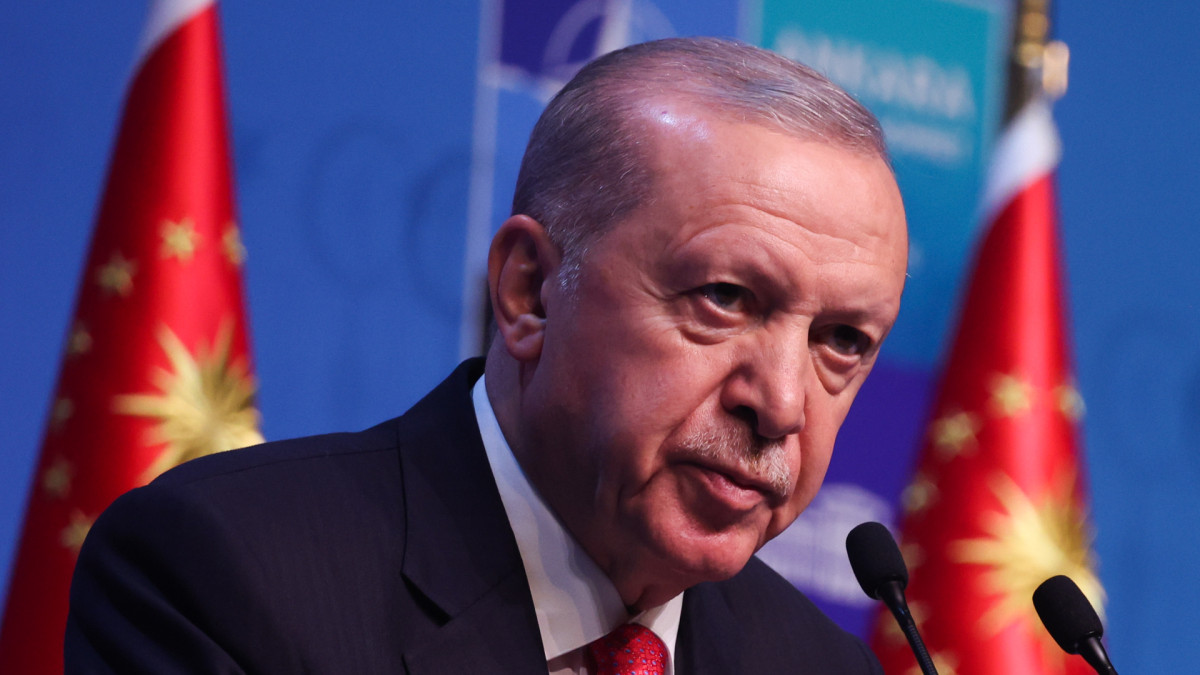
If the NATO summit in Ankara aimed to solidify the motto “a stronger Europe within a stronger NATO,” it largely achieved that goal. The allies reaffirmed collective defense and support for Ukraine, announced more than $50 billion in new acquisitions, and strengthened their commitments to military investment. But behind the veneer of unity, Donald Trump’s criticisms of Spain and his reiterations about Greenland continue to cast doubt on the future of transatlantic relations, the American commitment, and Europe’s ability to turn budgets and contracts into real military power. In other words, after the summit the outcome points to a hybrid architecture: “broader than the Union, less complete than NATO, and compelled to bear more weight with each passing year.”
“Under the appearance of unity, Donald Trump’s criticisms of Spain and his reiterations about Greenland continue to raise doubts about the future of transatlantic relations”
Amid these uncertainties, numerous observers pointed to Turkey, the host, as one of the summit’s winners. The evident alignment between Presidents Donald Trump and Recep Tayyip Erdoğan, the possibility of revising U.S. sanctions, and the reopening of the debate over a potential Turkish return to the F-35 program reinforced that impression. But Ankara’s strategic moment goes far beyond the personal rapport between the two leaders. Turkey arrived at the summit from a position of strength driven by structural transformations that are redefining Euro-Atlantic security.
Europe needs military capabilities, industry, interoperability, and a presence in the Black Sea, the Mediterranean, and its southern neighborhood. Turkey possesses all of these assets. The problem is that they belong to an indispensable ally, but also to a politically controversial one. If the question before was whether Turkey belongs to Europe in political or identity terms, now the question is whether Europe can build a credible security architecture without integrating Turkey in some way.
The Strategic Moment in Ankara
The summit confirmed a shift that goes beyond the traditional debate about how much each ally should spend. The issue is no longer solely burden sharing, but who can provide military capabilities, industrial production, technological innovation, and operational readiness. While the United States will remain the Alliance’s strategic anchor, Washington is not only asking Europeans to pay more, but also intends that they take on an increasing share of their own conventional defense.
This transition benefits Ankara. Turkey has the second-largest army in NATO and, since 2022, has reinforced a role that blends deterring Russian influence with managing threats from the south. It has provided military assistance to Ukraine, deepened industrial cooperation with Ukraine, and applied the Montreux Convention to restrict the passage of belligerent warships through the straits. At the same time, it has kept its channels with Moscow open and has not joined Western sanctions. This balance has frequently frustrated its allies, but it also grants Ankara a breadth of interlocution that few alliance members possess.
“Turkey possesses the second-largest army in NATO and, since 2022, has reinforced a role that blends containment of Russian influence with managing threats from the south”
At the same time, it is important to recognize that its value no longer depends solely on geography. In the last two decades, Turkey has developed a defense industry capable of producing drones, armored vehicles, naval platforms, munitions, missiles, and aerospace technologies. Its exports surpassed $7 billion in 2024, while companies such as Baykar, ASELSAN, Roketsan, and TUSAŞ have expanded their international presence and partnerships with European firms. For a Europe that urgently needs to accelerate its production and address the gaps exposed by the war in Ukraine, these capabilities are hard to ignore. The centrality of the Defense Industry Forum held during the summit was designed precisely to show that Ankara not only seeks a seat at the debates, but can also help materialize them.
Turkey aims to convert this availability of capabilities into three lasting benefits: contracts for its industry, normalization of its defense ties with Washington, and political recognition within the future European pillar of NATO. The F-35 file is particularly significant. A potential reintegration would remove one of the main obstacles to a strategic realignment with the United States, but it will not be immediate. The presence of Russian S-400s, CAATSA sanctions, technical requirements, and the necessary involvement of the U.S. Congress keep the process complex. Even so, the fact that the discussion has resurfaced shows that Washington is beginning to view Turkey less through past fractures and more through present necessities. Hence the question arises whether, in the face of immediate needs and rapidly accelerating geopolitical changes, the EU can rethink its relationship with Turkey, setting aside delicate issues of its difficult accession process and exploring new forms of integration and cooperation that are credible and current.
De facto Integrated, De jure Excluded
The paradox is that Turkey’s incorporation into European security is already underway. It advances through procurement decisions, technology transfers, the integration of supply chains, and industrial partnerships. Italy currently functions as the principal laboratory for this process. The Turkish company Baykar and the Italian Leonardo formalized in 2025 a 50/50 joint venture, LBA Systems, which shifts the relationship from platform sales to production, integration, certification, mission systems, and shared logistical support. The Italian Navy’s intention to operate the naval drone Bayraktar TB3 from the aircraft carrier Cavour sums up this leap well: Baykar ceases to be merely an external supplier and begins to be integrated into the industrial ecosystem of one of Europe’s leading defense companies.
Spain offers a not too different model, built on more than a decade of operational trust. The Spanish Patriot battery deployed in Turkey has contributed consistently to NATO’s air and missile defense. Its detection of an Iranian missile in March 2026 demonstrated how operational cooperation can generate tangible security and, with it, political capital and strategic trust. On that basis, an industrial dimension also develops. The HÜRJET program connects Turkish Aerospace with Airbus and Spanish companies to tailor the new advanced training aircraft to the needs of the Air and Space Force, incorporating components and subsystems produced in Spain. In addition, there are agreements aimed at integrating SMEs and major contractors from both countries, strengthening supply chains, and exploring forms of technology transfer and joint production.
“Turkey is entering ‘de facto’ into the European security architecture through platforms, components, certifications, and supply chains, but not yet ‘de jure’.”
Italy and Spain thus show two complementary pathways for Turkish integration. In both cases, the relationship is advancing faster than European political frameworks. Turkey is entering de facto into the European security architecture through platforms, components, certifications, and supply chains, but still not de jure. This difference is not merely semantic. Turkish technologies and companies are gradually being integrated into European supply chains, but Ankara remains outside many of the political and financial instruments that drive the transformation of continental defense. The EU’s SAFE program (Security Action for Europe), endowed with €150 billion, is the most visible example. Although in theory it contemplates formulas for third-country participation, Turkey remains excluded. From Ankara, Europe seems keen to access Turkish capabilities without granting it a place in the frameworks that fund and regulate them. From Brussels, however, concerns about Greece and Cyprus, doubts about Turkey’s erratic foreign policy in recent years, and a lack of internal consensus to build a more structured cooperation weigh heavily. Added to this is domestic democratic deterioration, which increasingly reinforces distrust of Ankara and, at the same time, calls into question Europe’s credibility.
This is not merely a normative objection. A durable cooperation requires institutional predictability and guarantees that agreements, institutions, and commitments will survive leadership changes. Trump’s return has reinforced a more transactional view of alliances, while Europe itself is going through what can best be described as a state of crisis. Security concerns today receive more attention than a decade ago, when democratic conditionality occupied a much more central role in EU–Turkey relations. This does not mean democracy and the rule of law no longer matter, but the criticisms that once dominated debates about Turkey now coexist with a growing awareness of the country’s strategic value. The challenge, therefore, is not whether political concerns should disappear, but whether Europe can develop frameworks capable of sustaining strategic cooperation despite recurring disagreements.
A Framework Wider Than the Union
The Ankara summit showed that European security and EU security are no longer necessarily equivalent. If governments want to build a stronger European pillar within NATO, they will hardly confine it to the community institutions. The United Kingdom, Norway, Turkey, and, gradually, Ukraine hold positions too important to be kept on the margins. The Italian defense minister’s recent proposal reflects the debate about a truly continental response and provides evidence of a growing awareness that Europe’s strategic challenges are advancing faster than its institutional framework. Turkey sits at the center of that contradiction. It has built autonomy and maneuvering room through its regional activism and its defense industry, yet it remains deeply connected to the Western ecosystem through bilateral cooperation and NATO itself. It is “too important” to continue being treated as a peripheral actor, but also “too integrated” into the Euro-Atlantic system to pursue a full separation. Mutual dependence is real.
“The United Kingdom, Norway, Turkey, and, progressively, Ukraine hold positions too important to be kept on the margins”
Keeping the relationship within the current “managed pragmatism”—cooperation when necessary and political distance when it seems inevitable—risks delivering the worst outcome for both sides: an indispensable strategic partner, but permanently underintegrated. The alternative is not to silence democratic criticisms or to artificially resurrect a credibility-free accession process. It means designing specific institutional pillars that can sustain industrial, operational, and political cooperation while preserving clear conditions of predictability and democratic resilience. Because, as recently written by the former leader of Turkey’s largest opposition party, “Europe’s Turkish partners must learn to look beyond the current government.”
Europe has already begun integrating Turkey’s capabilities. Now it must decide whether it is willing to define its institutional place within the architecture that those capabilities help sustain. The Ankara summit did not resolve the paradox, but it made it much harder to keep avoiding it.
