
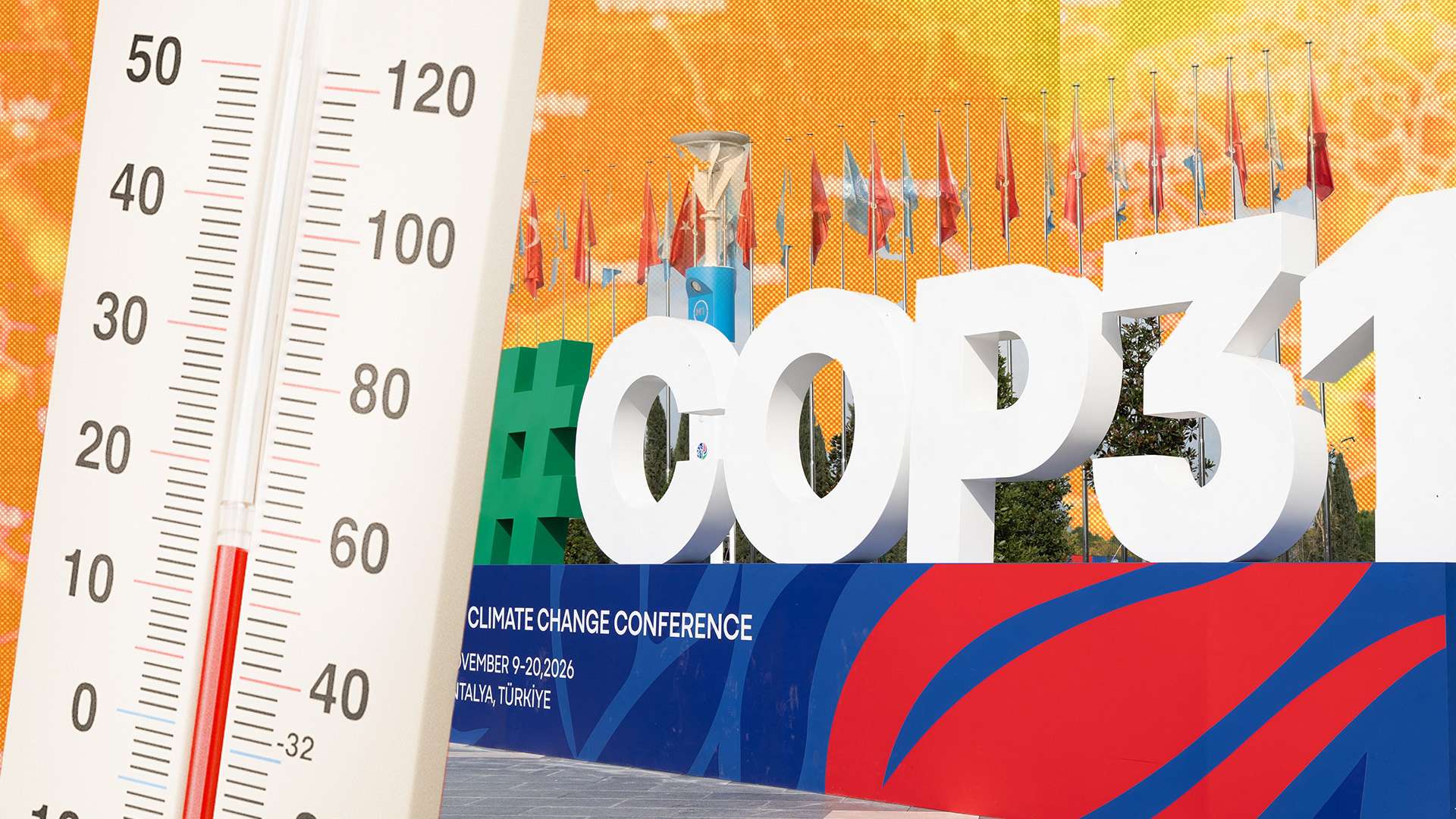
We’ve had 31 U.N. climate change conferences, and global temperatures keep rising.
In DW News, veteran climate advocate Mohamed Adow of Power Shift Africa insists there’s no doubt this has been the most ineffective COP to date. Given the long history of the United Nations’ annual pre-Christmas climate spectacles, Adow’s assessment that COP31—the 31st Conference of the Parties under the UNFCCC—is creeping toward its customary, underwhelming close in Antalya, Turkey, seems plausible.
Expect COP31 to wrap up this weekend with the standard conference decision, a document heavy on broad warnings to governments to step up action on climate change and to bolster climate finance. The action portion would require steep cuts in greenhouse gas emissions—primarily CO2 released by burning oil, gas, and coal. How steep? On the order of 18 percent by 2030, 45 percent by 2035, and 69 percent by 2040. The finance portion calls for wealthy nations to channel through 2035 at least $305 billion per year to poorer countries, ostensibly to assist them in adapting to climate impacts.
Even after 31 U.N. climate conferences, greenhouse gas emissions and the atmospheric concentration of those gases continue to rise, just as global average temperatures do.
The UNFCCC was adopted in 1992 with the goal of curbing globe-warming greenhouse gas emissions; instead, those emissions have kept climbing in a steady upward trajectory.

Rising emissions have accordingly boosted the concentration of heat-trapping carbon dioxide in the atmosphere.
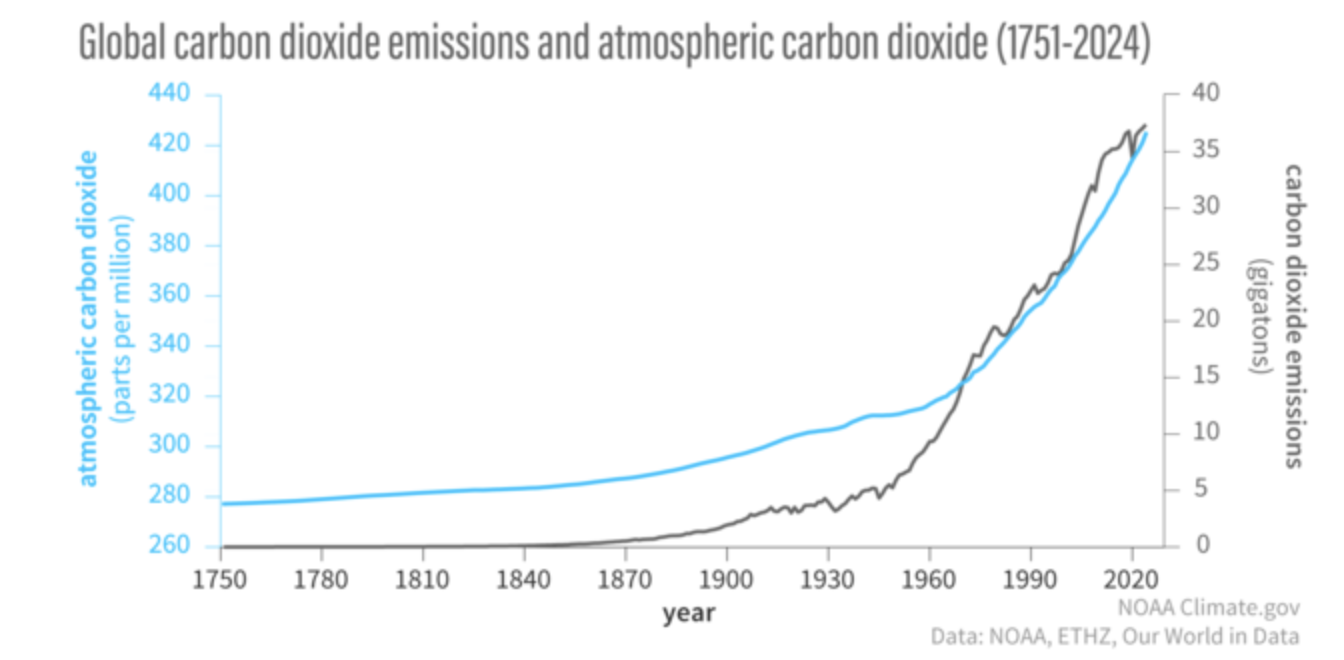
The 2015 Paris Agreement sought to keep the average global temperature rise well below 2°C above pre-industrial levels and to strive toward limiting it to 1.5°C. To reach that objective, emissions were supposed to peak before 2025 and then fall by about 43 percent by 2030. That outcome, on the ground, did not occur.
Alongside rising atmospheric concentrations of greenhouse gases, the planet’s average temperature has continued its upward climb.
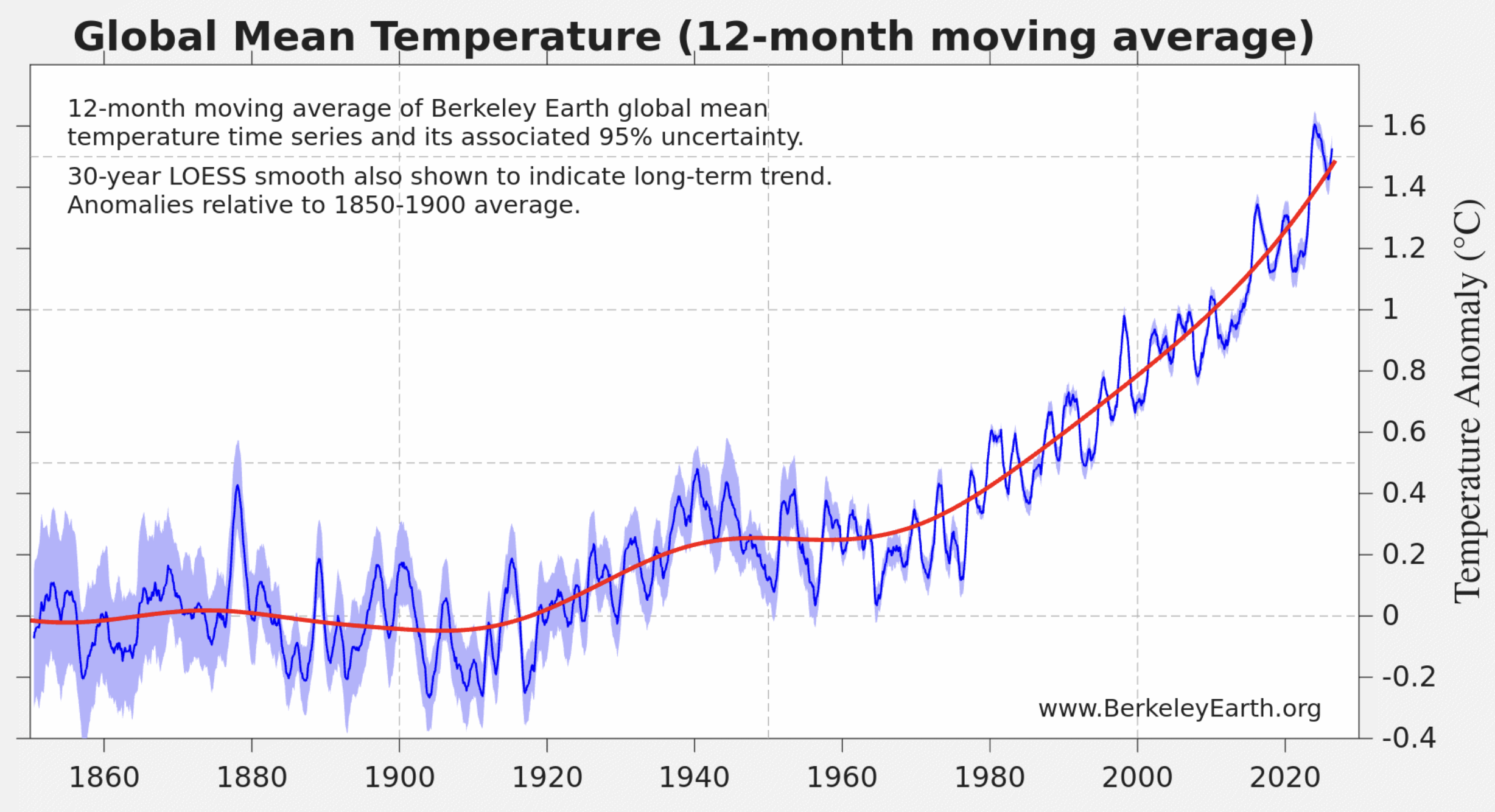
In fact, the 1.5°C target set by the Paris Agreement was surpassed when 2024 became the hottest year in the instrumental record. In its most recent update, the independent climate data group Berkeley Earth reports that “October 2026 was the warmest October on record, averaging 1.80 ± 0.12 °C (3.25 ± 0.22 °F) above the 1850–1900 baseline, about 0.12 °C above the prior record set in October 2023.” Berkeley Earth also notes that it is “now virtually certain that the 2026 annual average will exceed 1.5 °C (2.7 °F) above the 1850–1900 average, with a likely annual range around 1.55–1.64 °C.” This level would surpass the 2024 record, making 2026 the warmest year in Berkeley Earth’s records.
The European Copernicus Climate Change Service likewise projects that the global average temperature in 2026 will exceed the 1.5°C threshold above preindustrial levels.
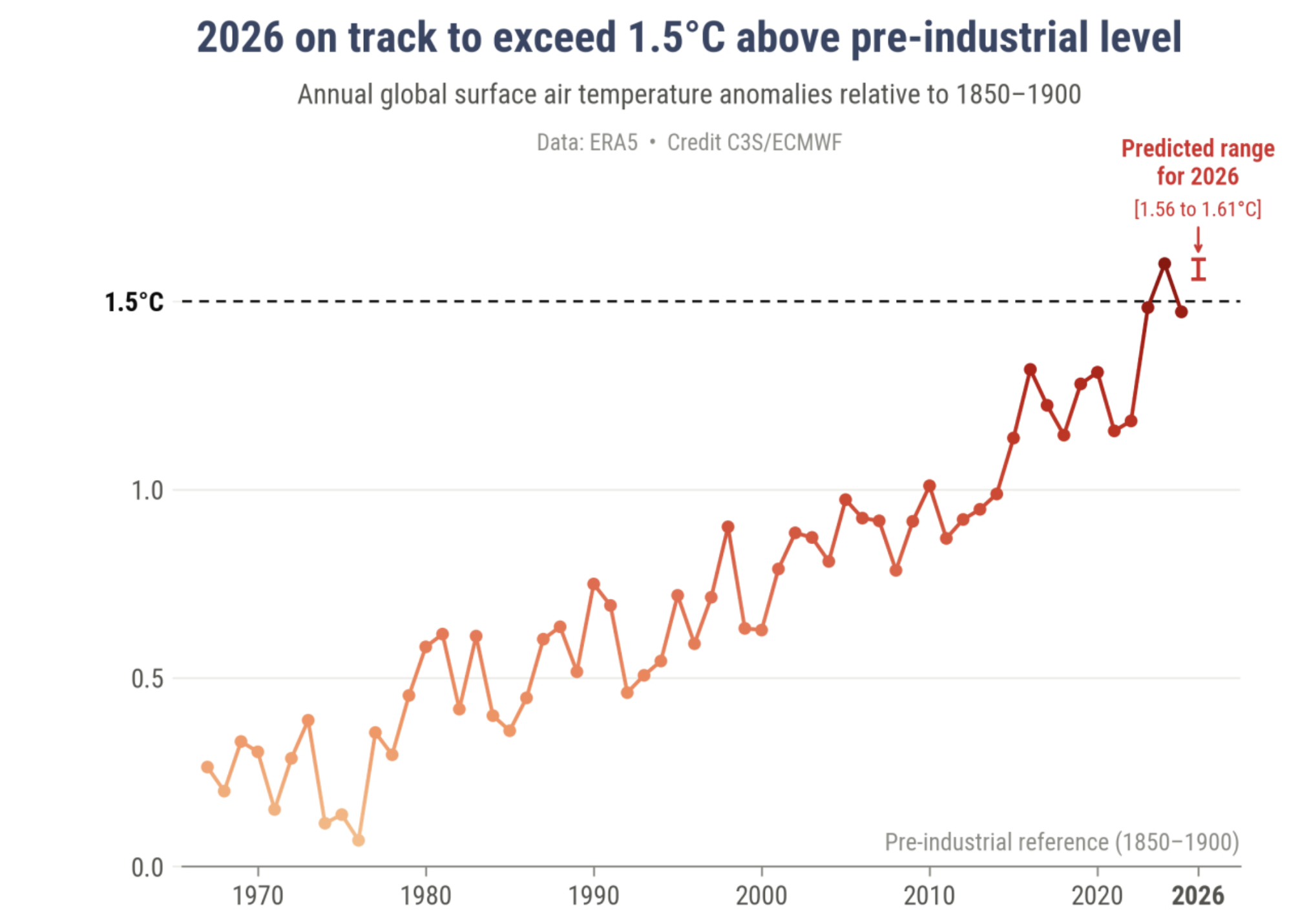
Global temperatures have this year been buoyed by the intense El Niño event, where a warm pool of surface water in the eastern Pacific near South America releases substantial heat into the atmosphere in periodic bursts.
The United Nations now concedes that the “chance of holding global warming to 1.5°C above pre-industrial levels…is now gone.” BusinessGreen notes that COP31 President of Negotiations Chris Bowen told reporters that “the responsibility of COP31 is to recognize that the world will not meet the Paris agreement’s 1.5°C pledge” adopted 11 years ago.
With negotiations showing little apparent effectiveness, what trajectory can we expect for the planet’s average temperature? The U.N. has warned that warming could reach as high as 2.6°C to 2.8°C above pre-industrial levels by century’s end. As I pointed out last year, climate researcher Roger Pielke Jr. and colleagues, using more nuanced emission scenarios, projected in 2022 that global mean temperatures would climb to somewhere between 2°C and 3°C above the pre-industrial baseline (1850–1900) by 2100, with a central estimate around 2.2°C.
“Even though projections of future climate change have moderated considerably in recent years,” Pielke rightly observed, “the human influence on the climate remains real and poses risks to our collective future.” After 31 years of COPs, United Nations climate negotiations have still not done much to lessen those risks.
