
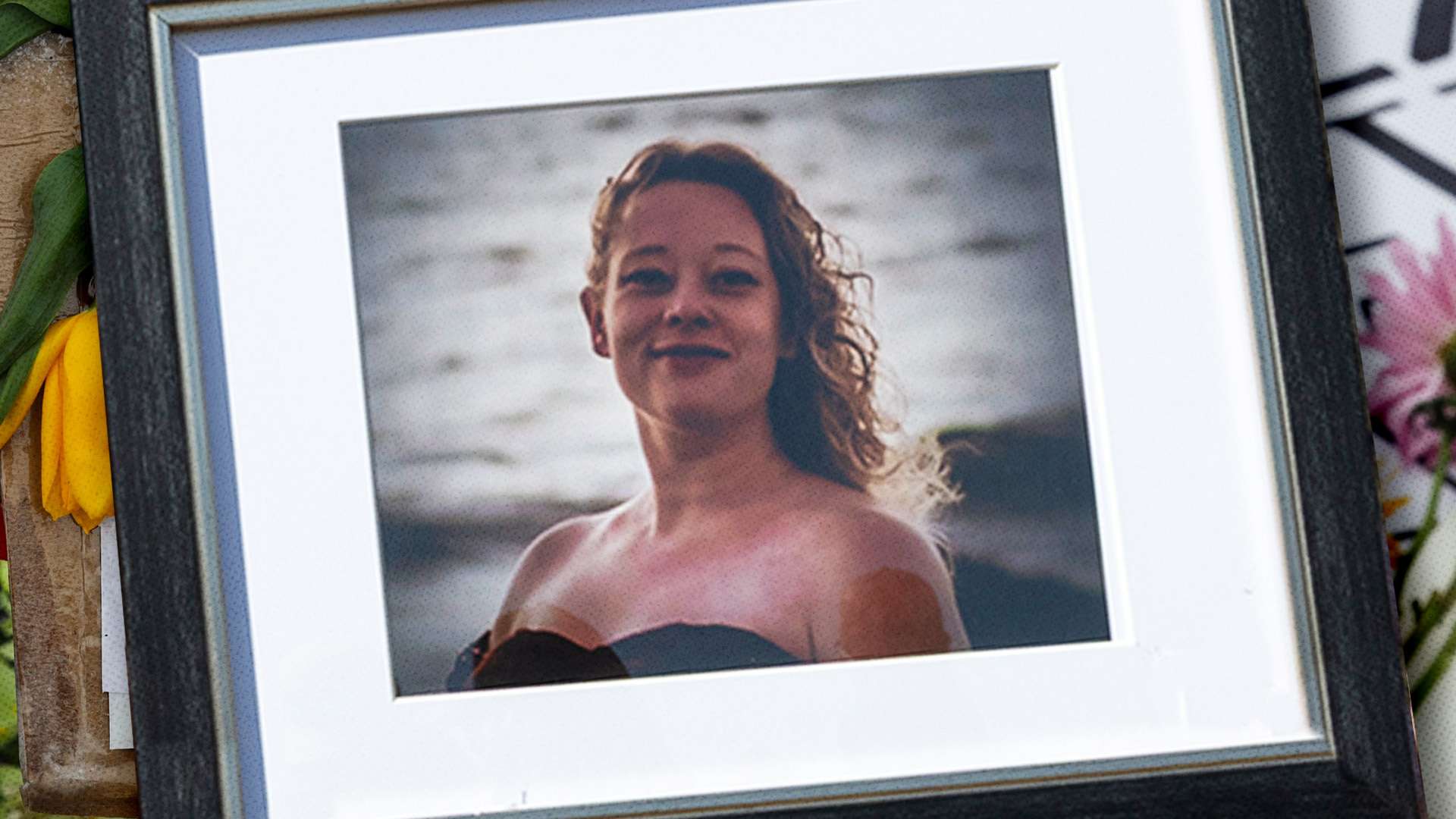
In lawsuits filed by Renée Good’s relatives, ICE agent Jonathan Ross is said to have faced no threat when he fired three rounds at the vehicle she was driving on January 7.
The actions are claimed to violate the Fourth Amendment and Department of Homeland Security (DHS) rules, with the plaintiffs asserting that Ross used deadly force in circumstances that did not justify it and that he acted beyond what DHS policies permit.
Video evidence from bystanders already cast doubt on DHS Secretary Kristi Noem’s assertion the day after the shooting that Good had “weaponized” her car and intended to strike a law enforcement member. The lawsuits add new specifics that, if accurate, would further undermine the claim that Ross acted in self-defense, and indicate that he and other ICE personnel ignored standard traffic-stop practices and DHS use-of-force guidelines in the moment.
The two complaints name Brent Ganger, Good’s brother, and Rebecca Good, her domestic partner, as plaintiffs. One suit seeks damages from the U.S. government under the Federal Tort Claims Act (FTCA). The other lawsuit relies on the Ku Klux Klan Act of 1871—protecting against conspiracies to deprive individuals of “equal privileges and immunities under the laws” or “the equal protection of the laws”—and Bivens v. Six Unknown Named Agents of Federal Bureau of Narcotics, a 1971 Supreme Court decision recognizing a claim for Fourth Amendment violations. The defendants in the second complaint include Ross, ten unnamed colleagues, Noem, and various other federal officials.
The filings, lodged in the U.S. District Court for the District of Minnesota, tell a largely consistent narrative. Renée and Rebecca Good were en route home after dropping Renée’s 6-year-old son off at school on a Wednesday morning when ICE agents—part of President Donald Trump’s deportation efforts—were present. Renée halted the Honda Pilot on Portland Avenue between 33rd and 34th Streets and began “honking to alert neighbors to ICE’s presence,” according to the FTCA claim, while Rebecca exited to record the agents with her cellphone. Although the SUV partly blocked the road, multiple vehicles, including an unmarked Chevrolet Tahoe driven by Ross, maneuvered around the stationary car without incident.
When Ross exited his SUV, he held his cellphone and used it to record the scene as he circled the vehicle. The footage shows Renée seated behind the wheel, smiling and speaking calmly through an open window. “That’s fine, dude,” Good tells Ross, seemingly acknowledging his video recording. “I’m not mad at you. I’m not mad at any of you.” Within roughly two minutes, Renée would be mortally wounded.
Two other ICE agents arrived on the opposite side of Good’s car, and she motioned for them to “just go around.” They declined. Instead, they stepped out of their truck, one of them shouting, “Out of the car. Get out of the fucking car.” In an effort to enforce that command, an ICE agent grabbed the door handle on the driver’s side. Meanwhile, another agent had instructed Good to drive away.
Good opted to follow that command, beginning to back away slowly. She then steered the vehicle toward the right—away from Ross, who stood at the vehicle’s front left—and began to move forward as the car started to turn away from the officers.
All of this aligns with the bystander footage and Ross’s own video, though the plaintiffs’ account omits a moment that might speak to the ICE officers’ intimidating posture. “Drive, baby, drive,” Rebecca urged Renée.
As Renée took Rebecca’s advice, the FTCA complaint states, Ross “moved away from the vehicle, his legs and body out of the vehicle’s path, while drawing his firearm with his right hand and leaning forward to shoot into the vehicle.” As he “leaned forward to shoot, his left hand—still clutching his cellphone—made contact with the car near the left headlight as the vehicle passed him.”
That portrayal implies any injury Ross sustained was not only minor but caused by his own decision to shoot. The account diverges sharply from Donald Trump’s description of events. On the day of the shooting, Trump claimed Good had “violently, willfully, and viciously ran over the ICE Officer” and opined that “it is hard to believe he is alive.”
Although Noem’s version was less dramatic, she maintained that Good had carried out an “act of domestic terrorism” by aiming to kill or injure agents. She asserted that Ross fired defensive shots because he believed his life and the lives of others were at stake and in an effort to protect “the other officers around him” and “the safety of the public.”
According to the lawsuits, none of these assertions held up. “Ross, leaning forward, with his legs, head, and upper body outside the vehicle’s path, fired the first shot into the lower left portion of Renee’s windshield,” the FTCA filing states. “As the car continued its slow rightward turn away from Ross, he fired two more rounds through the open driver’s-side window.”
The second shot, fired as the car moved past him, struck Good in the left temple. Another round pierced her left forearm. Her SUV, now out of control, sped down the street and collided with a parked car. “Fucking bitch,” Ross is quoted as having said.
It was evident that Ross was not in the vehicle’s path when he fired the second and third shots. The FTCA filing also asserts that he was not in the line of fire when he fired the first shot.
“At no point was Ross at risk of being run over by the vehicle,” the FTCA claim states. “To the extent Ross’s arm touched the car around the time of the first shot, it was because Ross intentionally leaned forward to position himself to shoot Renee.”
If true, this would complicate any interpretation that the first shot fell within the bounds of Supreme Court standards for deadly force. In the 1985 case Tennessee v. Garner, the Court ruled that deadly force is unconstitutional when a suspect is fleeing, unless it is necessary to prevent escape and the officer has probable cause to believe the suspect poses a significant threat of death or serious injury to the officer or others. The FTCA complaint notes that under Garner, deadly force cannot be used against a fleeing person who does not pose an immediate threat.
Four years later, the Supreme Court, in Graham v. Connor, explained that the assessment of whether a use of force is “objectively reasonable” under the Fourth Amendment must consider the “totality of the circumstances,” focusing closely on the facts of each situation. Relevant factors include the seriousness of the crime, whether the suspect poses an immediate threat to officers or bystanders, and whether the individual is actively resisting arrest or attempting to flee.
In applying this test, the Court emphasized last year in Barnes v. Felix that courts must weigh all pertinent circumstances, including what happened in the lead-up to the climactic moment. The Texas case involved an officer who stopped a car for suspected toll-violation and, after leaping onto the vehicle as it started to move again, shot the driver dead. The justices unanimously rejected the Fifth Circuit’s narrow focus on the moment of threat, which ignored the surrounding context.
Barnes might be pertinent here, since Ross initially positioned himself in front of the Honda Pilot, creating what the plaintiffs say was a manufactured danger justifying lethal force. In any case, if Ross was already outside the vehicle’s path when he fired the first shot, the danger could be viewed as illusory.
That issue also bears on Minnesota law, which allows the intentional taking of another’s life only when it is necessary to resist or prevent an offense that the actor reasonably believes could expose them or others to grave harm or death. In other words, Minnesota’s self-defense standard requires a reasonable belief that deadly force is needed to avert death or serious harm, a standard shared by many states and by federal self-defense rules governing law enforcement officers. Even if Ross truly feared for his life, that fear would need to be reasonable under the circumstances.
“There was no moment at which Renee posed any danger to Ross or to anyone else at the scene,” the FTCA complaint states. “Renee was attempting to slowly depart, and she engaged in a calm, cordial exchange with Ross in the seconds before the shots were fired. Ross had no justification to think he or any other officer faced risk of death or serious bodily harm. No one, including Ross, was in the vehicle’s path at the time of the first shot.” The same applied to the second and third shots.
Even if Ross’s fear was “unreasonable and mistaken,” the suit adds, firing on Renee could not have reduced any risk to him or to other officers: firing at a driver in Renee’s position would only heighten danger to anyone still in the vehicle’s trajectory, which is why DHS policy requires officers to weigh the consequences of an out-of-control vehicle before firing. The plaintiffs contend that Ross fired at Renee with complete disregard for anyone’s safety at the scene.
DHS policy instructs that officers should avoid placing themselves in positions where deadly force is their only option. In this case, the FTCA complaint contends, “Ross stood at the front left of Renee’s occupied car while other agents confronted her; he kept one hand occupied with the cellphone used to film and leaned toward the vehicle to shoot when he was not in its path.”
The DHS guideline also states that personnel “may use force only when no reasonably safe, effective, and feasible alternative exists and may apply only that degree of force that is objectively reasonable given the facts and circumstances confronting the officer at the moment.” Here, the plaintiffs insist, clearly viable alternatives existed: Ross could have simply stayed out of the vehicle’s path and allowed Renee to complete her turn.
Because “a respect for human life” guides DHS policy, officers are expected to be proficient in a range of techniques to de‑escalate confrontations. De‑escalation is described as using communication or other methods to stabilize or lessen the intensity of a potentially violent situation without or with reduced use of physical force.
The ICE agents confronted Good without exhibiting aggression or threat. She was not acting in a hostile or violent manner; apart from honking, she did not impede the enforcement action. The agents did not have authority to enforce Minnesota traffic laws, and they could have let Good pass. Instead, they ordered her from the vehicle and threatened to enforce the order physically.
The DHS policy also imposes a duty to intervene to stop or prevent excessive force by another officer. Yet the FTCA filing states that none of the agents present intervened to halt Ross or to de‑escalate the situation before shots were fired.
The plaintiffs further allege that Ross and the other ICE agents violated DHS rules by failing to provide Good with medical aid after Ross shot her and by obstructing a physician who was on the scene from helping her. “When a bystander offered assistance, an ICE agent ordered, ‘No, back up, now!’” the FTCA complaint notes. “When the person identified himself as a physician, the ICE agent responded, ‘I don’t care.’”
Despite the troubling details laid out in these lawsuits, Todd Blanche, who was then the deputy attorney general, did not see a need to open an investigation into the shooting. “We don’t just go out and investigate every time an officer is forced to defend himself against someone [who is] putting his life in danger,” Blanche—now the attorney general—stated on Fox News Sunday roughly a week and a half after Good’s death. “We never do.” Blanche added that “there are over a thousand shootings every year where law enforcement [officers] are placed in danger by individuals and they have to protect themselves, and they have a lawful right to do so.”
In other words, Blanche appeared to presume Ross acted in self-defense absent any inquiry that could illuminate the true sequence of events. His quick conclusion—untenable then and even more questionable in light of the allegations in these lawsuits—reflects a premature judgment.
