
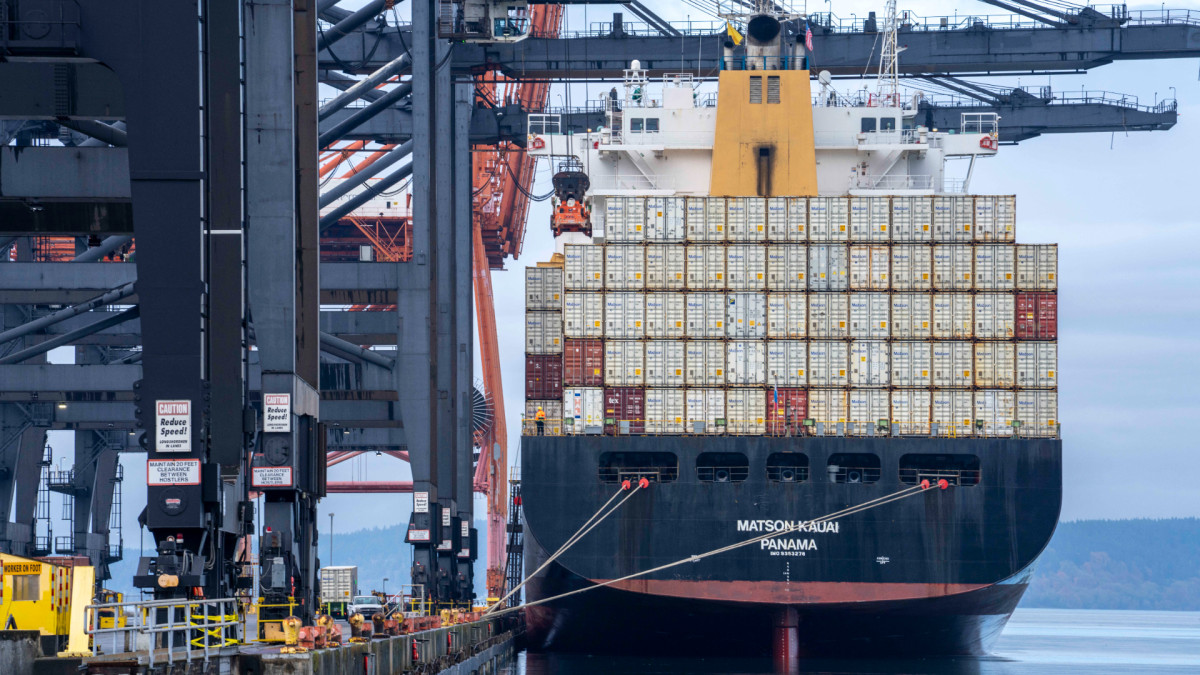
Commercial relations between Spain and the United States are facing a new episode of tension that could extend beyond maritime transport and directly impact several Spanish export sectors. On October 14, 2026, the United States Federal Maritime Commission (FMC) announced that, after an investigation opened in December 2024, it had determined that Spain imposed unfavorable conditions on U.S. maritime transport by blocking access of certain vessels to its ports. As a response, the American authority proposed imposing $200,000 in charges per voyage on Spanish-flag vessels arriving at U.S. ports, as well as restrictions on the importation of certain products originating from Spain. Among the sectors potentially affected are oils and fats, cosmetics, ceramic products, stone goods and confectionery.
It is important to note that these measures are not final yet. The FMC opened a public comment period that will close on December 14, 2026, and as part of the process, it contemplates giving Spain the opportunity to present its arguments before adopting a final decision.
The origin of the controversy: restrictions on access to Spanish ports
The U.S. investigation stems from decisions taken by Spain in November 2024, when it prevented several United States-flag vessels from docking in its ports, notably in Algeciras. Among the vessels affected were the Maersk Denver, the Maersk Seletar and the Maersk Hartford, all linked to the U.S. maritime security program.
“Among the sectors potentially affected are oils and fats, cosmetics, ceramic products, stone articles and confectionery.”
The Spanish authorities justified their action with a policy aimed at restricting the transit of weapons bound for Israel, in the context of the Gaza conflict. For their part, the United States argued that these restrictions unjustifiably harmed its vessels and distorted competition in international maritime transport.
In this regard, the FMC based its investigation on provisions of Title 46 of U.S. law, which empower the agency to examine foreign practices that create unfavorable conditions for its maritime trade.
In short, the controversy presents two distinct dimensions: Spain’s right to implement measures related to its security and arms-control policies, and the ability of the United States to challenge their impact on international trade.
Commercial background: from olive oil to black olives
The maritime conflict adds to a history of trade frictions that have affected Spanish exporters in recent years. One of the most notable precedents was the imposition in 2019 by the United States of additional tariffs on certain European products, including Spanish olive oil, as a consequence of the dispute between the United States and the European Union over subsidies to Airbus and Boeing. These measures were subject to a negotiated suspension in 2021.
Separately, the United States imposed in 2018 anti-dumping and countervailing duties on Spanish black olives, alleging unfair trade practices and subsidies tied to the European Common Agricultural Policy.
“The Spanish authorities justified their action with a policy aimed at restricting the transit of weapons bound for Israel, in the context of the Gaza conflict.”
This latter matter led to a World Trade Organization (WTO) dispute in which the European Union challenged the compatibility of the U.S. measures with multilateral disciplines. After various procedures, including compliance reviews, on December 19, 2025 the WTO’s Dispute Settlement Body authorized the European Union to adopt countermeasures worth up to 13.64 million dollars annually, subject to the appropriate adjustments.
These precedents help explain that trade differences between the United States and Spain are not new, but they have acquired a notable distinction, since while earlier disputes mainly centered on subsidies and tariffs, the current one incorporates port restrictions and potential retaliation on goods.
The European Commission: an indispensable actor
A peculiarity of this controversy is that, although the U.S. measures respond to decisions taken by Spain, their effects extend into areas under exclusive EU competence.
Articles 3 and 207 of the Treaty on the Functioning of the European Union (TFEU) establish that the common commercial policy, including trade in goods and services, is the responsibility of the Union. Consequently, Spain cannot negotiate tariff concessions unilaterally nor retaliate commercially against the United States. However, the matter becomes more complex because the original restrictions relate to Spain’s decisions on security and weapons control, and these are areas where member states retain significant competencies.
With this distribution of responsibilities, an important institutional challenge emerges. Spain will need to justify its port decisions, but it would primarily be for the European Commission to lead the commercial response to any potential U.S. restrictions on Spanish products.
Brussels would have to assess both the compatibility of the proposed measures with the United States’ international commitments and their possible effects on the European market as a whole, at a delicate moment and balance, considering that the implementation of the Turnberry agreements has proven complex.
“Spain will need to justify its port decisions, but it would primarily be for the European Commission to lead the commercial response to any potential U.S. restrictions.”
Moreover, there is a risk of a precedent: accepting trade restrictions aimed at a single EU member state in response to decisions linked to its foreign policy could weaken the European Union’s position as the single trade interlocutor.
The WTO and the peculiarities of maritime services trade
The controversy also raises questions about the role of the WTO and, in particular, the General Agreement on Trade in Services (GATS). Although international maritime transport falls within the broader GATS framework, its multilateral regulation has important particularities.
During the Uruguay Round it was not possible to reach a broad agreement on liberalizing maritime transport. Negotiations continued after 1995, but were suspended in June 1996 due to a lack of consensus, particularly regarding market access commitments.
Today, the regime comprises three main components: international maritime transport, ancillary services and access to and use of port facilities. Likewise, the GATS annex dealing with maritime transport negotiations sets out special provisions on the application of the most-favored-nation principle, with exceptions linked to the specific commitments undertaken by members.
This does not mean that maritime transport is completely excluded from WTO disciplines. However, determining whether the Spanish restrictions breach multilateral obligations would require examining the specific commitments applicable and the possible exceptions, including those related to security.
“Determining whether the Spanish restrictions breach multilateral obligations would require examining the specific commitments applicable and the possible exceptions, including those related to security.”
So far, the controversy has unfolded through an American administrative procedure rather than through the WTO’s dispute settlement mechanism. This reflects the legal path chosen by the United States, and one cannot conclude that the organization lacks jurisdiction to examine certain aspects of the conflict. However, taking the case to WTO litigation could be moot due to the United States’ lack of interest in multilateral rules.
A new challenge for the international trading system
The dispute between Spain and the United States shows how foreign policy and security decisions can spill over into broader trade conflicts.
Beyond the potential consequences for Spanish exporters, the case raises fundamental questions about the limits of unilateral trade measures, the EU’s competences and the ability of multilateral rules to resolve differences that involve goods, services, and national security considerations.
The FMC’s open consultation phase is an opportunity to reach a negotiated solution before the proposed restrictions materialize. For the European Union, the challenge will be to defend its trade competences and avoid an escalation that ends up affecting sectors far from the origin of the controversy. In other words, the case constitutes a new test for balancing national sovereignty, European integration, and the disciplines of international trade.
