
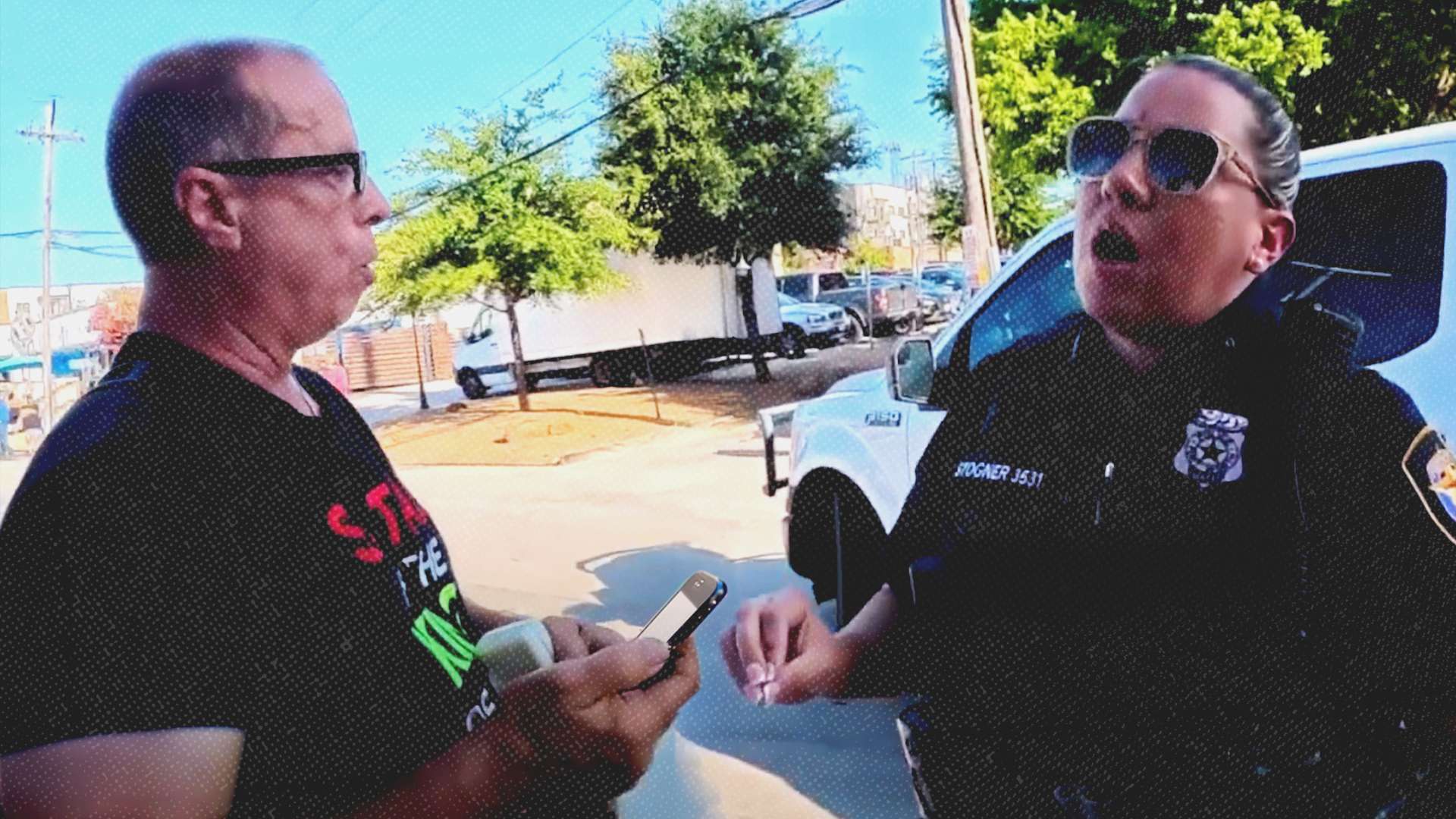
“A legal expert from FIRE notes that the First Amendment bars government officials from silencing speech simply because it is deemed offensive.”
A Fort Worth police officer issued a citation to a preacher in late June, arguing that the preacher’s words were offensive. This week, the Civil Rights Division of the Department of Justice opened an inquiry to determine whether the officer’s actions ran afoul of the First Amendment.
The widely viewed footage of the confrontation captures a moment between an officer and a protester at Trinity Pride Fest on June 27. “If someone is offended by your words, then we have a problem,” commented Officer Sara Stogner.
“That would amount to a constitutional violation of our rights,” replied David Grisham, a street preacher and retired federal law enforcement officer. The exchange continued as Stogner pressed forward, saying, “Okay, then I’ll issue you the ticket, and we’ll take it from there.”
“Wait, you’re going to ticket us for offensive speech?” the cameraman pressed with disbelief. The officer responded with assurance, “Yes, absolutely.”
Man: “You’re going to ticket us for ‘offensive’ speech?”
Fort Worth Cop: “Yes, I am.”
That’s not how that works. Thankfully, the city says it’s taking steps so this never happens again.
FIRE stands ready to help @fortworthpd in providing First Amendment training to officers. pic.twitter.com/Z1CBN3qHra
— FIRE (@TheFIREorg) July 13, 2026
Stogner persisted in maintaining that she could cite the two men for disorderly conduct “if someone complains that your language or what you’re saying is offensive.”
But legal experts say that interpretation misreads the First Amendment. “The First Amendment does not permit government officials to shut down speech solely because it is offensive,” explained Brennan VanderVeen, program counsel at the Foundation for Individual Rights and Expression. “The government can regulate certain conduct or impose limits on noise, but punishing someone simply for the content of protected speech is precisely what the First Amendment forbids.”
Grisham ultimately received a citation for the purported misuse of a bullhorn during the protest, a move he contends is not supported by the city’s noise ordinance, according to WFAA, an ABC affiliate. Grisham’s civil rights lawyers announced on July 3 their plan to challenge the ticket, arguing that Stogner failed to perform a decibel check consistent with the ordinance and Texas law, which define excessive noise as above 85 decibels, instead accusing him of “engaging in peaceful and protected speech.”
Following a surge of online criticism, Fort Worth Police Chief Eddie Garcia told WFAA on Monday that the department accepts responsibility and is rolling out department-wide training on the First Amendment. “We’ve refreshed our command staff with updated courses. We’ll train our sergeants and our rank-and-file officers,” Garcia stated. “We are not a flawless profession,” he added, “and mistakes by officers do occur.” He did not specify any personal accountability measures for Stogner.
“Proactively educating officers on First Amendment standards would be a constructive step,” VanderVeen commented, noting that “a persistent problem is officials’ unfamiliarity with fundamental First Amendment principles.”
The Justice Department’s involvement appears to reflect a broader concern with safeguarding speech rights, and it has requested information from Fort Worth’s city attorney to help determine whether an investigation is warranted, per Fox News. “The Civil Rights Division is committed to ensuring all Americans—regardless of the content or viewpoint of their speech—are protected from unlawful restrictions on expressive activity,” wrote Harmeet Dhillon, Assistant Attorney General for the Civil Rights Division.
Fort Worth, Texas, has a 30-day window to supply the DOJ with additional information.
The department’s actions to verify Grisham’s right to free expression align with its fundamental mission to protect civil rights. Yet the move sits against a backdrop of alleged First Amendment concerns involving the agency since President Donald Trump’s tenure, including subpoenas of journalists, pressure on social media platforms to remove immigration-related tracking apps, and attempts to reveal anonymous online critics.
Still, for the moment, there is some reassurance that the Justice Department can still do the right thing from time to time.
