
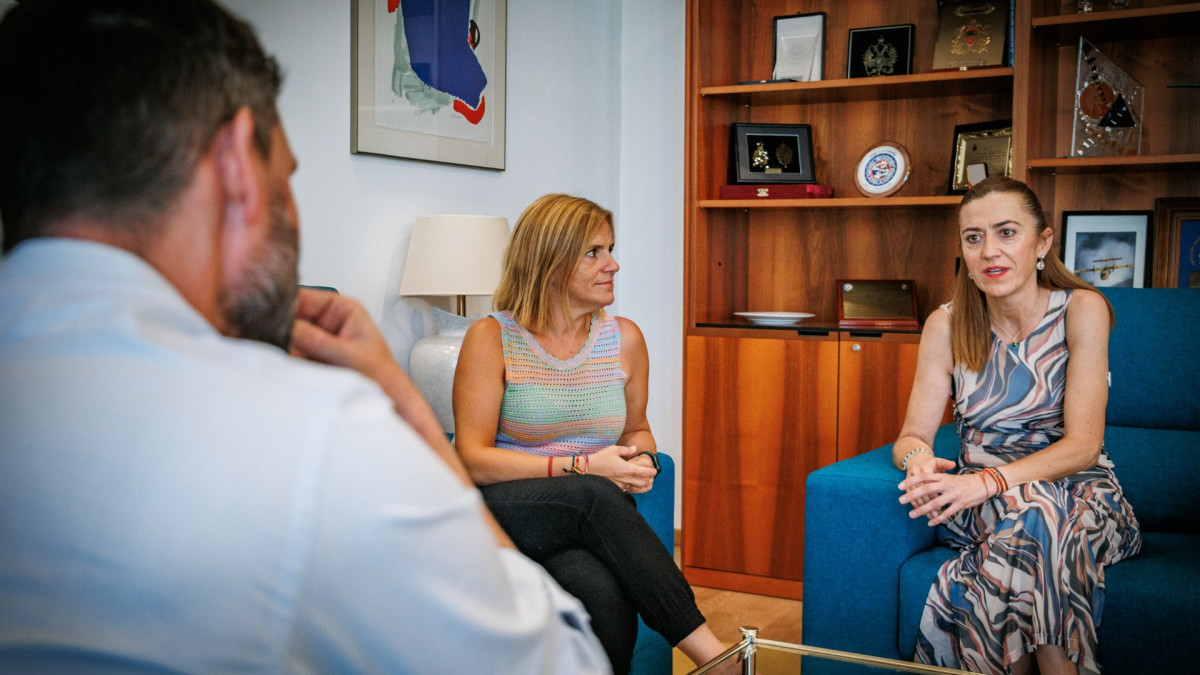
In the past year, Spain has faced two of the most virulent climate crises in its recent history: the DANA that devastated the Valencian Community in 2024 and the wildfire wave that swept through hundreds of thousands of hectares in the summer of 2025. These emergencies have tested not only the operational capacity of civil protection systems, but also the country’s political and institutional strength to coordinate effective responses in a context marked by the climate emergency and partisan confrontation.
In this dialogue, Agenda Pública brings together Virginia Barcones, Director General of Civil Protection and Emergencies, and Pilar Bernabé, Government Delegate in the Valencian Community, two women who have stood on the front line of managing these catastrophes. “A state pact is necessary: we have faced climate catastrophes never seen in recent European history“, Barcones emphasizes, convinced that the future lies in strengthening institutional cooperation and prevention. Bernabé agrees that the challenge is political as well as technical: “There are actors who break consensus and move to confrontation for electoral gain“, she warns, alerting to the risks of trivializing tragedies that have claimed hundreds of lives.
Both reflect on what they have learned in extreme situations, the structural challenges that remain, the role that politics plays in the effectiveness of the institutional response, and the need to achieve a state pact on climate emergencies that transcends the logic of confrontation.
Barcones and Bernabé during the conversation for Agenda Pública. Photo: Agenda Pública / Tania Sieira
Do you see a State Pact between the PSOE and the PP?
Virginia Barcones (V. B.): When the Prime Minister says “there must be a state pact, precisely due to the emergency and the emergencies,” it is because there must be that consensus and that pact in which we set everything aside and get to work.
The obligation of serious institutional leaders is to protect Spaniards above other strategies. The magnitude of what we face is unknown so far: virulence, speed, and intensity.
Regarding the fires: regardless of origin —which is being investigated by the security forces—, we will have to apply public policies to try to minimize them.
Some we will not be able to prevent, such as a dry storm that causes a lightning strike and a fire. But, regardless of the cause, the evolution is of an unknown magnitude.
“We must listen to the experts. Their experience and track record explain that these fires had never happened”
Virginia Barcones, Director General of Civil Protection and Emergencies
It is as simple as listening to scientists, to the university community, and, especially, to the professionals who face the fire. Many, with long careers, say they have never seen anything like it: fires capable of generating their own synergies.
Something has changed and it is the climate emergency that has hit Spain. In the last year we experienced the DANA, with hundreds of deaths, and now the worst wave of fires of our lives.
What more has to happen in this country to raise the level of responsibility, to set aside political confrontation and put the safety of Spaniards first? This is a call to political and institutional leaders, but also to society as a whole. We are all called, as a country, to avert this: responsible institutional leaders, politicians, civil society organizations, the third sector, the private sector. If something happens again, which will unfortunately happen, we must be better prepared, stronger, and with a faster response.
Pilar Bernabé (P. B.): I must add that the element that most distorts consensus is Alberto Núñez Feijóo. In the fires, he has copied exactly the behavior of what happened with the DANA.
Everyone will remember the phrase of the president Mazón: “Dear president, thank you very much for everything you are doing and for the help the Government is giving us.” Mazón was thanking President Sánchez for the assistance, and after a call from his party leader, everything turned into a disaster. The media are also a problem, because they do not defend the interests where they should. But there is someone who is undermining democratic normalcy: regional presidents who, having the power to protect their citizens, should understand and work with those who can help them.
And we saw, before August 15, how the CCAA said they had everything solved. Suddenly, they issued an excessive request in barely two hours, when they had just said they had everything and were receiving the necessary resources. The pattern repeats: at minute 33 they thank the Prime Minister, at minute 34, after a call, everything is a disaster.
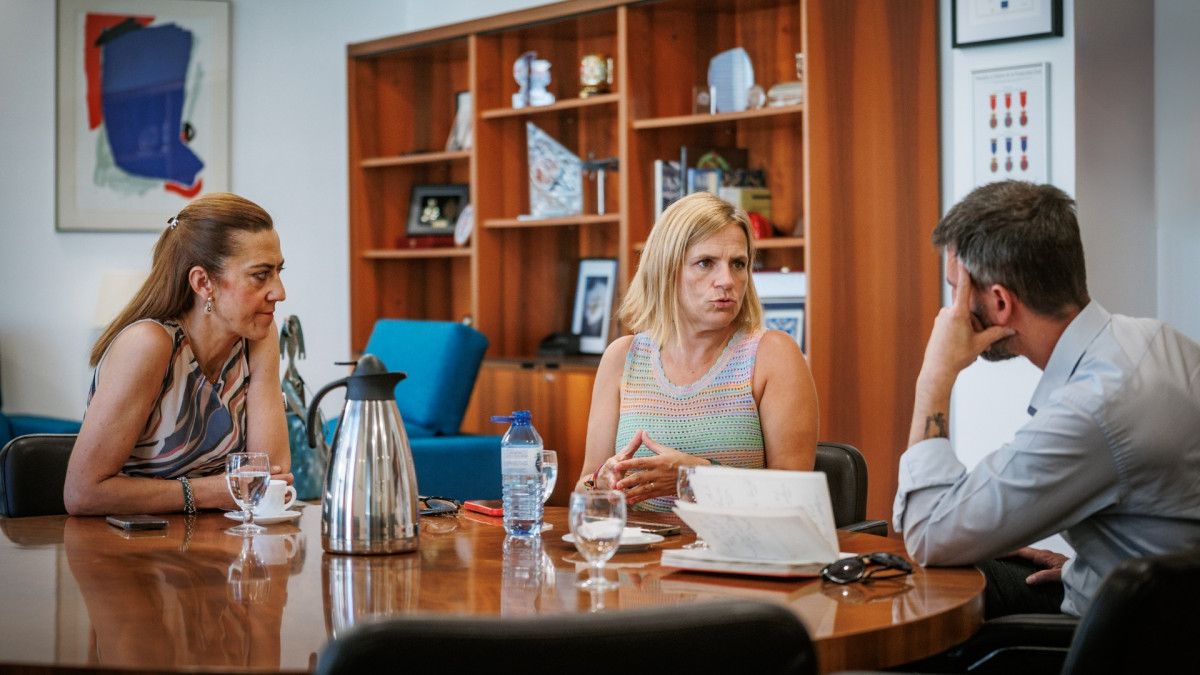
Virginia Barcones and Pilar Bernabé address an analysis as key actors of the two major natural disasters in recent years. Photo: Agenda Pública / Tania Sieira
V. B.: Behind the General State Administration there are people: civil servants who go days without sleep, who activate protocols in record time.
When they say “they arrived late, they did it badly,” I saw the faces of people who had gone days without rest, running to help. What will those people think? In the DANA, at Christmas, it was our armed forces who were there, away from their families, serving their country, while they were subjected to unjust criticism.
Is the anxiety to want to govern of the PP harming the interests of Spaniards?
P. B.:
And about citizen security. There was coordination work, regional presidents thanking resources, and a single call from their boss could change everything.
“There are political actors who break consensus and move to confrontation for electoral gain”
Pilar Bernabé, Government Delegate in the Valencian Community
What does this mean? For electoral arithmetic, they undermine agreements and confront because that is what their polls tell them.
I have lived it in my own community: 228 people died because it was not done properly. It’s not that nothing was done; it’s that something fundamental was trivialized.
V. B: The Partido Popular has been a state party, a government party, one of alternation. When it suits and Spaniards decide, it will take the country’s reins. But behind that “everything goes to get there” stance, very delicate things are put at risk: the safety of people.
P. B: That anxiety makes them resemble Vox more and more, but it weakens them even more.
I am convinced that, if Alberto Núñez Feijóo remained president of Galicia…
P. B.: He would act in a completely different way. And I’m sorry, but I must say it: it is unacceptable for a man to call you a “pyromaniac,” dehumanizing, the Director-General of Civil Protection.
Could you outline the main elements of the State Pact that has been offered, in light of what has been done well in managing this crisis and what must improve?
V. B.: The State Pact seeks to address everything that impacts a climate emergency: forest policy, available means, coordination… The ultimate goal is to do everything possible to prevent damages like those from the DANA or the fires.
We know the climate emergency is enormous, but we must be stronger to better protect citizens. In prevention, anticipation, response, recovery: without competency excuses, as a country. And we must do it quickly. Autumn is coming, it will rain, and we have 330,000 hectares devastated by fires. The Mediterranean Sea is at 30°C. We all know what that implies.
When you lead institutions or parties, you must be responsible. There is no option but to ask how we can all help. Beyond what happened, everyone will offer explanations. I have tried to account every day for what the State did, when, how, and why.
P. B.: The system, when it works well, works. The problem is when there is no will: it doesn’t work and it creates risk.
If there is general consensus, regardless of political color, and it is established that the priority is to protect the country against climate change, we can work in a coordinated manner. I, as Government Delegate, know that a region cannot handle a level-two emergency alone without the resources of the State.
In the DANA 33,000 army personnel participated. In the fires, mobilization was immediate. In the Teresa de Cofrentes fire, 75% of the personnel were from the State, filling gaps that the autonomous community did not cover. And this is visible in budgets: in 2024, the Valencian government cut 14 million in prevention and dissolved the Valencian Emergency Agency and the Valencian Emergency Unit. The same happened in Castilla y León, another clear example of neglect in civil protection and fire prevention policies. For years they have been dismantling the public emergency management system.
V. B.: Think about what we saw in Valencia: the use of ES-Alert. It’s crystal clear that in drills and real activations, all communities were using it normally during this wave of fires. Lockdowns, evacuations… Did you hear any regional leader sow doubts? No, because it did not exist. It has been used 259 times, 183 in real emergencies. And yet, what we had to hear in the DANA with ES-Alert.
P. B.: This week the conseller repeated it. The Generalitat tries to justify that the central problem of the 228 deaths was that there was no warning. That is why the entire debate revolves around whether the obligation to alert the population was fulfilled.
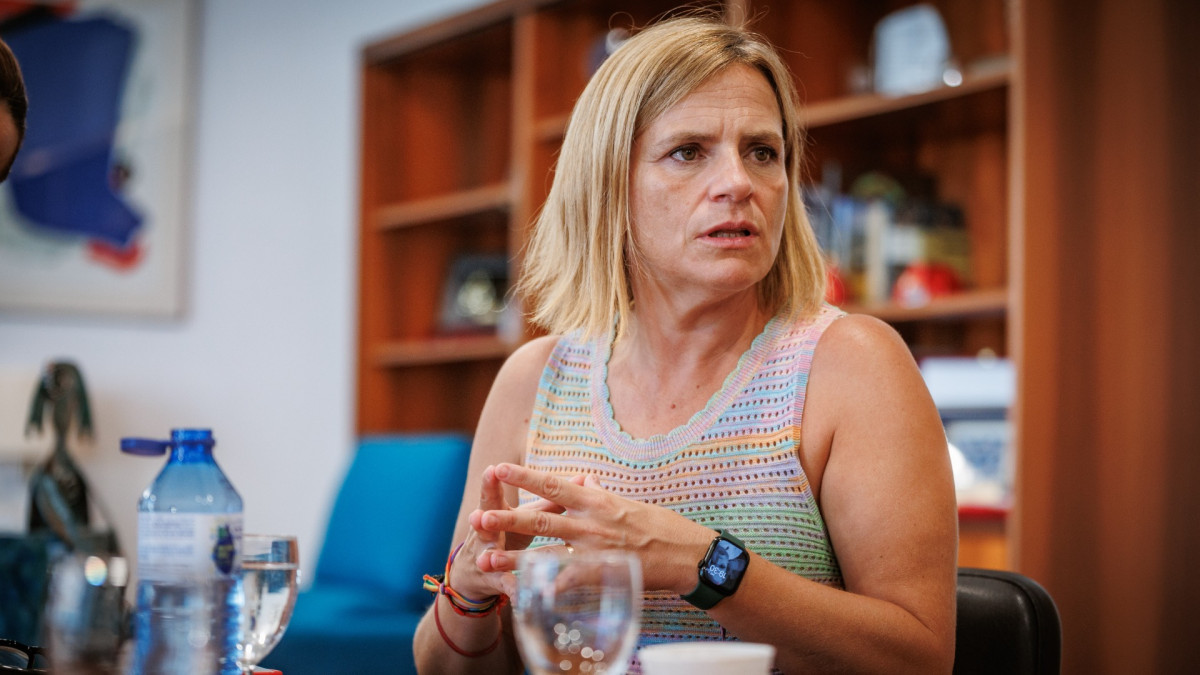
Pilar Bernabé is the Government Delegate in the Valencian Community and led the DANA management in 2024. Photo: Agenda Pública / Tania Sieira
“There are procedures that exist but were not applied”
Pilar Bernabé
What fails in the DANA or in some communities in wildfire management? The emergency system is not well worked: it has not been reinforced, procedures not improved. The problem is that they exist, but they are not applied.
In 2019 there was a DANA in the Valencian Community and no one died. A CECOPI was convened on October 24, when there was already an alert, and the Special Flood Plan was activated. In 2024, however, the CECOPI was convened on October 29 at five in the afternoon, when there were already deaths.
V. B.: The national civil protection system is very complex, because we decided—and we have decided this in the Constitution—that there are matters better managed from the territory. And that is why we decided that the autonomous communities and the municipalities have the competence.
Some stress three ideas: more centralism, more military presence and more punitive approaches when managing climate emergency crises.
P. B.: It’s not a coincidence that General Pampols is the one who is supposedly heading the reconstruction of Valencia.
From Valencia’s DANA to the fires, the public is increasingly aware of the importance of the responsibility that emergency and prevention policies entail for regional leaders. And that will necessarily lead political leaders at the autonomous level to enter that dynamic.
Let me give you an example: in the Valencia DANA there were grave errors. These, however, have been corrected. We saw: in the next DANA the ES-Alert was sent, a preliminary meeting was convened as soon as the orange weather alert was activated and all State agencies were convened.
That is to say, citizens now clearly know who bears responsibility for protection, because 228 people have died.
Although the DANA was like a testing ground for the far-right—and also for the right—to defend Spanish centralism and to dismantle the State of Autonomies.
Emergencies serve, as with any other issue, to the discourse of the party that the PP is strengthening with the support of Alberto Núñez Feijóo: Vox.
But the State of Autonomies is effective when managed well. The problem is that when it is poorly managed, that does not mean it is useless.
V. B.: There are very significant points: moving from “we have all the means of the State, but they arrive late and poorly” to “what would change if only a level three is in charge of directing the emergency?” Therefore, at one level you are asking for one thing, and at another, where you hold the responsibility to govern, you say the opposite.
Those contradictory discourses, at the end, aim to confuse people, based on the idea that the system is confusing.
Confusing it or generating a disengagement from the democratic and decentralized system we have? Because, in reality, no one knows better than Feijóo how the Spain of the autonomies works.
V. B.: You cannot rewrite history or the system every time there is an emergency. In the middle of one, when things do not go as you consider, you cannot rewrite what happened —because in Valencia what happened happened and in the fires what happened—, nor the system. You cannot rewrite the system when people see their house burning.
Why does Asturias contain the risk of wildfires better when they blaze near Cangas de Onís? Was it similarly the case in Navarra, the Basque Country and Catalonia?
P. B.: Because emergency systems work, are well equipped, and there is perfect coordination. Yesterday, in a meeting with Government delegates, the Asturias delegate explained that they even helped Castilla y León, because their services were at the limit. In Asturias, the team leaders are highly trained, with adequate means and staff. In Castilla y León, instead, the personnel were skeletal: whoever arrived was made boss, even if they did not know the terrain.
Where were the seams seen? In those places where neglect and abandonment occurred. Virginia, besides being Director General of Civil Protection, was the Delegate in Castilla y León. In 2022, during a terrible summer of fires, she found the system dismantled. There, the UME accounted for 75%-80% of the personnel because the rest was destroyed.
V. B.: For every crisis in emergencies, a lot of work goes into learning lessons. Each thing that happens to us must help us improve, and that is why there must be a State Pact. Without entering into the abundance or scarcity of resources, there are emergencies as large as Valencia that no one can have too many mid-level commanders. There arrived 79 command posts, and that requires leaders with replacements, because crises last longer and longer. You cannot have a commander for four months without rest. In Valencia, the need to train more mid-level commanders who are interoperable and prepared to lead multiple outbreaks simultaneously was once again evident.
“There is a need for a State Pact: we have faced climate catastrophes never seen in recent European history”
Virginia Barcones
That is to say, if things are already happening to us, we must learn from them. And if there are so many of them, we need a State Pact to strengthen the system. We cannot go back to the shortages we have already seen. We have faced Europe’s greatest recent climate catastrophe and the continent’s greatest wildfire wave of the campaign. A third of European resources had to come to Spain. That requires adapting the system, because before we did not have simultaneous emergencies of this magnitude.
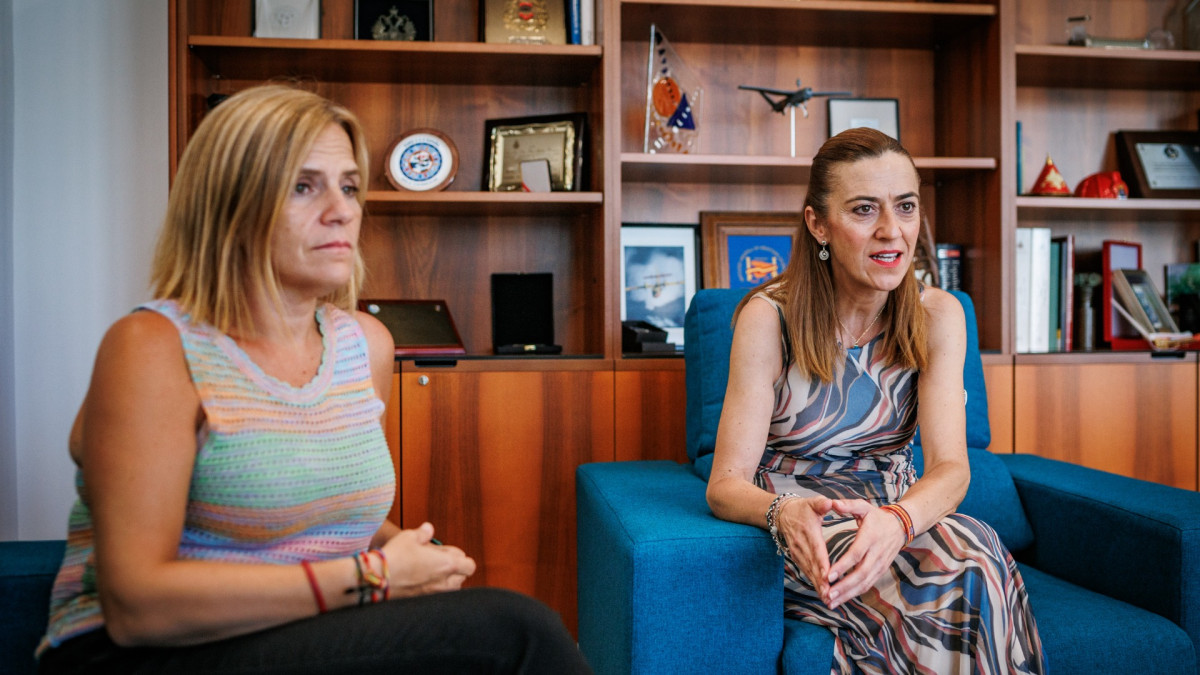
Virginia Barcones, Director General of Civil Protection and Emergencies, has received criticism and praise following the management of the wildfire waves this summer. Photo: Agenda Pública / Tania Sieira
Did you say earlier that the pact would facilitate or speed up the hiring of personnel in moments of emergency? Is that the State Emergency Agency?
V. B.: Exactly, that is the Agency. In the end, each emergency is different. The Directorate General, and subsequently the Agency, handles the entire cycle of the emergency: from preparing the population to the recovery of the devastated areas. There will always be a time from the occurrence to when services arrive: a minute, ten minutes… In that interval each citizen must know what to do; that can save lives in a DANA, for instance, by knowing to seek height and not stay in basements.
Then comes the recovery of the affected areas. This building across the street has been staffed all summer since the DANA, with contractors and agile procedures, to move as fast as possible. Each emergency has its own circumstances, and we need an instrument capable of adapting to them.
P. B.: In the DANA we had not faced something similar. Also, following the lessons learned, in the first weeks, as the Prime Minister asked, we spoke with other countries that had suffered similar catastrophes —Germany, Italy— to know how they managed things like waste extraction. They told us: “We have never faced something like this. Tell us when you’re done so we can learn from what you do.”
In Europe, in 2025, one million hectares have burned, of which more than 388,000 have been in Spain. The climate emergency takes on a supranational political dimension. What lessons have been learned from incorporating European civil protection policies into the Spanish system?
V. B.: Spain is a very active member of the European Civil Protection Mechanism, which includes all EU countries plus ten signatory nations. We are the second country that contributes the most resources. Furthermore, we are involved in defense and cooperation in the Mediterranean. The climate emergency requires strengthening the European mechanism to be able to pool efforts when catastrophes occur.
The climate emergency is not only Spanish; it is global. Therefore, Spain collaborates closely with the EU, the United Nations, the G20, and countries around the Mediterranean. This prior work allows that when fires like the recent ones occur, a third of all European resources are mobilized to help Spain.
The Government of Spain has worked intensely at the international level. Spain is recognized for its capacity in emergencies. For that reason, and respecting the autonomous structure, a State Pact is necessary. There is no alternative.
P. B.: Furthermore, Spain was a pioneer in launching the UME, created precisely to address catastrophes. Many countries have followed. The Mediterranean is a hot and vulnerable point: the 2024 DANA in Valencia occurred in the warmest year in recent history. The ten warmest years in the Mediterranean have all occurred in the 21st century, especially since 2010.
The climate change is real. It is not comparable with the old arguments about arsonists: Valencia’s flood was not just rain; a dam collapsed. Denial kills. The climate emergency exists and policies must reflect that reality. The Autonomous Communities know the responsibility this entails and will act: people’s lives come first. If you’re not willing to protect them, leave.
V. B.: Pilar noted that 2024 was the warmest year, and this summer will be the warmest August. To find summers with similar temperatures, you would have to go back to 1975. With the temperatures of the Mediterranean we’ve had, questioning whether we can reach an agreement to be stronger against this…
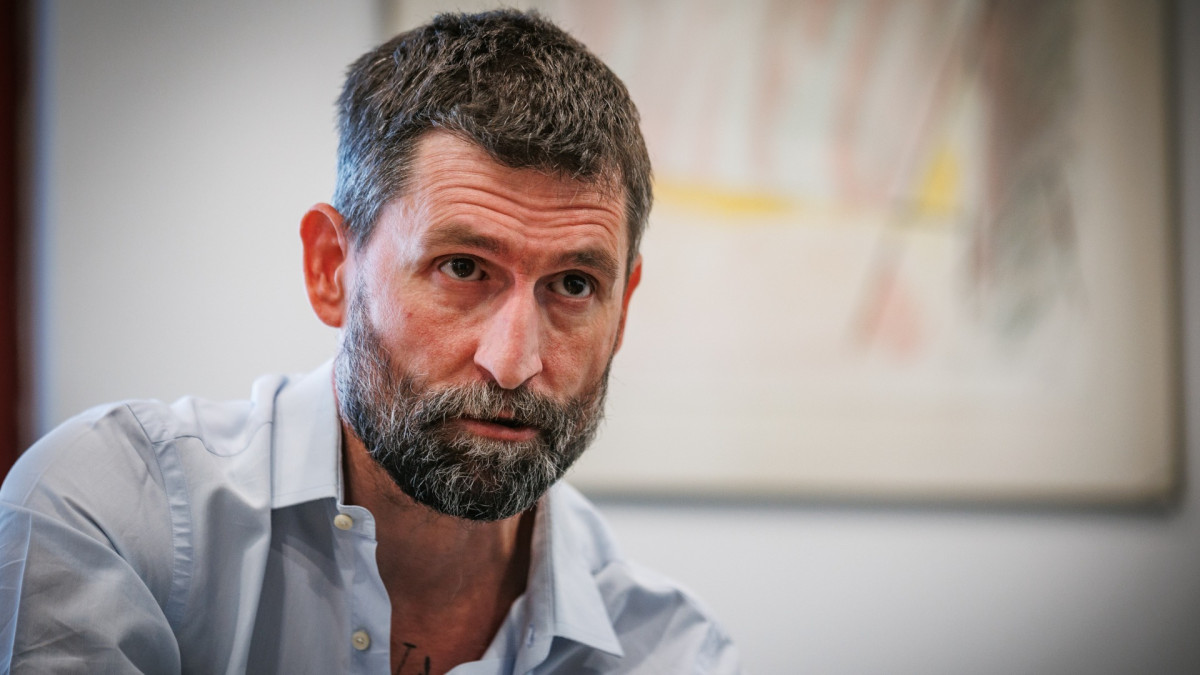
The journalist Víctor Guillot moderated the conversation between Barcones and Bernabé. Photo: Agenda Pública / Tania Sieira
Is there a sexist condescension from some people who tend to dehumanize the women who lead crises?
P. B.: I’m delighted to have shared those months with Virginia, during the DANA management, which were the hardest of my political life. With Virginia I found someone who spoke my language, who empathized and felt the same. We needed to go to the towns, talk to people and listen to what they were experiencing. Female leaderships are different: we are more empathetic and seek to work as a team, even under extreme pressure.
And yes, there is specific aggression toward women. When there is criticism to be made, they come down harder on us than on men, even questioning personal or physical aspects, something that never happens with men in the same context.
V. B.: I want to highlight Pilar’s capacity for work. During the crisis in Valencia, she understood better than anyone what was happening, listened to everyone on the ground, coordinated and ensured that the decisions made by the Spanish Government were really what people needed. This reflects what a true public servant is: listen, analyze and transform people’s needs into concrete actions, even if they are not politically “pretty.”
To that end, you must have the entire process well organized: the command post, the CECOPI, with all State participants and mayors. From there, with firmness, you reach the interministerial level and act in a coordinated manner. This is the basis of effective management.
“You must listen and understand what people need in order to implement effective public policy, as we saw when allocating resources to those who needed them in Valencia”
Virginia Barcones
A good manager listens, observes, analyzes and transforms what people need into real policies. In the Valencia crisis, nearly 20 billion euros were allocated to the places and people who really needed them. This is public service.
In both cases, the focus has been on helping people. The fact that we are women has generated aggression and virulence in the opposition that they have not been able to weaken, because our primary objective has always been people’s protection.
P. B.: I recall the CECOPI table: the dynamics were complex. There were people who were not the head of the emergency, but who made decisions from their positions. At times they addressed me by my name, while others were treated with protocol. This reflects the difference in how women are treated in these contexts.
Thank you both. A very interesting conversation.
