
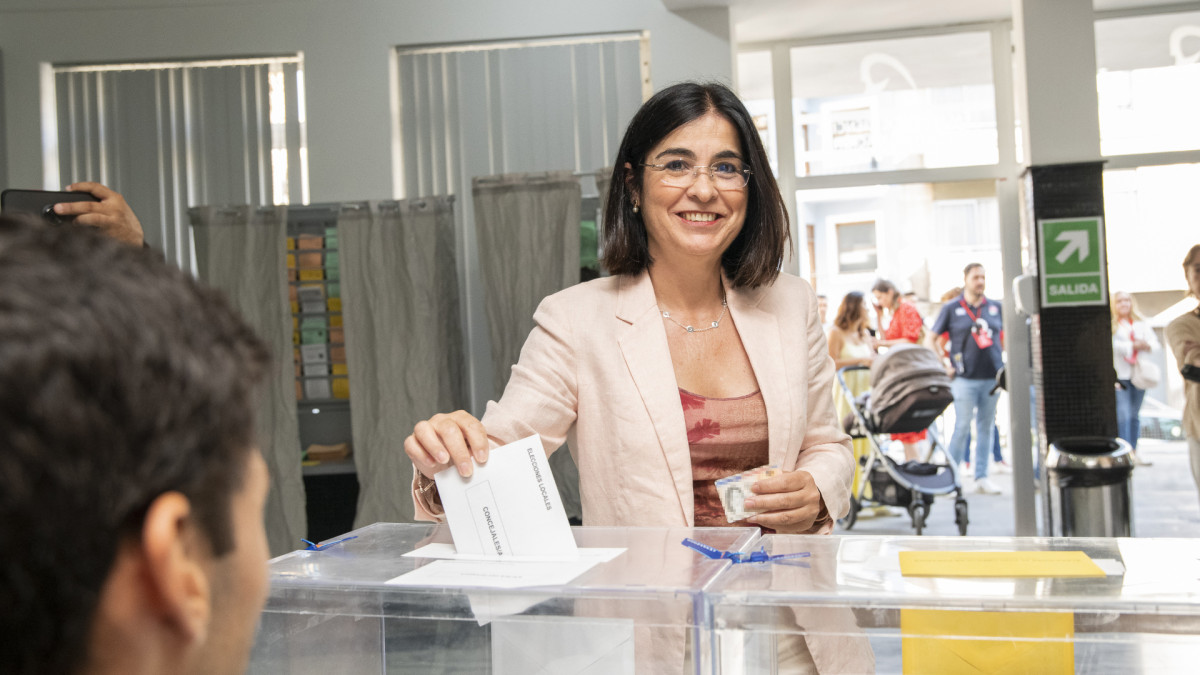
The PSOE will have spent twelve years in power at the City Hall of Las Palmas de Gran Canaria by the end of the current municipal term, in just over ten months. The capital of the archipelago is one of the two major cities in Spain under PSOE control; the other is Barcelona.
The arrival of Carolina Darias to the mayoralty was the result of a period in which the strategy of sending ministers as territorial candidates was still successful. Darias landed at the mayoralty coming from the Ministry of Health and managed to capitalize on her time in the Government, unlike what happened later, when neither Pilar Alegría nor María Jesús Montero succeeded.
The current left-wing majority in the archipelago’s capital is very tight, and that makes the result in May 2027 highly uncertain. The governance of the former minister has not been easy, and the instability and disputes among her partners have been and remain her biggest headache. In her favor is the indecision of the PP when it comes to naming its opponent.
“The current left-wing majority in the capital of the archipelago is very tight, and that makes the result in May 2027 highly uncertain”
After the municipal elections, in summer 2023, the governing team consisted of twelve Socialist councillors, two from Nueva Canarias and one from Unidas Sí Podemos. Fifteen seats against fourteen for the opposition promised a nail-biting term, but the departure of José Eduardo Ramírez from Nueva Canarias to found Primero Canarias has been another source of instability. Nueva Canarias, which holds the first deputy mayor’s post, led by Pedro Quevedo, demanded Ramírez’s exit from the Government Council, considering him a turncoat, but Darias refused, since doing so would have meant losing the majority.
The most recent poll, published by the newspaper Atlántico Hoy, places the PP and PSOE tied in a range of nine to ten councillors; Vox, on the rise, with five to six seats in the municipal plenary; Coalición Canaria, with the possibility of rising from one to two councillors; Nueva Canarias, with one to two councillors; while the new Primero Canarias party would enter the plenary, also achieving one to two seats. Unidas Sí Podemos, according to the poll, loses representation.
With these projections, everything is open, given that the PSOE and Nueva Canarias would not only have to reach their top band in the poll, but would also have to include Primero Canarias in the pact to continue governing, something difficult given their frontal confrontation with Nueva Canarias.
“Everything is open, given that the PSOE and Nueva Canarias would not only have to reach their top band in the poll, but they would also need to include Primero Canarias”
For its part, the opposition would suffice with staying at the lower end of the poll range, but it has a Achilles heel in the indecision of the PP about who will be its candidate. The conservatives have seen in the mayoralty the former minister Soria and Pepa Luzardo, and have not wielded power since the days of Juan José Cardona, mayor from 2011 to 2015. Now they debate among several options: Ángel Sabroso, Deputy Councillor of Physical Activity and Sports; Matilde Asián, Councillor of Finance and EU Relations; and Poli Suárez, Councillor of Education and former mayor of Moya from 2011 to 2019. The only thing clear in the PP is that the current spokesperson at City Hall, Jimena Delgado, will not repeat as candidate. She is valued for her watchdog work, but she is not seen as a candidate.
In addition to the clashes among her partners, Darias has had to deal with the Valka case, which in November 2025 led to the resignation of her councillor Inmaculada Medina for embezzlement of public funds, irregular contracts in parks and gardens and influence peddling.
Las Palmas will in May 2027 be a barometer of the real possibilities that another minister sent to reconquer territory, Ángel Víctor Torres, can win the presidency of the Canary Islands Government. Without a Socialist victory in Las Palmas city, the Torres operation is doomed to fail.
