
The Recovery, Transformation and Resilience Plan is drawing to a close. All reforms and investments included in it must be finished by June 30, 2026, and the final disbursement must be submitted before December. These are the deadlines set from the outset and they will not change. The majority of projects funded with the Next Generation funds must be completed by June, and the milestone implementation concludes on August 31, so businesses and administrations must push to close investments on time. We have a lot at stake and there is still a long way to go: projects to be carried out, works to be completed, and resolutions to be published.
An exceptional period comes to an end. Since the Plan’s approval in 2021, Spain has lived through an extraordinary situation, characterized by an unprecedented availability of funds to invest and deploy public policies, not only in transport infrastructure, where European funds have traditionally concentrated. The EU has made 80,000 million euros available to Spain in transfers and a similar amount in loans, although the volume of loans ultimately disbursed will be around 22,000 million.
“The five years available to the various administrations to design and deploy the funds have driven an unprecedented acceleration”
Beyond the magnitude, the speed of implementation has been another distinguishing feature of this period. Those five years, at best, available to different administrations to design and deploy the funds have forced an unprecedented acceleration in the usual pace of the public sector.
The Nuances of the End of the Next Generation
The Plan ends, but with important nuances that often go unnoticed. The 112 reforms and 101 investments articulated through 412 milestones and objectives were designed to boost the growth potential of the economy. Therefore, the effects of the effort expended will be felt in the coming years in the form of higher growth and a more diversified economy.
Moreover, a significant number of milestones, especially those linked to large energy and industrial projects, require that funds be granted by August 31 to the beneficiary companies, but not that the projects be completed. The same applies to the resources channeled through the different financial instruments in the loan tranche: they must be fully committed to the final recipient or to intermediary funds, but not necessarily fully executed. This means that, in the coming years, and especially in 2027 and 2028, the execution of a very sizable volume of projects funded with the Next Generation will continue, prolonging their impact on growth and employment.
“The explicit objective of Spain’s sovereign fund, España Crece, is to sustain the momentum of the Next Generation and consolidate the current economic growth”
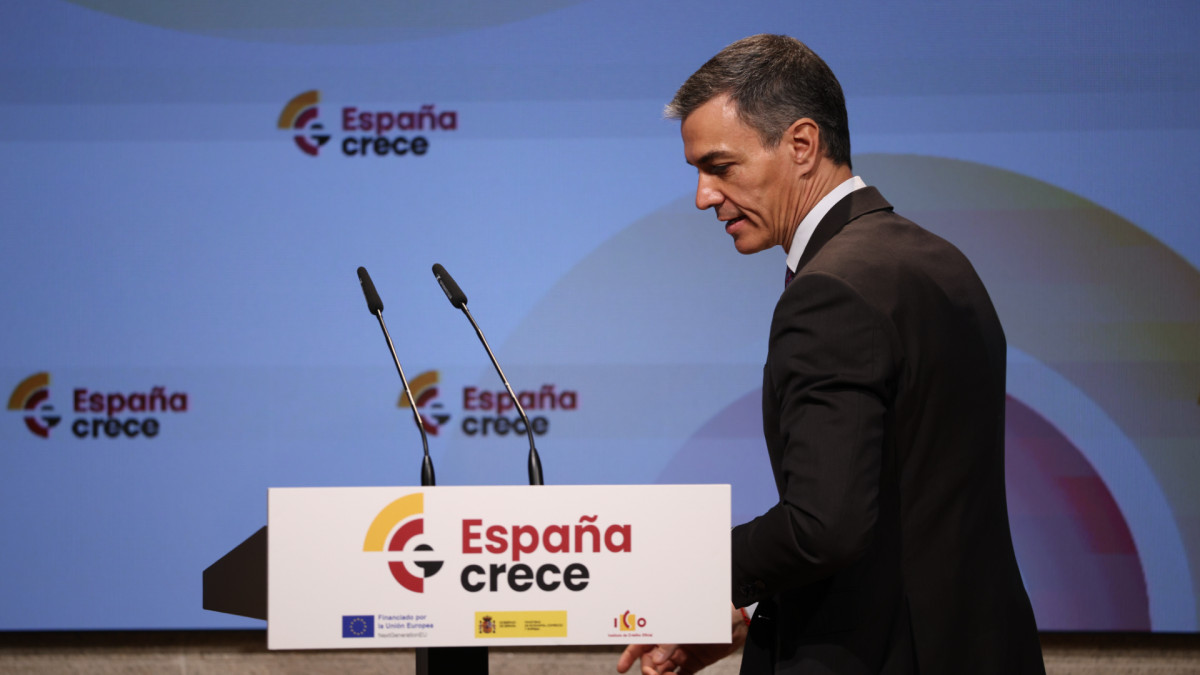
In addition, the Government has created the España Crece fund with a allocation of 13.3 billion euros, “of which 10.5 billion are loans from the Recovery and Resilience Plan.” Its explicit aim is to maintain the momentum of the Next Generation and consolidate the current economic growth. The milestone defined with the Commission requires injecting an additional 3.637 billion euros of European funds into the ICO and 2.800 billion in transfers to support investments through guarantees, hybrid financial instruments, and other formulas that combine grants and loans to enhance their attractiveness and impact.
The Need to Avoid a Desert Crossing
The Next Generation will continue driving investment in the coming years, but the end of the Plan in August 2026 marks a turning point in the availability of resources to fund public policies with the high level of ambition of the recent years. The MRR funds have been concentrated 39% in green transition and 28% in the digital sector, yet they have been deployed in economic sectors that do not typically receive transformative investments and are not accustomed to receiving such intense public attention. One of its priorities has been innovation and R&D, which, according to the Cotec Foundation’s analysis, has absorbed 37% of the resources. This has been one of the factors that enabled Spain to resume its convergence with the EU in R&D after the drastic drop in investment during the financial crisis of the past decade.
“The end of the Plan could jeopardize that path of convergence in R&D and public investment with Europe, as well as many other country missions”
Without additional measures, the Plan’s end could undermine that convergence path in R&D and public investment with Europe, as well as many other country missions included in the Plan: enhancing energy self-consumption, boosting vocational training, digitalization of the productive fabric and the third sector, consolidating a decarbonized reindustrialization, or the push for personalized medicine, among many others.
The first risk is to focus on reducing the deficit and public debt at the expense of reinvigorating investment and directing resources toward traditional sectors such as major transport infrastructure or automotive subsidies. Inertia and pressure to drain funds will be intense, and the political capacity to resist that pressure weaker in the final stretch of the term. The second risk is that the increase in defense spending concentrates on creating national champions without addressing the underlying challenge: broadening the sector and turning innovation and procurement policies in security and defense into mechanisms for building technological and industrial capabilities that ultimately improve the quality of life for the entire population. The key is to open a model today that is concentrated and closed off to the innovation of the rest of the existing innovation fabric and to foster what can emerge. There are initiatives underway, but there remains substantial room for improvement.
However, it’s not only a matter of resources. The MRR funds have activated multiple innovative initiatives that have generated transformative dynamics across various productive ecosystems and regions. The coming years are crucial to avoid wasting the effort and to give continuity to the major and minor transformations launched in the wake of the Plan. Administrations must continue to accompany these processes, maintain the commitment and forge alliances with other levels of administration and with the private sector to maximize the returns on the investments made.
What remains to be done is not business as usual. Administrations, moreover, are weary after delivering the Plan and focused on the demanding processes of expenditure verification. Precisely for this reason, it is necessary to define a clear strategy for each of the Plan’s verticals. The lack of budgets and the political context do not help, but it is essential to sustain the Plan’s momentum through other channels and to identify and consolidate the lessons learned, which are numerous.
