
The November 29 elections could bring us either relatively continuist positions in energy policy or a change of uncertain depth. Nevertheless, whatever the result, there are things the next minister with responsibilities in the ecological transition will have to face.
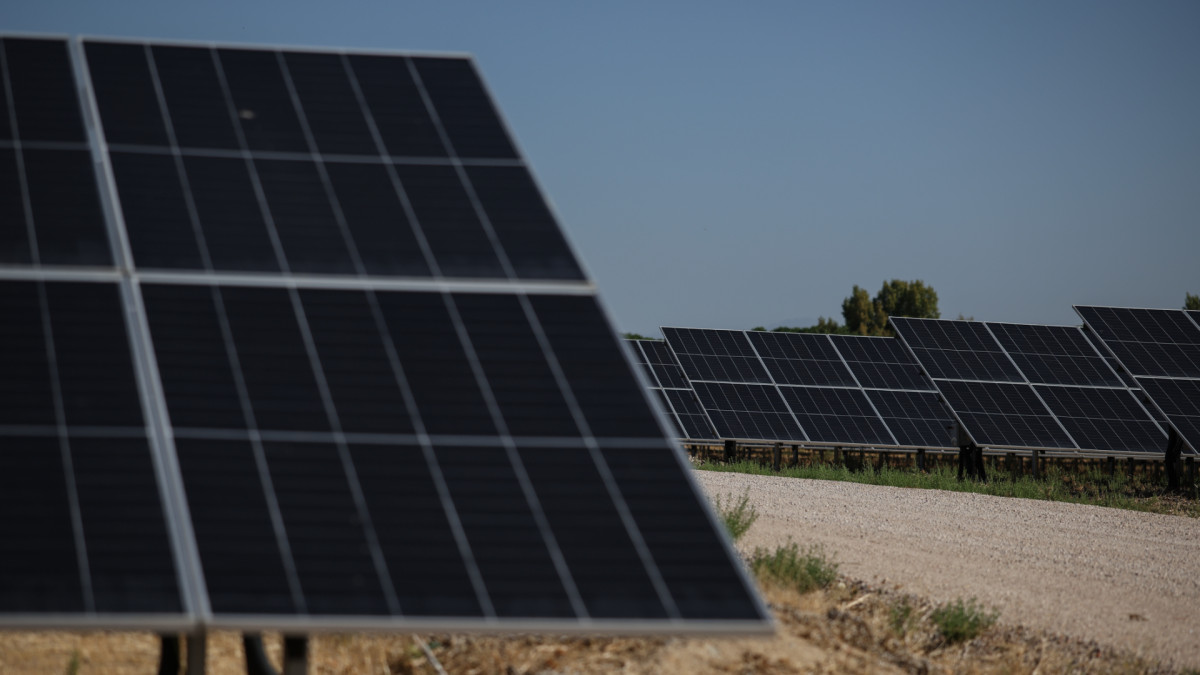
The first demand that should be placed on any new occupant entering a role (if the case arises) is to act with common sense. This, in politics, means preserving what has been done well, improving what has not yet worked, and changing what has failed. In this sense, I believe there are two undeniable successes from the latest legislatures that must be maintained: the notable development of renewable energies in Spain and, related to this, the large deployment of self-consumption in the country, which has already generated an ecosystem of more than half a million individuals and nearly 100,000 companies, many of them large electricity consumers who, thanks to self-consumption, are achieving a highly competitive average price of electricity.
According to Eurostat data from the first half of 2026, the price of domestic electricity in Spain is below the European average when historically it has been the fourth or fifth most expensive in the continent. For companies and consumers on mid-voltage tariffs (the band between 500 and 2,000 MWh per year) it is still better: Spain has the fifth-cheapest electricity in Europe, only behind the Nordic countries and Portugal. This change from our historical position is due to this massive installation of renewables. It is true that some large energy-intensive consumers have better prices in France or Germany, but this is due to the brazen subsidies they receive in the electricity price, some of which are incomprehensibly authorized by Brussels, not to the actual electricity price. In fact, asking Brussels for similar conditions so that subsidies do not distort the single market should be one of the policies of the next legislature.
“The price of domestic electricity in Spain is below the European average when historically it has been the fourth or fifth most expensive in the continent”
Maintaining this momentum of renewable development and regulation favorable to self-consumption will indeed be the acid test in the event of a change of government. If these policies are maintained, as regional governments of all stripes have done, it would be a clear indication that we are facing pragmatic leaders who understand the dynamics of the world today. Otherwise, it would signal a warning that would allow glimpses of erratic policies, lacking a sense of the current era and potentially self-destructive.
Beyond this issue, there are many tasks ahead. The next government will presumably be responsible not only for meeting the 2030 targets but for preparing the energy policy for the next decade. Depending on its sensibility, it may concentrate efforts in certain areas or seek different incentives, but there are two questions inherently rooted in Europe’s needs: to do away with fossil fuels and to advance rapidly in electrification. This path should be non-negotiable and should not be slowed. The trajectory can be adjusted, but not the destination or the pace of the journey.
At the level of the electrical system and generation, there are two fundamental issues beyond the intricated nuclear saga. The first is that momentum in wind energy development must be revived. The new government will have to find a way to install 3 or 4 GW annually compared to the current average of 1 GW. Restoring auctions will be essential. Also freeing capacity at nodes. Deploying acceleration zones and curbing the dynamics of judicialization and administrative obstruction that are causing everything from project paralysis to extortion dynamics are two matters to address.
“The new Government will have to find a way to install 3 or 4 GW annually compared with the current average of 1 GW”
The second issue is the rapid development of storage and the hybridization of solar plants. Batteries are the fastest solution to the multiple problems facing our electrical system: they will allow us to harness many TWh of renewables that today go to waste, reducing the use of natural gas and prices. They will push down the costs of technical restrictions, displacing gas-fired plants that charge them at astronomical prices. They will provide back-up capacity, resolve demand peaks, offer grid services as we develop the appropriate regulation, etc. The development of battery storage should be the priority of the electrical system at this moment. Losing focus with pumped storage that will take at least a decade or offering capacity payments to gas plants at the expense of batteries, policies very pleasing to the dominant energy players, would be a grave mistake.
However, beyond the electric mix, the great challenge of our energy policy is electrification. It is essential to advance electrification of the thermal consumptions on all fronts, primarily in mobility and in industry. At the mobility level, Spain lags somewhat in the adoption of electric vehicles compared with countries like France or Germany. We must maintain the momentum of electrifying the vehicle fleet and begin to develop specific policies and infrastructure for the new revolution coming from Asia: the electric truck.
At the industrial level, it is essential to leverage the momentum of European auctions for decarbonizing industrial heat, where Spain has shown high competitiveness thanks to the boost that industrial self-consumption provides. We must develop the grid with an eye to the massive electrification of our industry and not yield to the paralyzing dynamics so common in moments of industrial transformation.
For electrification to be possible in any sector, it is essential to reduce the price gap between electricity and fossil fuels. Europe is committed to this objective and to reviewing energy taxation, so this will be one of the duties of the new government. If we want to electrify heating, fleets of trucks or industrial heat, we need a price signal aligned with that, reducing the electricity price and keeping the price of gas and fuels for transportation high. The second is harder than the first, but if we want a profound transformation we must do both things and not let the persistent energy crises do the job for us.
“If we want to electrify heating, fleets of trucks or industrial heat, we need a price signal aligned with that, reducing the electricity price and keeping high the price of gas and fuel for transport”
In politics, having different approaches is healthy. That there are more than one way to achieve a goal gives us alternatives and new opportunities to get the strategy right. It is one of democracy’s virtues. But one thing is to change the strategy, the approach or the incentives and another, very different thing, is to destroy previous policies, something that is regrettably becoming common in this era of populism.
Whether there is continuity or a change of governing parties, the development of renewables, decarbonization and electrification of the economy are the path we must maintain. The world advances in that direction, technology leads us to those solutions, and geopolitical uncertainty imposes this path. My fundamental request to the future minister with powers in energy is that they understand these are the dynamics of this era and that they do not let themselves be duped by those who, acting in their own interest, want to delay the change.
