
The government frames this as a matter of national security. Yet, given the track record—and the ongoing lawsuits—between the White House and Anthropic, there may be more at stake than is immediately apparent.
Is the Trump administration determined to derail Anthropic now? Citing “national security” concerns, it has effectively shut down public access to Anthropic’s latest AI model. The move reads like retaliation for Anthropic’s earlier refusal to grant the government permission to employ its technologies for mass surveillance and autonomous weapons.
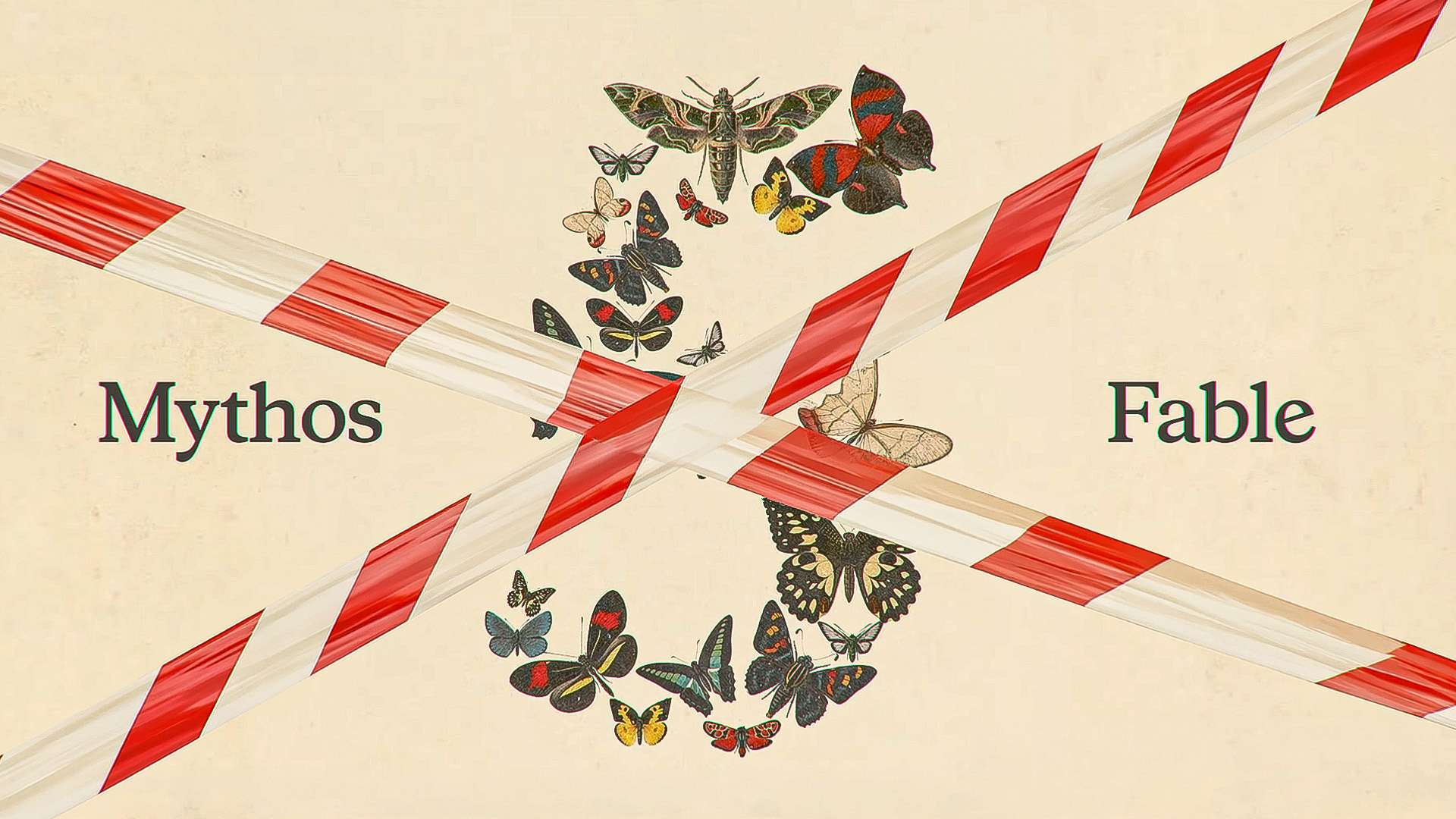
Anthropic’s newest publicly available model is named Claude Fable 5. Debuted on June 9, it was marketed as a version of Claude Mythos 5 that is safe for broad use, whereas Mythos 5 itself is a potent AI system that was released only to “a small group of cyberdefenders and infrastructure providers…in collaboration with the US government.”
You are reading Sex & Tech, from Elizabeth Nolan Brown. Get more of Elizabeth’s sex, tech, bodily autonomy, law, and online culture coverage.
The White House informed Anthropic in a Friday missive that under a revised export-control directive, Mythos and Fable 5 could not be used by any foreign national within the United States—including Anthropic staff on work visas—or by anyone in a foreign country.
With no immediate path to compliance, Anthropic temporarily suspended public access for all users.
Could this be a form of retaliation?
“We do not accept the premise that identifying a narrow potential jailbreak should justify pulling a commercial model relied on by hundreds of millions of users,” Anthropic stated in its Friday post. “If this criterion were applied industry-wide, it would essentially halt all new model deployments across frontier-model providers.”
“We believe the government should be able to block unsafe deployments, within a transparent, fair, and technically grounded statutory framework,” it added. “This action does not meet those standards.”
Anthropic stopped short of accusing the administration of retaliation.
Extent to which White House allies are signaling that this is a culture war issue, not a technical one, is striking https://t.co/1fgoJEJn64
— Ben Smith (@semaforben) June 13, 2026
Nevertheless, Anthropic has been in the sights of the White House for months, since the company—which previously held a Defense Department contract—refused to lift limits on using Claude for mass surveillance or autonomous weapons. In response, the administration labeled Anthropic a “supply chain risk” and barred any government agency or contractor from employing Anthropic’s technology.
Anthropic countered with a lawsuit alleging illegal retaliation and accusing the administration of abusing its vast power to sanction a company for expressing dissent.
U.S. District Judge Rita Lin preliminarily sided with Anthropic, stating that the Pentagon had offered “no legitimate basis to infer” that Anthropic “might become a saboteur” and rejecting the notion that an American company could be branded a potential adversary for disagreeing with the government. The ruling paused the supply-chain risk designation temporarily.
Ultimately, the government could not compel Anthropic to alter its policies or silence its commentary about the events. And thus far, it has failed to punish Anthropic by blocking its business with others.
In light of this, the question arises: is Anthropic’s new model really a threat? It seems questionable, especially when you scrutinize officials like Defense Secretary Pete Hegseth’s remarks about the situation.
Three months ago, @DeptofWar kicked @AnthropicAI out of our building—forever.
Every passing day proves why that was the right move. 🇺🇸
— Pete Hegseth (@PeteHegseth) June 13, 2026
Be on the Lookout for Overreach
Before releasing Fable 5, “Anthropic had previously notified the government multiple times…and the government did not object,” according to Axios.
Luta Security’s Katie Moussouris told Axios that the government’s response “appears far outside what’s actually in the [Amazon] research report” and that recognizing these vulnerabilities demonstrates that security tools are functioning as intended. “All AI models must be able to aid defenders in exactly this way, or we won’t be able to scale protection against attackers,” she said.
It’s worth considering the administration’s stance as well. If these vulnerabilities are truly so worrisome, shouldn’t they also raise alarms for Americans?
These flaws are described as so dangerous that access must be blocked for foreigners—but not for Americans. The rationale feels murky. It hints that this may be more about signaling security theater or crafting a pretext to penalize a company that clashed with Trump-era officials than about addressing genuine concerns.
Not everyone buys this. David Sacks, a former AI czar in the White House, has argued that the issue isn’t a simple policy dispute but a broader aim of keeping a “cyber weapon” out of reach.
Whatever the motive, the administration’s moves clearly indicate a aggressive stance on AI governance—one that diverges from the more measured language in the president’s executive order.
That order explicitly rejected the notion of mandating licensing or preclearance for the development or distribution of AI models, including frontier models. Yet such rhetoric is hollow if deployed models can suddenly be placed under tight restrictions after deployment whenever authorities feel unsettled.
Be Careful What You Wish For
“Unlike the government’s legally dubious attempt to brand Anthropic a ‘supply chain risk’ earlier this year, there is at least a plausible legal framework in this case,” observes University of Minnesota law professor Alan Rozenshtein in Lawfare. The administration appears to be leaning on the Export Control Reform Act of 2018, which governs technology and treats sharing controlled technology with a foreign person inside the United States as an export to that person’s home country.
But “this is the first instance in which export controls have been used to regulate access to an AI model,” Rozenshtein notes. If Washington intends to treat frontier models as national-security assets that can be toggled on and off, Congress will need to establish clear rules around that power.
Perhaps. Yet it seems naive to expect a neutral, objective process from Congress. If the president or the Pentagon gain unilateral authority to block new AI model releases, to declare them unsuitable for foreign nationals, or to tightly control AI output, such authority will inevitably invite “political favoritism or arbitrary decisions,” as Anthropic CEO Dario Amodei warned earlier this month.
Amodei is among tech leaders advocating increased AI regulation.
— 🍅🥔🫐🌽 hoopy frood 🌶️ 🥑🍫🌵 (@huwupy.kawaii.social) 2026-06-13T14:58:17.019Z
“Because this is happening to Anthropic, many will be tempted to say: Play silly games, win silly prizes,” writes Adam Thierer of the R Street Institute. “They have relentlessly raised regulatory temperature in Washington by inviting far-reaching controls on frontier models….”
“But this decision by the Trump administration should be judged on its merits and on what it means for America’s broader AI goals, not as payback,” Thierer adds. “In that sense, this action is profoundly troubling. How exactly will the government verify that everyone using this specific model complies? That alone raises significant concerns.”
In the News
“Taken together, these bills would fundamentally alter the internet as we know it.” A fresh tech policy package being negotiated by Congress and the White House looks like very troubling news for free speech and privacy online. “In exchange for overriding some state AI regulations, the package would reportedly include sweeping federal limits on online expression—potentially ushering in an era of unprecedented online censorship,” writes the Foundation for Individual Rights and Expression. “The package could feature the Senate’s version of the Kids Online Safety Act, the NO FAKES Act, and age-verification mandates.”
Just so we’re clear, trading preemption of some state AI laws for federal bills like KOSA, NO FAKES, GUARD Act, or ASAA is a bad deal for free speech online.
— John Coleman (@FreeSpeech_AI) June 12, 2026
The U.K. plans to bar teenagers from social media and online gaming. The government intends to block under-16s from social platforms, a move that would require identity checks or another form of invasive verification for all users. “The government also intends to block under-16s from livestreaming and from contacting strangers across a broader range of online services, including gaming sites,” The New York Times reports.
Australia attempted a similar measure late last year. The results have been disappointing.
“Six months in, most indicators show the law has largely failed to keep young teens off the platforms, marking a disappointing start to a policy closely watched by parents and governments worldwide,” writes Times Australia correspondent Victoria Kim.
A government report from Australia noted that 70 percent of parents say their children under 16 still maintain social media accounts. In another survey, “three in five (61%) Australian 12-15 year-olds who had accounts on restricted platforms before the ban took effect still retain access to one or more accounts.”
But regulators rarely let practical outcomes deter them. The momentum remains for more action.
On Substack
AI chatbots could save lives. Artificial intelligence can be beneficial in certain medical contexts, spotting illnesses earlier and potentially saving lives. This includes AI chatbots often criticized by critics, according to Adam Omary and Jennifer Huddleston in Human Progress:
The Senate Judiciary Committee advanced Senator Josh Hawley’s Guidelines for User Age-verification and Responsible Dialogue (GUARD) Act. The bill would require every American to prove their age before using a generative AI chatbot and would bar anyone under eighteen from using a “companion” chatbot altogether. In the room for the markup were the parents of children who died by suicide after conversations with AI products. Their grief is immeasurable, and their motives are noble. But such a policy might inadvertently cause more harm than good.
The strongest rationale behind this bill is the belief that restricting minors’ access to AI chatbots will prevent suicides. Based on current data, that claim is more of a hypothesis than a proven fact—and a hypothesis that contradicts decades of research on how young people die.
According to the Centers for Disease Control and Prevention, the American suicide rate began rising around 2000—well before ChatGPT, smartphones, or social media existed. It accelerated through the 2010s, then, contrary to popular belief, plateaued and declined modestly after 2018—even as generative AI moved into the hands of nearly every teenager. If chatbots were a meaningful driver of youth suicide, the trends would have moved in tandem. They did not, and importantly, suicide rates among younger Americans remain the lowest of any age group.
Omary and Huddleston go on to suggest that for some adolescents—particularly those in homes where therapy is unaffordable or unsafe to discuss—chatbots could provide accessible, reliable emotional support and potentially help prevent self-harm.
Read This Thread
This is a clear example of “what’s the difference between a bouncer checking your ID and a website doing it?”
Identity theft. https://t.co/c6S6Oveih2
— Shoshana Weissmann, Sloth Committee Chair 🦥 (@senatorshoshana) June 12, 2026
More Sex & Tech News
• The Justice Against Weaponized Bureaucratic Overreach to Networked Expression (JAWBONE) Act, from Sens. Ron Wyden (D–Ore.) and Ted Cruz (R–Texas), seeks to curb indirect government censorship of speech on social media, AI systems, and television.
• A federal appeals court is weighing the constitutionality of an Arkansas law that makes librarians who provide books deemed “harmful to minors” a crime, and gives city and county officials power to set library content.
• It’s good to see people pushing back against unfounded anti-porn narratives.
• An Ohio police chief faces 70 counts of felony charges related to sex crimes. Bethel police chief Chad Essert is accused of sexual battery and unlawful sexual conduct with a minor for alleged offenses from 2005–2010. Essert also faces a sexual harassment claim from a former employee and was under investigation for misconduct on duty, WKRC reports.
• The American Innovation and Choice Online Act remains contentious. (See details on an earlier version of this bill here.)
• Self-help author Tim Ferris suggests AI is already reshaping how-to nonfiction sales—but his take ends on a surprisingly optimistic note about the phenomenon.
• Illinois is introducing a special monthly tax on social media platforms. “The proposal’s biggest hurdle is the decades of case law that have labeled this kind of tax as exactly what it is: a regulation of speech,” writes Tyler Tone.
• In advance of the World Cup in Los Angeles, authorities vow to mount extensive enforcement actions. “Sex workers—like me—are targeted because cops and politicians have something to prove.”
