
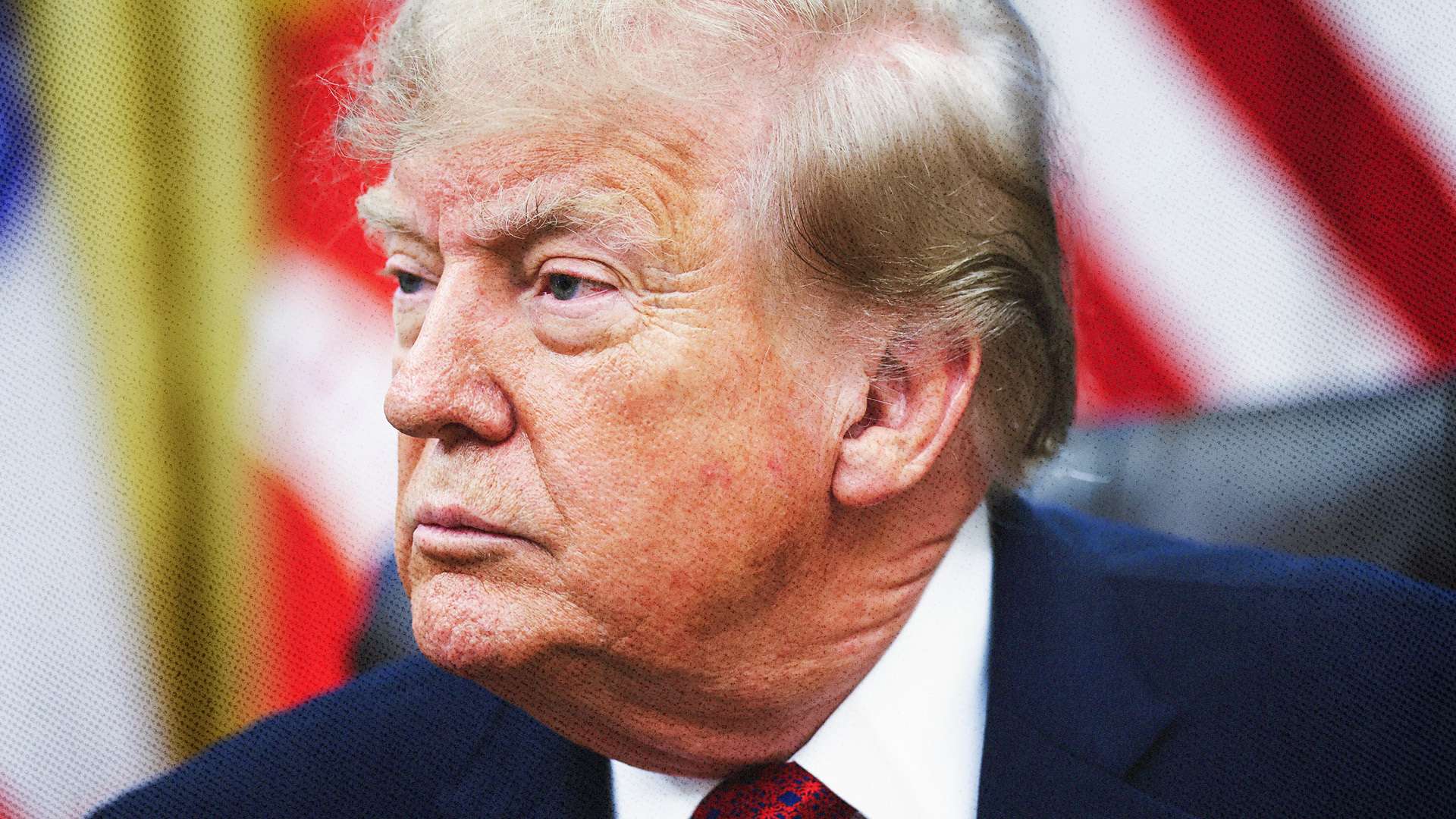
The White House maintains the memo isn’t a threat—but given Trump’s history, that claim is hard to accept.
As President Donald Trump’s standing remains vulnerable in the wake of Democrats’ sweeping midterm victory, members of his own party are beginning to voice criticism of the president and his agenda.
Midweek, Vice President J.D. Vance labeled Trump’s decision to take a hard line in Iran as the “real reason” behind the GOP’s loss. Florida’s Governor Ron DeSantis has spent the last several days dissecting voter discontent, telling The Sage Steele Show that crony capitalism among “the Republicans in Washington” is part of the problem. With the party appearing to fracture, the White House is moving to limit potential fallout within the party base.
On Thursday, the White House Office of Public Liaison circulated a memo to more than 3,000 conservative organizations, The Wall Street Journal reports, which “outlined Trump’s accomplishments in office and pledged to prevent newly ascendant Democrats from reversing them.” The document concluded with a sentence highlighted in yellow: “As always, we are monitoring statements, press releases, and media engagements from your organizations.”
When the Journal sought comment, a White House spokesperson said the memo “wasn’t a threat and was part of a larger effort to mobilize outside supporters,” insisting that the Office of Public Liaison has issued similar messages in the past. The Journal’s review of prior emails from the liaison’s office to groups urging advocacy for the president did not reveal comparable language.
It is certainly possible that the liaison office did not intend to threaten conservative groups—it falls within its remit to monitor allied organizations’ activities. Yet, given the administration’s history of tracking and pressuring critics over constitutionally protected speech, the line doesn’t come across as a friendly reminder.
In September, for instance, Trump barred several major news outlets from the White House, displeased with their coverage. “The White House is not instituting an assault on the Free Press, something which I cherish. It is instituting an assault on the FAKE NEWS,” he stated on Truth Social. “It is a threat to our National Security, and must be stopped, NOW!” A district court judge blocked the ban in October, finding that Trump’s own words demonstrated “unlawful viewpoint discrimination.”
The Trump administration has also targeted legal residents for their political speech. Last year, Immigration and Customs Enforcement arrested Mahmoud Khalil, a Columbia University graduate student, over his role in pro-Palestine campus protests. Khalil faced no formal charges, but the administration deemed him “subject to removal” because his “presence or activities…would have potentially serious adverse foreign policy consequences for the United States.”
Trump isn’t the first president to crack down on disfavored speech. During the COVID-19 pandemic, former President Joe Biden spent much of his time pressuring social-media companies to remove content they deemed “misinformation.” Meta CEO Mark Zuckerberg said that Biden administration officials “repeatedly pressured our teams for months to censor certain COVID-19 content, including humor and satire.”
If the Trump White House is threatening these groups, it remains unclear what the consequences of disobedience might be. One thing is certain: with the president’s popularity in doubt after the midterm results, a memo reminding allies that they are being watched signals the White House fears its grip on the GOP may be slipping.
