
Sporting success has long stood as a powerful symbol of national or communal pride. The best embodiment of this is the notoriety and prestige of the Olympic Games, the world’s most important sporting event. Its origins date back to 776 BCE in Ancient Greece and the city of Olympia. In those times, it consisted of a series of athletic competitions, wrestling or chariot races staged by citizens of the numerous city-states that made up Greece. These Great Games culminated in an awards ceremony in which each winner was proclaimed as “the best among the Greeks” and received a vegetal crown, crafted from the leaves of the tree sacred to the deities presiding over the Games: olive in Olympia, laurel in Delphi, fresh celery in Nemea, and dried celery in Corinth. Sporting success constituted a mark of prestige and reputation reflected in the epinikia or “odes of victory” that the poet Pindar dedicated to the victors (Olympic, Isthmian, Pythian or Nemean). They were poems almost always devoted to the chariot races, and the victory did not go to the driver, but to the owner of the winning chariot as a symbol of the high social status of horseowners.
There we could situate the origin or the seed of what we today call “sports diplomacy,” referring to the capacity and influence of sport to bring people, nations and communities closer through the shared passion for certain sports activities. Similarly, sports diplomacy rests on a common purpose, namely promoting life values and skills related to fair competition, values such as leadership, equality, non-violence, participation, or peaceful coexistence among nations, groups or communities.
In the modern era, as in antiquity for the various Greek states, sports diplomacy has become one of the most important levers for positioning the country brand, unfolding as another tool of a nation’s foreign relations, and even of cities or territories. The Swiss tennis player Roger Federer, one of the figures who enjoys great global prestige for embodying values such as elegance, honesty and fair play, received in 2017 an honorary doctorate from the University of Basel, his hometown. The award was not given mainly in recognition of his sports titles, but for his contribution to Switzerland’s reputation. Another particularly notable case is Nelson Mandela, who managed to project a renewed image of his country to the world during the Rugby World Cup that South Africa hosted and won in 1995, instilling the spirit of being a single nation for whites and blacks. One of the finest episodes of modern sports diplomacy recounted by journalist John Carlin in his book The Human Factor, which later became the film Invictus directed by Clint Eastwood and featuring world-renowned actors such as Morgan Freeman or Matt Damon.
In the realm of diplomacy and the reputation of the king of sports, football, English player Gary Lineker popularized a phrase that became etched in collective imagination after losing to Germany in the 1990s: “football is a game in which 22 men chase a ball and in the end Germany always wins.”A myth that Spain managed to dispel after successive triumphs in the 2008 and 2012 European Championships, as well as in the 2010 World Cup final in South Africa thanks to Andrés Iniesta’s legendary goal. From that moment, Spain rode a grand narrative of sporting success that has formed the backbone of its sports diplomacy and the country-brand over the last decade. The tale is complemented by the feats and successes of individual figures such as the Gasol brothers or Rafael Nadal, elevating them to symbols of national pride. Likewise, the triumphs of FC Barcelona or Real Madrid—also global brands—enrich and feed the story of Spain’s prestigious sports brand. Victories by great athletes are celebrated at the highest level, with heroes welcomed and treated as true icons by presidents, ministers or mayors at large-scale events in a modern rendition of the ancient Greek rituals. Heroes who mobilize emotions and passions across an entire country or territory and serve as emotional balm and community glue for many citizens’ wounds, as shown by celebrations following Argentina’s national football team victory in the most recent FIFA World Cup in Qatar.
Sports diplomacy and the economy of reputation
Beyond the emotional impact of sport, its economic impact is also a strong incentive for deploying ambitious international sports diplomacy. The industry contributes in Spain roughly 3.3% of GDP and supports nearly half a million jobs according to a PwC Spain study. International sporting successes in major tournaments are a powerful instrument for generating economic value. Experts such as Marco G. Mello, the researcher and author of A Kick for the GDP: the Effects on Winning the World Cup, even argue that a country at risk of entering a “mild recession” could avoid it by winning the World Cup, potentially achieving GDP growth of at least 0.25% in the following two quarters after conquering the World Cup. One example of this was Brazil, which after winning the 2002 World Cup in Korea and Japan saw a 13% rise in exports in the two quarters following the tournament.
Similarly, the lure of major sporting events mobilizes thousands of people and generates hundreds of millions thanks to connectivity and massive global audiences, so countries and cities deploy strategies and invest enormous amounts of energy and resources in ambitious sports diplomacy actions to attract the world’s leading events. Hosting the final of the Champions League, the Final Four in basketball, the Davis Cup in tennis, the Athletics World Championships, the Olympic Games, the FIFA World Cup, Formula 1 or the Ryder Cup in golf, are attempts to pair the enhancement of the country-brand’s position with business generation and economic value, and they are the vectors that today largely drive the sports diplomacy of countries and territories.
A telling example of the potential and growing complexity of sports diplomacy is the strategy adopted by some Middle Eastern monarchies to use the allure of sporting events and sport figures as instruments for their international projection. Their strategy is to put sport at the service of the strategic interests of the country-brand. One of the most paradigmatic cases is the hosting of the 2022 FIFA World Cup in Qatar, which was accompanied by substantial controversy in many countries but which, paradoxically, experts and analysts defined as “the best World Cup final in history” with the epic Argentina-France clash. The final will be etched in the annals as it crowned Lionel Messi as the greatest footballer of all time and left a non-negligible legacy for the Arab world, both for hosting the World Cup in the Qatari country and for the historic fourth place of the Moroccan national team. On the other hand, Saudi Arabia’s strategy of purchasing sporting talent with big funds, with Cristiano Ronaldo as its flagship, or acquiring European clubs like Manchester City or Paris Saint-Germain, is changing the rules of the game of international sports diplomacy by tearing at the seams of its traditional working method.
Sport and emotions
In a world of rapid-fire pace and in the face of a juxtaposition of crises, positive sports news constitutes a good antidote to forget—at least temporarily—the various crises. Major events and sporting successes help create a more pleasant social atmosphere, generate positive collective emotions and allow us to escape a complex reality that fosters uncertainty. Emotions are the new energy that moves the world. They have a profound impact on human behavior, as explained by neurologist António Damásio in his book Descartes’ Error, coining the term “somatic marker,” the mechanism by which emotions guide—or bias—our behavior and decision-making. Emotions have an enormous impact on our civic-political behavior, and the perception of sporting success creates positive mental states and a sense of shared purpose, aspirations, and dreams that are essential to (re)ignite the spirit of citizens and cultivate a solid sense of belonging. A successful sports diplomacy rests mainly on leveraging emotions to generate complicities, meaningful connections and favorable opinion about countries, cities, teams or territories.
Spain, a sporting power with a poor narrative
Sports diplomacy is nothing more than the construction of a grand story that enters the collective imagination of people and groups. Countries, nations, cities and territories cannot choose the circumstances in which such a narrative is produced, but they can choose their dreams and construct stories that partially help to improve their circumstances. Sports diplomacy forms part of that construction of the emotional bond with people as well as with public and published opinions, whether domestic or foreign, through a good story that harmonizes or reconciles the aspirations of different communities. To achieve this, one must design a delicate strategy of focusing efforts in a mix of tactics and strategy, identifying opportunities to broadcast the right messages at the right moments. It is a matter of knowing how to communicate our purpose, avoiding the risks of misrepresenting our story or letting others tell a story that is not aligned with our interests and could erode our reputation and the trust in our project. In the same vein, reputation requires coherence and consistency between what we say we are and what we actually do, since it is basically a perception built on a set of shared beliefs. If a negative narrative about our purpose or our conduct takes root, the risks for our organization, country, city, or group multiply.
That is precisely what is happening to Spain’s sports diplomacy. It is a sporting powerhouse undergoing a major reputation and narrative crisis on the eve of hosting the 2030 World Cup. The scandal and the deep crisis at the Spanish Football Federation, led by the Rubiales case, have opened a huge credibility gap for the Spain brand at the sports level. An unprecedented situation after the women’s national team won the FIFA Women’s World Cup in Australia and New Zealand 2023. A feat that was tarnished and diminished by the president of the Federation, Luis Rubiales, whose conduct provoked worldwide condemnation and has exposed the corruption and rot of the federation’s top leadership. The scandal of Rubiales’s non-consensual kiss was not the cause, but the consequence of decades of ethical, moral and professional decline in an organization charged with organizing one of the world’s most important sports events and, in the coming years, with managing tens of millions of public money as well as non-professional sport.
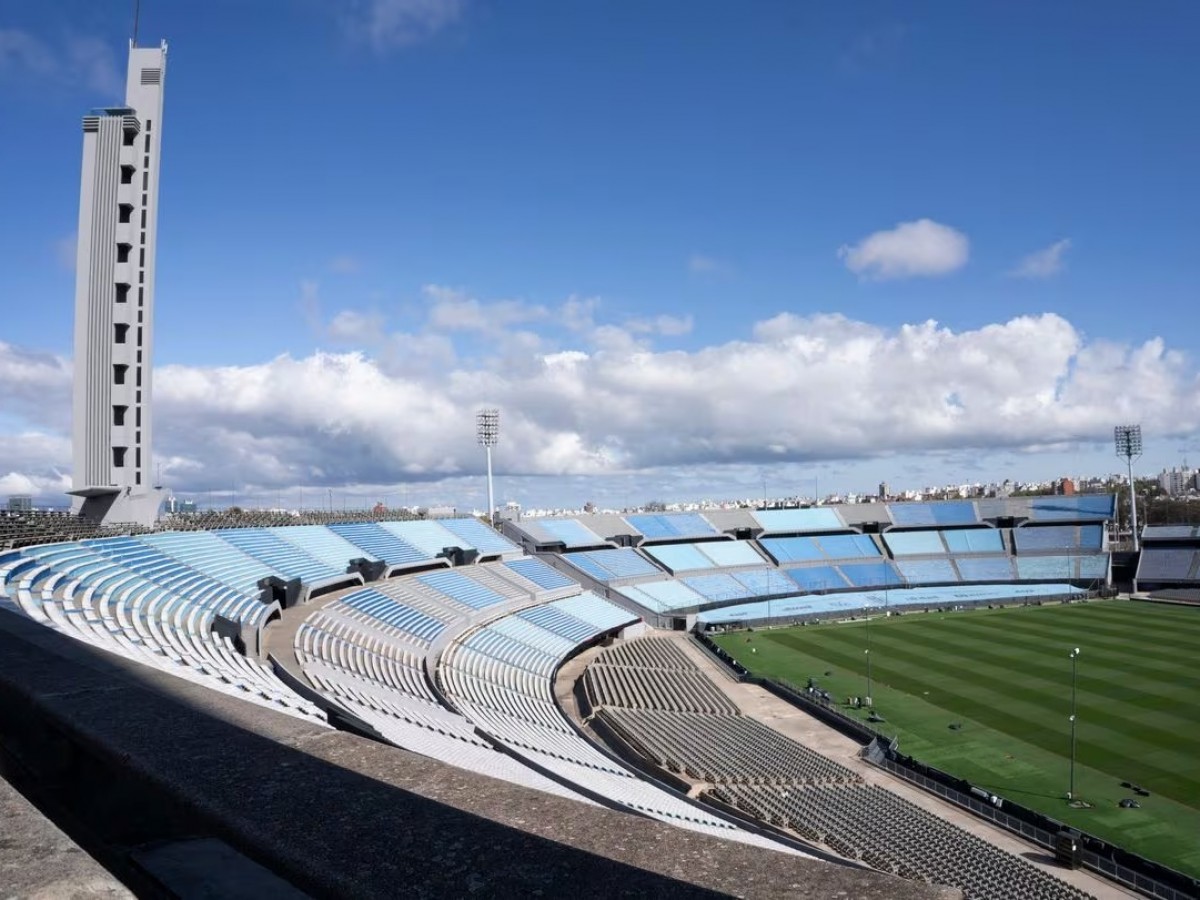
All of this is especially relevant for analyzing the reputation impact on the Spain brand and its capacity to deploy a sports diplomacy strategy that allows designing and implementing an intelligent and effective approach for the years ahead. Spain, Portugal and Morocco presented a joint bid to host the great World Cup in 2030. FIFA granted that responsibility to the three neighboring countries, although the first three matches will be played in Uruguay, Argentina and Paraguay to commemorate the centenary of the FIFA World Cup held in Uruguay in 1930. The first of these three matches will be played at the stadium where it all began, the legendary Estadio Centenario in Montevideo, but the “crown jewel,” i.e., where the World Cup final will be played, remains to be decided, likely the world’s most important sporting event.
Who will host the 2030 World Cup final?
In Spain, many people assume Spain will host the final, anticipating a tight contest between the recently renovated Santiago Bernabéu in Madrid or the Camp Nou, currently under reconstruction. However, if the crisis of the Spanish Football Federation’s reputation is not satisfactorily and swiftly resolved, the final might not be so obvious. Morocco has shown its ambition and willingness to host the grand final and will play its cards with intelligence and resolve. Moroccan authorities have begun planning a new flagship stadium in Casablanca, which will have a capacity of 115,000 spectators and an estimated budget of 460 million euros. They have awarded the project to the American firm Populous, responsible for the Wembley stadium project, and aim to possess the largest and most modern stadium in the world, surpassing the Bernabéu (80,000 seats) and the Camp Nou (105,000), a clear statement of intent.
Some may think that is a pipe dream, but beware of complacency and undervaluing Morocco’s abilities to deploy a tactic and strategy to have serious chances of achieving it. If we agree that confidence generation and reputation have become among the most valuable assets in today’s world, the Maghreb country has gained significant ground, especially at the sporting level. Its fourth-place finish at the 2022 World Cup in Qatar has projected its sports profile globally, and in October 2023 Marrakech hosted the World Bank and IMF annual meetings, further consolidating its image to host major international events.
Morocco has been preparing for this moment for years, after having attempted to host the World Cup solo on five occasions without success. The ambitious Moroccan plan to build and renovate stadiums for the 2030 World Cup has a budget of 1.3 billion euros and includes six other stadiums—Tangier, Casablanca, Rabat, Agadir, Marrakech and Fez—in addition to the Casablanca venue. In the same vein, our southern neighbor will host and organize the Africa Cup of Nations in 2025, the continent’s premier sporting event.
Thus, nothing is decided. In the coming period we will witness an interesting clash between sports diplomacy and the country-brand of Spain and Morocco. Europe’s traditional power has weakened markedly and lost much of its ability to impose its will. Today it is more important to seduce and move than to impose or coerce. Influence and reputation have become the most efficient software in international organizations in which reputational capital is a critical factor. Spain arrives at that final sprint exhausted and lacking figures with the moral authority and recognition to lead the process. It would be desirable for the Spanish Football Federation and the Spanish Government to interpret the new physical, social and emotional map in which the world of football moves to have solid options to host the World Cup final, and it would be a mistake to take it for granted.
The credibility of Spain’s sports diplomacy and, in particular, that of the Federation, which is in charge of organizing the World Cup, is seriously damaged before FIFA and a large portion of the world. There is a need to urgently reconstruct it by putting at the fore of the World Cup organization and international sports diplomacy a team capable of managing this interim and the Federation’s complexity efficiently and stopping the hemorrhage of a scandal that tarnishes the image of football and Spanish sport. But be warned, promoting the country’s image and the reputation of the football world is much more than one or several communication campaigns. It is, above all, a value proposition tied to a series of expectations. Projecting an image of competitiveness, capability and confidence requires consistently conveying the key messages about the country’s values and attributes, built through actions and a smart balance between what we say we are (storytelling) and what we actually do (storydoing). We must urgently align sports diplomacy with reputation and the country-brand; we are playing for more than just hosting the World Cup final.
