

During my college years, it was the liberals rather than the conservatives who pressed most vigorously to defend free speech, including debates over whether pornography should enjoy constitutional protection. In 1990, when I was in law school and my introductory constitutional law course covered Texas v. Johnson, the well-known flag-burning case, it was only the more conservative students who argued that Gregory Johnson’s actions should not be protected as expressive conduct. That memory predates the free-speech seminar I later took with Professor Volokh during my doctoral studies in political science at UCLA, and I hoped at the time that free speech could someday stand above partisanship. After all, predicting which party will steer your school board, city council, state legislature, or Congress is often unreliable. If you grant lawmakers the power to censor an idea you detest today, you also grant them the power to suppress ideas you may value tomorrow. It can be difficult to stomach ideas you find revolting, yet others will feel the same about yours. In a society devoted to free speech, the government must be neutral; it cannot discriminate against viewpoints, even those that are deeply offensive and even racist, sexist, or homophobic. No real government can censor “bad” viewpoints competently or fairly, even if we frequently agree on which ones are bad. Equally important, the citizens living in that society must be willing to permit others to express their thoughts. The merit of the arguments should be beside the point.
These days in this country, the situation seems to be worsening. On both ends of the political spectrum, the natural impulse to suppress disagreeable ideas appears to be growing more resistant, even among young adults. As someone who teaches at an undergraduate institution and has done so for more than twenty years, my sense is that college students are far less willing to endure expressions they dislike than they used to be. Aside from campus censorship—the disinvitation of guest speakers or being shouted down—media attention tends to overshadow the broader issue of how school authorities may curb student speech in public middle or high schools. The prevailing assumption is that because of their age and relative immaturity, most of what they contribute to the marketplace of ideas at school will have little to no value. Furthermore, the primary mission of a school is to educate, and student speech can be disruptive or distracting.
As a result, it can seem obvious that teenagers should not have the same free-speech rights as college students. Yet, this view is more difficult to defend than many people recognize. After all, it is almost self-evident that if impressionable tweens and teens attend schools hostile to free speech, they will absorb the wrong lessons, regardless of what they might study in civics class. They can be punished for saying, writing, or wearing clothing that expresses a view on abortion, guns, same-sex relations, or any other topic; they could face detention, suspension, or even expulsion. Sooner rather than later, they will learn to self-censor.
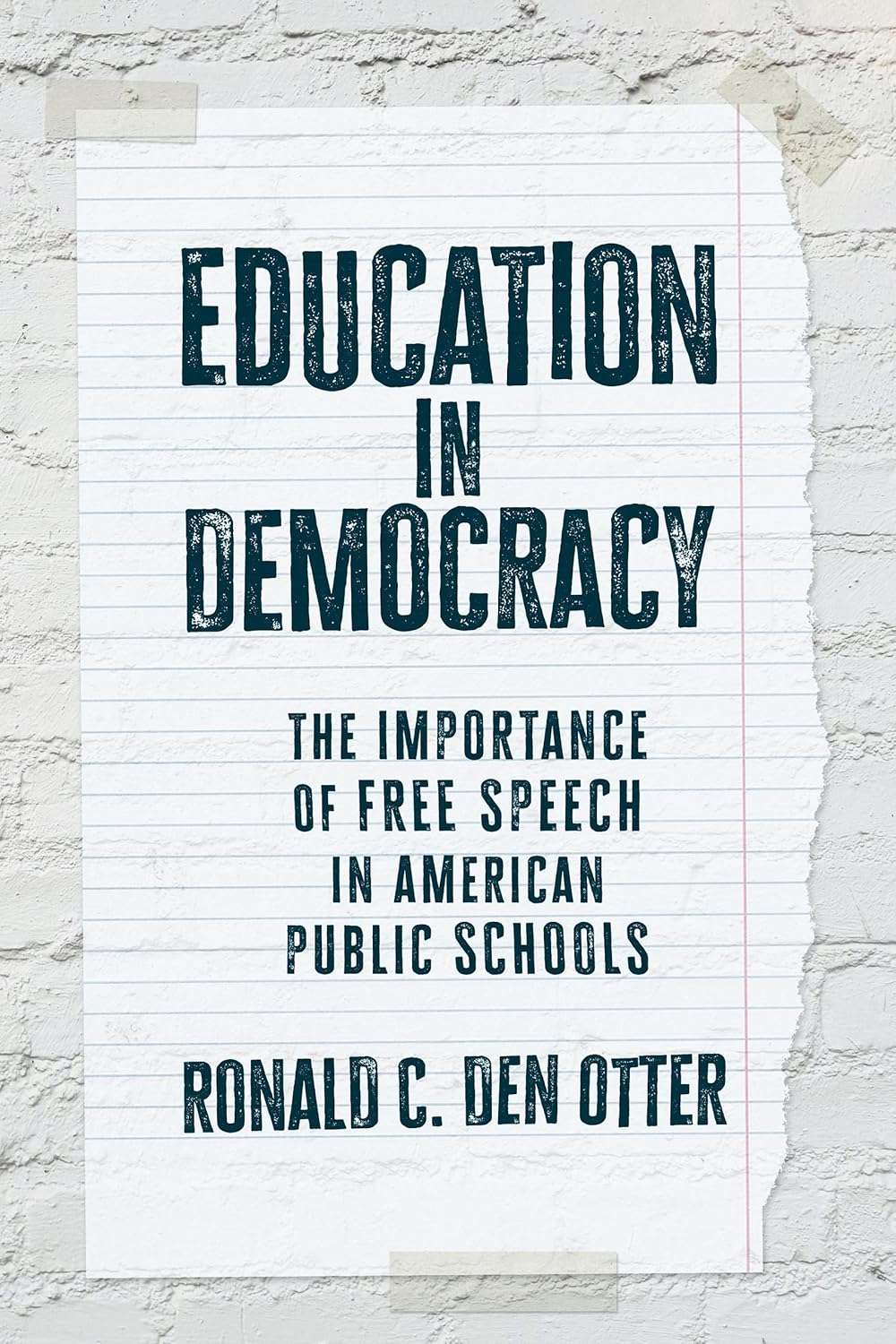
My forthcoming book, Democracy in Education: The Importance of Free Speech in American Public Schools, argues for the importance of the free speech rights of junior high and high school students in a country like ours and questions the double standard that treats public schools so differently from colleges on free-speech grounds. There are many ways to defend free speech, and I emphasize the educational value of situations in which students are challenged to formulate their own views while being exposed to the perspectives of their classmates. Indeed, becoming a citizen in a democracy requires learning how to engage with differences and disagreements in political life.
In 2021, the U.S. Supreme Court ruled on this exact topic, the first such decision in fourteen years. In the celebrated Tinker decision (1969), the Court granted constitutional protection to student speech at public middle and high schools for the first time in American history. In Mahanoy, the Court sided with a freshman who had been disciplined for remarks about the cheerleading coach and team. On Snapchat, over a weekend, B. L. posted a photo in which she raised her middle finger with a caption that included the f-word multiple times, expressing frustration at not making the varsity cheerleading team. From the perspective of school officials, such a crude gesture paired with crude language was inappropriate. While Mahanoy did not receive extensive media coverage, for anyone who cares about free speech it is a more significant decision than most people realize, because it raises fundamental questions about the value of student speech and the role of censorship in a high school. If she had been a college student, the case would have been straightforward: her speech would have been unquestionably protected. In recent years, scholars have widely discussed free speech on college campuses. Yet comparatively little has been written about the free speech rights of junior high and high school students—which arguably may be even more important.
For the moment, school board members, administrators, and teachers retain substantial discretion in these matters whenever they can plausibly claim that the student speech in question is disruptive, sexual, offensive, school-sponsored, or advocates illegal activity. The implication is that they can discriminate not only against progressive viewpoints but also against conservative or libertarian ones. That should concern all of us in a society that aims to prepare teenagers for adulthood and democratic citizenship.
What I argue in this book is less descriptive or explanatory and more normative. I delineate where the U.S. Supreme Court went astray and what the law ought to be, rather than predicting what lower courts might do or are doing. Ultimately, my objective is to persuade readers that free speech doctrine must be revised so that this kind of speech receives the broad constitutional protection it deserves.
At first glance, it may not be obvious why anyone would care about this topic if they are not interested in the specifics of free speech doctrine. For someone like that, I would argue it is far too easy to underestimate how likely it is that student speech, especially at a formative age, will help teenagers become better democratic citizens by bringing political issues to light, giving them a platform to be heard, helping them appreciate dissent, encouraging them to listen to others, fostering tolerance, teaching them how to exchange reasons with one another, and prompting them to respond to disagreement with counter-speech rather than with censorship by political authorities. In this sense, protecting such student speech may be even more essential than safeguarding the speech of adults who already hold formed views.
I spell out why student speech ought to be afforded far greater constitutional protection than it currently receives. Put plainly, the value of student speech should not be underestimated given the developmental stage of teenagers, and the state’s countervailing interests in restricting it are relatively weak upon closer examination. I go further than the Supreme Court has ever ventured by proposing that public junior high and high schools be treated like public universities for purposes of free expression (resembling California’s Leonard Law, the only statute in the country that goes beyond the constitutional minimum). I articulate a more stringent version of the Tinker v. Des Moines Independent Community School District substantial disruption test. The only reason I do not adopt this extreme approach and abandon the Tinker test altogether is that, in my view, school officials should be able to restrict student speech in rare cases where it is likely to substantially disrupt the learning environment, a principle that would apply equally to a public university. Content-neutral restrictions would be permissible in some places on school grounds, yet they cannot be used to cloak an avoidance of controversy. Ultimately, no public educational institution should engage in viewpoint discrimination. In the end, junior high and high school students do not differ greatly from college students in their capacity to exercise freedom of expression and to gain educational benefits from the experience.
