
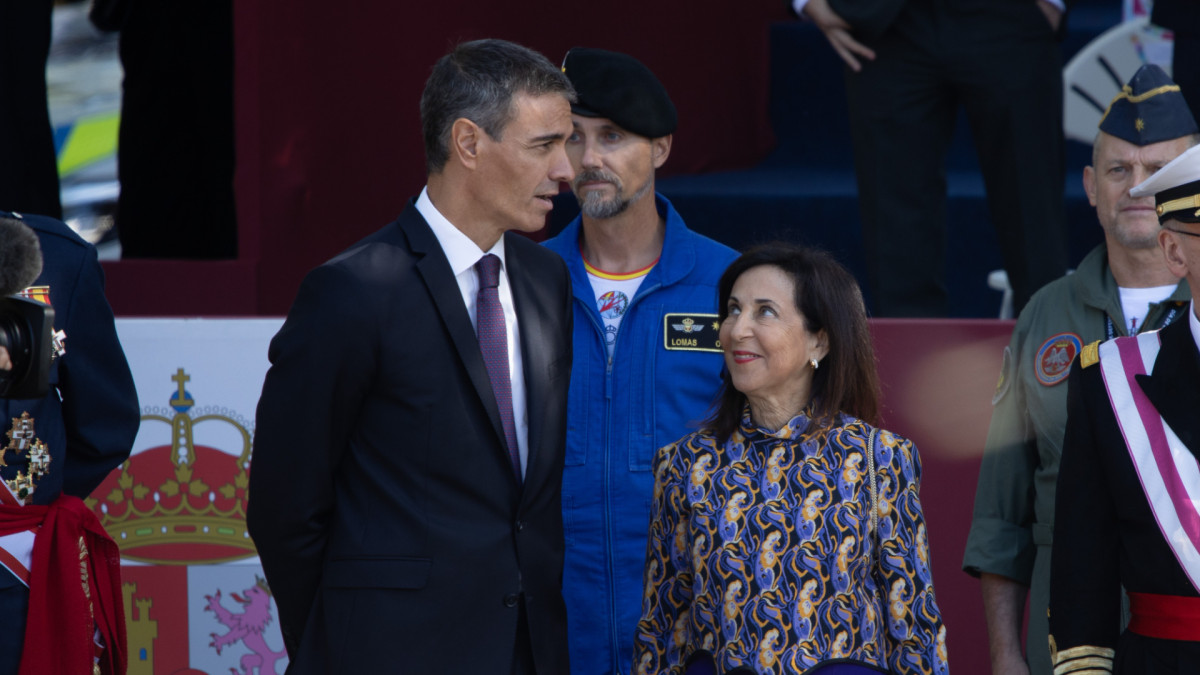
On 30 and 31 July, as tens of thousands of migrants crossed the border into Ceuta, Moroccan warships advanced into Spanish territorial waters. The Spanish Navy bolstered its patrols in the zone, and the episode was ultimately defused through dialogue between Madrid and Rabat, as prime minister Pedro Sánchez later noted. The government, however, offered no public statement. For more than two months, the public remained unaware that the border crisis carried a military dimension as well. Nor was it clear who stood behind the mass arrival of migrants. Had the naval incursions been disclosed at the time, many people would probably have pointed the finger at Morocco for what happened at the border, even in the absence of conclusive proof. Sánchez had incentives to shield Rabat from further damage to their relationship. Yet the choice carried a significant political risk: the information might emerge publicly before the government could provide an explanation. That is precisely what happened. The prime minister kept the matter within diplomatic channels, but he exposed himself to accusations of a cover-up. If the incursions had become public a few days after they occurred, while Ceuta’s images still dominated public discourse, the political fallout would likely have been greater. The disclosures came later, but they compelled the government to account, after the fact, for a decision it had opted not to disclose.
From Kennedy to Perejil: lessons in diplomatic restraint
In October 1962, John F. Kennedy confronted a dilemma that, despite its clear differences, bears a certain resemblance to Sánchez’s predicament. The United States had learned that the Soviet Union was installing nuclear missiles in Cuba. Kennedy kept the discovery secret for six days while weighing his military and diplomatic options. By the time he announced it publicly, he had already decided to impose a naval quarantine around the island. This move allowed him to demonstrate resolve without automatically precipitating war. During those days, keeping the discovery quiet gave Washington time to prepare its response and prevented an overly hasty public threat from narrowing its negotiating options.
In an international crisis, making threats public can constrain governments just as much as the threats themselves. A forceful statement may satisfy domestic opinion, but it also commits the actor to a particular course of action. If an adversary is publicly humiliated, backing down can become more difficult. Diplomacy must preserve the possibility of exit: permitting the other side to retreat without publicly admitting defeat. That is why a state’s strength matters, but so does its ability to decide when to use it and how far to push a confrontation.
“In an international crisis, making threats public can constrain governments just as much as the threats themselves”
Thomas Schelling studied precisely this link between deterrence and negotiation. The threat of force may be necessary to defend certain interests, but it loses some of its value when the alternatives to confrontation disappear. Spain could respond militarily to the Moroccan incursions while also seeking to avoid a cycle in which every move demanded an ever stronger response. Publicly turning the episode into a test of authority would have left the government with less room to pursue a discreet solution.
Of course, Cuba and Ceuta are very different cases. Spain was not facing nuclear war, and Morocco does not present a threat akin to the Soviet Union in 1962. What matters about the American precedent is the timing of political decisions. Kennedy delayed making the discovery public so that he could prepare his response. In Ceuta, the Spanish government appears to have opted for discretion to prevent the naval incursion from worsening a crisis that was already exceptionally serious.
Spain has a precedent much closer to home: Perejil Island. In July 2002, José María Aznar ordered a military operation to remove the Moroccan personnel who had occupied it. Spain regained control through military intervention, but the confrontation subsequently required US mediation to restore the status quo. Military action ended the occupation; without that diplomatic channel, relations between Madrid and Rabat could have continued to deteriorate.
The Perejil episode does not imply that Spain should have refrained from intervening. A military response could be warranted without it being sufficient, on its own, to secure a political settlement. That distinction is especially important between neighboring states. Spain and Morocco share borders, economic interests, police cooperation and responsibilities for migration management. They may encounter serious crises, but they will still have to interact in the aftermath. Even after a confrontation is resolved, its effects on mutual trust can endure for years.
“Even when a confrontation is resolved, its effects on mutual trust can last for years”
It is also crucial to consider how each government interprets the other’s actions. A measure intended to bolster one country’s security may be perceived as a threat across the border, triggering a response that worsens the situation. Diplomatic restraint can interrupt that cycle. Spain’s actions in Ceuta can thus be understood as an attempt to defend its sovereignty with a measured military response, without inflaming the confrontation beyond necessity.
This caution should guide judgments about demands for Spain to publicly blame Morocco for what happened. The government can and should face criticism for its conduct, its slow response and its prolonged silence about the incursions. Accountability is an essential component of democratic oversight. But formally alleging that Morocco deliberately committed an act of aggression against Spain would entail consequences far beyond a mere political rebuke.
Such an accusation would generate expectations of retaliation. Spain could come under pressure to suspend elements of bilateral cooperation, advocate European sanctions or stage further shows of military force. Rabat, in turn, could respond to any of those measures. The risk of escalation remains clear, even if neither side desires it. In foreign policy, words can create commitments that are difficult to retract. Once an accusation has been voiced in public, retracting it or downplaying its seriousness also carries a political cost.
“In foreign policy, words can create commitments that are difficult to walk back. Once an accusation has been made in public, withdrawing it or playing down its seriousness also carries a political cost”
Of course, the aim of maintaining good ties with Morocco does not grant it diplomatic immunity. Spain must be able to condemn Rabat’s actions when warranted. Yet demanding explanations from the Spanish government need not entail inviting a public confrontation with its neighbor. Before pushing for tougher measures, it is worth clarifying what they would aim to achieve, how Morocco might respond, and what remaining options there are to resolve the dispute.
In Ceuta, moreover, it is crucial to distinguish between different kinds of threats. Spain’s obligation to safeguard its sovereignty and manage its borders does not equate the arrival of civilians with a military intrusion. Nor does it authorize indiscriminate lethal force against migrants. The state’s response must be lawful and proportional to the circumstances. Insisting on the harshest possible response to every border incident, regardless of its nature, risks leading to dangerous choices.
Felipe VI’s visit to Ceuta and tensions within Morocco
The visit of Felipe VI and Queen Letizia to Ceuta on 13 October allowed Spain to articulate its position without resorting to further displays of force. The king reaffirmed Spain’s sovereignty over the autonomous city, underscored that its border is also a European border, and urged that relations with Morocco be grounded in mutual respect. The institutional message combined a firm defense of territorial sovereignty with a willingness to maintain stable ties with Rabat.
“Spain’s duty to protect its sovereignty and control its borders does not make the arrival of civilians comparable to a military incursion”
A few days earlier, Ignacio Cembrero had predicted in an interview with Agenda Pública that Morocco’s anger over the visit would be less intense than its reaction to Juan Carlos I’s trip in 2007. In his view, Rabat had reasons to avoid further damage to its international standing from the Ceuta crisis. The relatively measured response from Moroccan authorities thus far appears to support that assessment. It also serves as a reminder that the political significance of a royal visit depends on conditions in the neighboring country and on the interests of those who govern it.
Morocco’s domestic situation also warrants attention. When the Ceuta crisis erupted, there were fewer than two months left before parliamentary elections on 23 September, which ultimately took place against a backdrop of deep social discontent, particularly among young people. Alongside that disaffection lies uncertainty about the future of Morocco’s Alaouite monarchy. Mohammed VI continues to perform his duties, and no formal succession process has begun. Yet rumors about a potential transition to the throne of his son, Crown Prince Moulay Hassan, have been accompanied by reports of rivalries and power struggles within the royal court.
These circumstances matter because Morocco’s major strategic decisions still rest with the monarch. A diplomatic flare-up with Spain could unfold amid social tensions, shifts in the balance of power, and expectations surrounding the succession, the full scope of which is hard to gauge from outside. It would be speculative to claim that any of these factors motivated July’s naval incursions or to attribute them to a specific faction within the regime. There is insufficient information to establish that.
That uncertainty is itself a reason for caution. When the distribution of power in a neighboring country is not fully understood, the domestic consequences of an external confrontation are difficult to predict. A Spanish response designed to project resolve could end up aiding those within Morocco’s political system who see advantage in prolonging the dispute. Spain has a clear stake in the stability of the country at its southern border. Preventing a bilateral crisis from fueling possible internal power struggles therefore warrants serious consideration.
Sánchez’s silence and the limits of diplomatic discretion
Such caution abroad, however, carries consequences at home. Making the incursions public could have provoked a response from Rabat, but remaining silent left Sánchez exposed to charges of concealing important information. The prime minister confirmed the incident on 12 October, after it had already appeared in the press. He had not mentioned it during his parliamentary appearance in September, an omission that begs an explanation.
“A Spanish response intended to demonstrate resolve could end up helping those within Morocco’s political system who see an advantage in prolonging the dispute”
A government may have legitimate reasons to delay releasing certain military details while a security crisis unfolds. But it can also invoke those reasons to dodge political accountability. Distinguishing between the two requires clarifying what happened, why the decision to stay silent was made, and how long that silence was justified. No government can disclose every military move while operations are underway, but national security cannot become a permanent pretext to evade democratic scrutiny. Discretion during a crisis must be followed by accountability afterward.
Sánchez has paid a heavy political price for his handling of Ceuta. His delayed response, along with the opposition’s use of the crisis, has also borne particularly damaging consequences for Spanish society: the spread of racist rhetoric in public discourse. Some have read the government’s refusal to officially lay blame on Morocco as a betrayal. Yet that decision may also reflect a desire to preserve the bilateral relationship that Spain needs to maintain, without necessarily yielding to Moroccan interests.
How Sánchez’s actions are judged will depend on their outcomes. It will be essential to determine whether the Spanish Navy’s response adequately protected Spain’s sovereignty and prevented further incursions, and whether discretion helped restore stable ties with Morocco. The government will also need to explain why it kept the episode from public knowledge for more than two months.
“National security cannot become a permanent excuse for evading democratic scrutiny”
Kennedy had six days to prepare his response to the Soviet Union. In the Perejil crisis, Spain required mediation after its military intervention. Ceuta has its own particularities, but it offers the same reminder: a show of force may resolve an incident without bringing a crisis to an end. Sánchez chose to avoid a public confrontation with Morocco. He now must explain why he made that choice and demonstrate that his restraint served Spain’s interests.
