
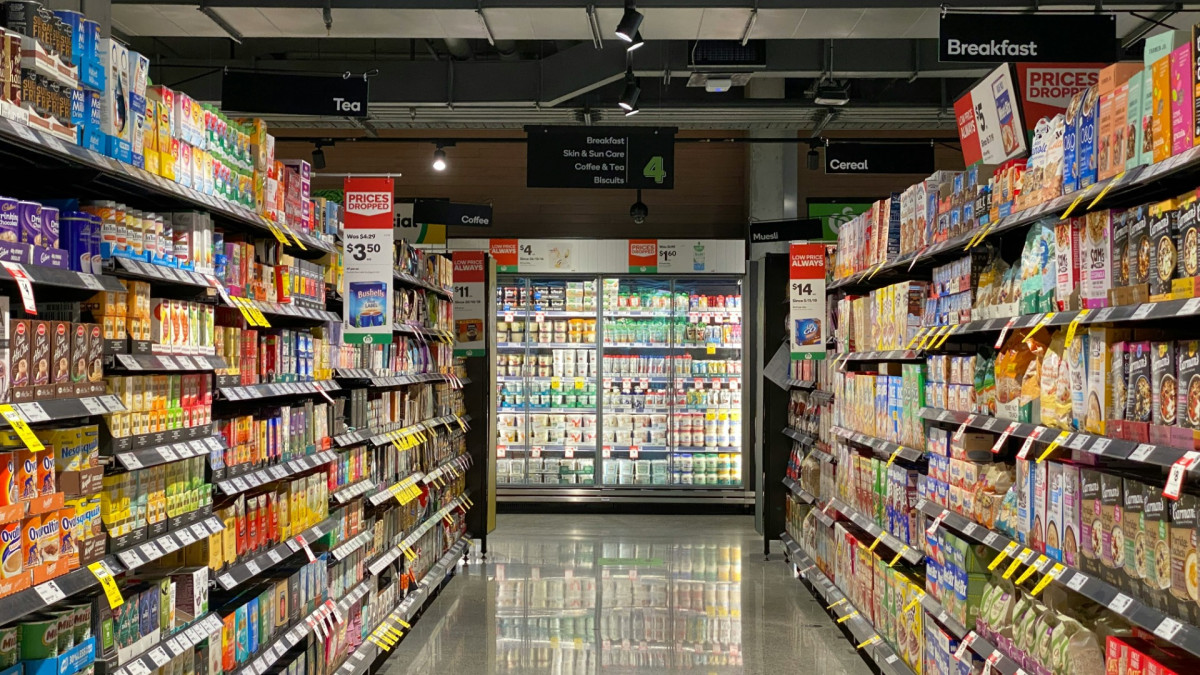
Governments around the world are striving to devise a sensible approach to managing inflation and the disruptions in the production and supply of essential goods. The Treasury of the United Kingdom, for example, has just unveiled a proposal to encourage supermarkets to cap the prices of basic goods (such as bread and milk) in exchange for a relaxation of packaging and environmental regulations.
“There is a noticeable lack of willingness in politics to confront the structural factors that drive cost inflation”
At first glance, the policy appears pragmatic and compassionate. But a closer look reveals a reluctance to tackle the structural drivers of rising costs. Rather than intervening in markets, the Treasury is negotiating with them, underscoring its inability to grasp the scale of the affordability crisis faces. The problem goes beyond the high price of bread and milk; it rests on a systemic and long‑term failure to address wage stagnation, the high costs of housing, and the steep price of basic services.
Worse still, while publicly “taking on” the cost of staples might appear to be a sensible response, it risks being counterproductive. What will the Government do if retailers simply resist, delay implementation, or comply only selectively? Policy in such a scenario will bear little fruit, and the State’s credibility would be further eroded.
The Illusion of Price Control
Recent European experience highlights the danger. In 2023, the French government negotiated a “anti‑inflation basket” through which supermarkets could freely select a limited set of products to sell at reduced prices for a defined period. While politically salient, the plan relied on voluntary participation, covered only a small share of goods, varied by retailer, and had limited and ephemeral impact on the overall dynamics of food prices. Such schemes can lower prices for certain items, but they allow retailers to adjust margins in other areas.
Similarly, in 2022, Greece introduced a “shopping basket” initiative that encouraged supermarkets to keep selected essentials affordable and to periodically report prices to demonstrate responsiveness. Again, the program yielded short‑term visibility and some moderation in prices for specific items, but did not meaningfully alter underlying profit margins or the broader inflation dynamics.
The more interventionist approaches have also run into trouble. When Hungary imposed direct price caps on certain food products during 2022–23—moving from voluntary coordination to mandatory controls—retailers responded by raising prices on items not covered by the caps, causing distortions in supply and periodic scarcities. Spain, by contrast, temporarily reduced the value‑added tax on basic foods, which marginally eased consumer prices; but since the plan relied on savings percolating through multiple links in the supply chain, overall outcomes were neither uniform nor transformative.
The Cost of Living Is Not Solved at the Supermarket
Despite their differences, these cases share a common, ultimately inadequate model. Whether voluntary, coercive, or indirect, government interventions centered on retailer‑driven measures targeted a narrow range of goods at the point of sale. These schemes may raise visibility, but they do not change market structures; price caps risk encouraging evasion and supply disruptions; and indirect measures, such as tax breaks, depend on corporate behavior to pass savings through the chain. In none of these instances did policy alter the underlying cost structures, the profit dynamics, or the distribution patterns.
“By focusing solely on supermarket prices, the Government is diagnosing the wrong problem and missing the opportunity to address the true causes of the affordability crisis”
The retail‑focused approach is especially misplaced in the United Kingdom, where the exceptionally high costs of housing and utilities are absorbing an ever‑larger share of household incomes and drastically reducing what remains for essential consumption. By concentrating only on supermarket pricing, the Government is misdiagnosing the problem and forfeiting the chance to tackle the real drivers of the affordability crisis.
Taken together, these interventions reveal a persistent bias in how policymakers respond to inflation. The instinct of policymakers is to act on prices at the end of the supply chain, rather than on the conditions that generate them. Yet food price inflation is typically driven by the energy costs, agricultural inputs, labor conditions, global commodity markets, and firms’ pricing strategies.
Ensuring Access, Not Just Containing Prices
The affordability crisis is not merely a retail price issue. It stems from the interplay of prices, incomes, and the broader organization of social provisioning. What matters is not whether bread costs a few pence less at the till, but whether households have the means to obtain essential goods reliably. The question is not how to constrain prices but how to guarantee access.
The Mexico basic basket program offers a useful illustration in this regard. Rather than focusing exclusively on supermarket prices, it defines a basket of essentials and seeks to ensure its affordability through a mix of instruments: income support, minimum wage policies, coordination with producers and retailers, and selective price stabilization. Although it remains partly dependent on agreements with firms, it does so within a broader social policy framework.
Likewise, Brazil has focused less on limiting the retail prices of a basic food basket and more on facilitating access through income and tax transfer policies, public procurement and supply coordination, and direct food provision.
“Affordability is guaranteed not only through prices but also through the institutional organization of access to essential goods”
In each case, affordability is secured not merely by prices but by how access to essential goods is structurally organized. It is crucial that these strategies recognize that affordability is determined by both purchasing power and prices themselves. The takeaway—whether in developed or developing countries—is that the State must intervene through the income, provisioning and production channels, rather than at the point of sale.
In the United Kingdom, this would require moving beyond voluntary price limits toward a coordinated strategy that addresses the structural pressure on family budgets. That entails strengthening income support for low‑ and middle‑income households, reducing the burden of housing and utility costs, and engaging suppliers early in the entire food system to stabilize key inputs. Rather than negotiating marginal price cuts with retailers, the State would set out essential needs and deploy policy tools across relevant sectors to ensure their satisfaction.
A shift of this kind would relieve immediate pressures while building a more resilient and equitable system for distributing basic goods. Without it, policies such as voluntary price caps merely offer the illusion of control and risk reproducing precisely the dynamics that breed vulnerability, market concentration, weak regulation and disappointing outcomes.
© Project Syndicate, 2026.
In collaboration with the Fundação “la Caixa”
